How to Personalize Content for Prospects (and Close Deals Faster With a Shared Space)
To personalize content for prospects, sales teams map existing assets to specific buyer roles, industries, and deal stagesthen share only what is relevant using a Digital Sales Room. Engagement data (time spent, pages viewed, committee shares) refines follow-up in real time. The result is a buying experience that feels built for that specific account, not broadcast to everyone.
Your prospect has eleven tabs open. One is your competitor's one-pager. Another is a generic deck your rep sent at 9:03 AM, subject line: "Thought this might be useful." You already know how that story ends.
Most sales teams keep sending the same deck to every prospect, the same case study to every vertical, and calling it personalization when they swap the company name in the subject line. The problem is not effort. It is systemsand the absence of a shared space where buyer and seller can actually work through a deal together.
This guide covers what it actually means to personalize content for prospects, which four signals should drive every content decision, how to build a repeatable system, and how a Digital Sales Room turns one-way content sends into two-way buying experiences. If you want a wider foundation first, the 13 most important types of sales enablement content is a good place to start.
What Does It Mean to Personalize Content for
Prospects?
Content personalization for prospects means tailoring the assets, messaging, and delivery format you share based on who the buyer istheir role, industry, deal stage, and known pain points. Done right, it is the difference between content that gets ignored and content that gets forwarded internally and discussed in a shared deal workspace.
There are two kinds of content personalization in sales, and mixing them up is one of the most common mistakes teams make.
Internal personalization is about equipping your reps: tailored playbooks, role-specific training, buyer persona briefings. It is important, but it is not what this article is about.
External personalization is what your buyer actually sees. The PDF shared after a discovery call. The case study in a follow-up email. The curated Digital Sales Room you build for a specific account. That is the type of personalization that either moves a deal forward or lets it quietly die in someone's inbox.
The spectrum is wide. At the basic end, personalization means swapping a prospect's company name into a template. At the sophisticated end, it means building a curated shared workspacewith relevant case studies, role-specific messaging, in-room Q&A, and mutual next stepsthat speaks directly to what that buyer cares about at this specific moment in their decision process.
The teams that win more deals sit closer to the sophisticated end. The difference between the two is almost never creativity. It is sales enablement infrastructure: the right content, organized the right way, delivered into the right shared environment.
Why Generic Content Is Losing You Deals
Generic sales decks fail because the buyer at the awareness stage needs a different story than the one at the decision stage. Sending the same asset to both means one of them is ignoring you. And without engagement tracking or a shared deal space, your rep has no idea which one it is, or where to focus the next conversation.
Here is a scenario that plays out every day across sales teams. A rep closes a strong discovery call. The prospect seems genuinely interested. The rep fires off a follow-up email with a product PDF attached. Subject line: "Resources from today's call."
The prospect opens the PDF. Spends four seconds on it. Jumps to page 12. Does not come back. The rep has no idea any of this happened. Three days later, they send a check-in email: "Just wanted to see if you had any questions." The prospect does not reply. The deal goes cold.
Now play the same scenario differently. The rep creates a Digital Sales Room: three case studies from the prospect's industry, a short explainer video about the specific workflow problem that came up in the call, a pricing one-pager, and a shared mutual action plan. The prospect gets a notification-free link to a workspace that feels built for them. Their colleagues can access it too. And everyone is looking at the same information.
The rep gets a real-time notification. The prospect spent eight minutes on the competitive comparison page and came back twice. A new stakeholder just entered the room from procurement. The rep leads the next call with that context. The deal moves forward.
42% of B2B marketers acknowledge their content is not fully personalized (Seismic research). That is not a content quality problem. It is a content tracking and delivery problem. You cannot personalize what you cannot find, and you cannot improve what you cannot measureespecially when you have no visibility into who on the buyer's team is actually engaging.
Generic sales collateral is not just ineffective. It actively signals to the buyer that you have not done your homework
.
The Four Signals That Should Drive Your Content Personalization
Before you can personalize anything, you need a framework for what "relevant" actually means. Most teams rely on instinct. The better approach is to let four clear signals guide every content decision.
1. Buyer Role and Seniority
The CFO does not want the same asset as the SDR manager. The CFO wants ROI framing, total cost of ownership, and evidence that this investment moves a number on their P&L. The SDR manager wants workflow proof: how many fewer clicks to find a piece of content, how much time the team saves per week, whether it integrates with the tools they already use.
Think about the three buyer roles you encounter most often. End users care about ease of use and day-to-day impact. Managers care about team performance and adoption. Executives care about business outcomes and risk. When your prospect is a decision-maker, lead with business impact. When they are an evaluator, lead with integrations and ease of use.
2. Industry and Use Case Context
A healthcare operations team and a fintech startup have the same underlying problem: messy content workflows and no visibility into what the buyer actually read. But they need to see that problem solved in their world.
Healthcare buyers need to see HIPAA compliance mentioned before anything else. Fintech buyers want to know about API flexibility and CRM integration depth. Industry-specific content is the fastest shortcut to credibility. A case study from the prospect's exact vertical is worth five generic ones.
3. Deal Stage and Buyer Journey Position
At the awareness stage, your prospect is still figuring out whether they have a problem worth solving. Educational content wins here: how-to guides, industry benchmarks, thought leadership that names the pain without immediately pitching a solution.
At the evaluation stage, your buyer is comparing options. Case studies, comparison guides, use-case content matched to their vertical, and detailed product explainers are what they need. This is where personalization by industry and role becomes essential, not optional.
At the decision stage, your buyer needs to justify the purchase internally. ROI documentation, security and compliance materials, implementation timelines, and onboarding plans are the assets that move this stage forward. This is also where a shared Digital Sales Room earns its keep: the buying committee can access everything they need in one place, without chasing down email threads.
4. Prior Engagement Signals
When a prospect spends four minutes on your pricing page but skips the product overview entirely, that tells you something. When they return to the same case study three times, that tells you something else. When they forward your deal room link to two other people on their team, that tells you the deal has moved into a buying committee conversation.
Engagement data turns your follow-up from a guess into a conversation. Instead of "just checking in," your rep can say: "I noticed you spent some time on the competitive comparison sectionand I can see your procurement lead just joined the room. Happy to walk through how we handle those specific scenarios." That is not a generic touch. That is a rep who sounds like they have been paying attention.
Content engagement analytics for sales addressed here and expanded in the product section below.
How to Build a Personalized Content System (Step by Step)
Personalization at scale does not happen because reps work harder. It happens because the system makes the right content easy to find, easy to assemble, and easy to deliver into a shared experience. Here is how to build that system.
Step 1: Audit what you already have
Before you create anything new, map what exists. Most teams discover they have far more relevant content than they realize; it is just buried in a folder structure that makes no sense to anyone except the person who built it. Go through your library and tag every asset by type (case study, one-pager, explainer), topic, buyer persona, and deal stage.
Step 2: Tag by context, not just format
Moving from a folder called "Case Studies" to tags like "Fintech + Evaluation Stage + CFO" changes what happens when a rep needs something fast. This is the core of any sales content management guide: organize for retrieval, not for filing. The goal is that a rep can surface the right asset in under 30 seconds.
Step 3: Build modular content sets for your highest-frequency personas
Identify your three to five most common buyer types. For each one, curate a dedicated content set: the case study from their vertical, the ROI one-pager framed for their role, the comparison guide that addresses their most common objection. Reps customize from here rather than building from scratch.
Step 4: Use templates for personalized outreach, not finished decks
A template with swappable sections is more powerful than a finished deck. Include spaces for: the prospect's company name and industry, a relevant stat from their vertical, the case study most relevant to their use case, and a specific call to action tied to the conversation you just had. Reps personalize in minutes. Brand and messaging stay consistent.
Step 5: Move from sending content to sharing a deal workspace
Sending a curated Digital Sales Room to a prospect is categorically different from attaching three PDFs to an email. A Digital Sales Room with the prospect's name, your logo, key assets, a Q&A thread, and a mutual action plan feels like something built for them. Because it was. It also gives you engagement data and gives the buyer's committee a single place to evaluate, discuss, and decide that an email attachment never will.
Step 6: Track, iterate, and stop guessing
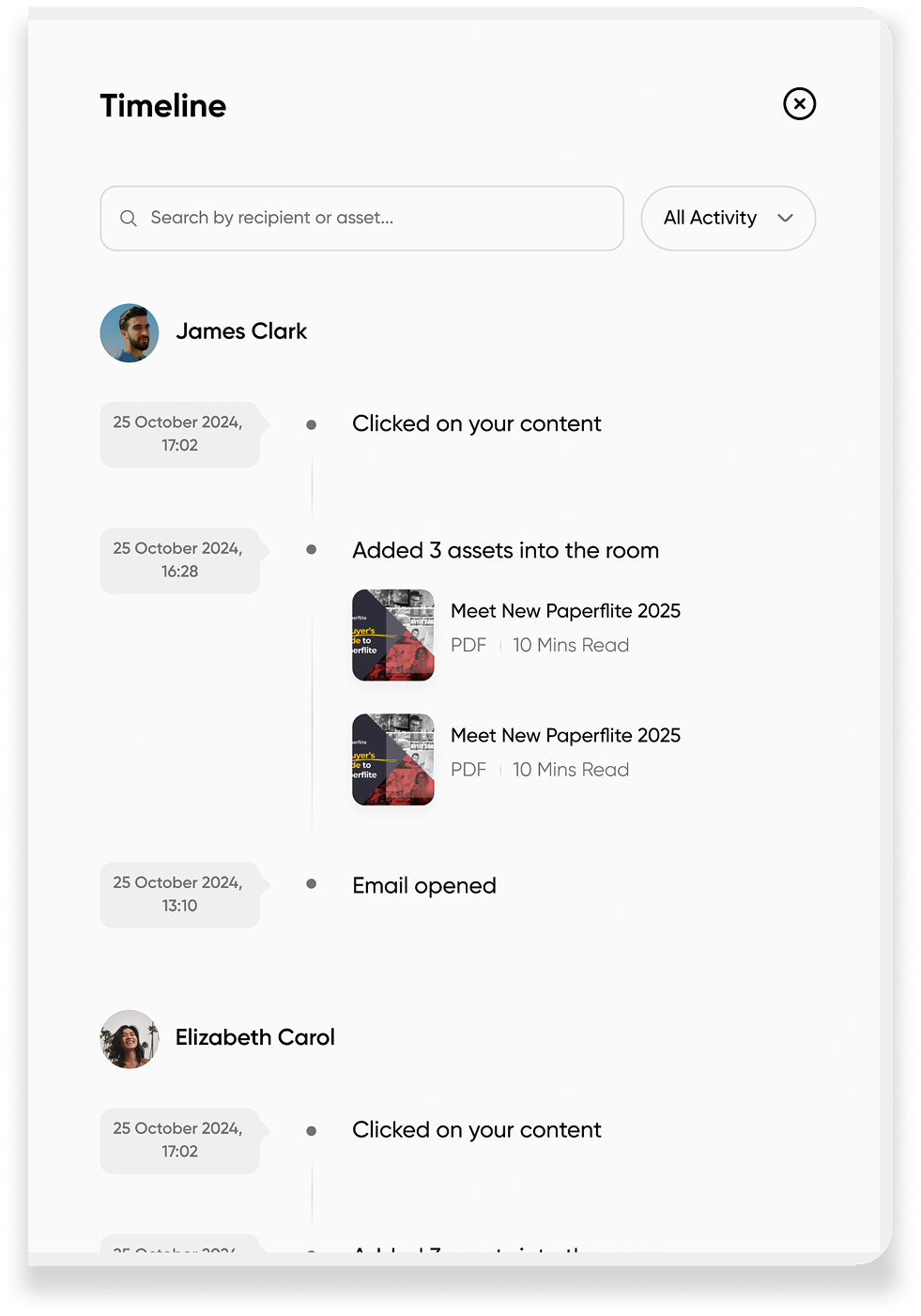
Use engagement analytics to understand which assets actually move prospects forward and which stakeholders are driving internal momentum. Content that gets 11 seconds of attention is not worth re-sending. Content that gets eight minutes and three return visits and then gets accessed by a new committee member is a deal signal. The content hub operations that support this kind of ongoing refinement are what separate content-led teams from content-hoarding ones.
Common Mistakes That Kill Content Personalization Efforts
Most personalization efforts do not fail because of bad intent. They fail because of avoidable patterns that look reasonable until you see the results.
Personalizing at the surface level only
Swapping a prospect's company name into a template and calling it personalized content is the most common mistake. True personalization means choosing the right asset for this buyer at this stage, not decorating a generic one. A solid sales enablement strategy addresses content selection before content presentation.
Building personalization without a governance model
When reps create their own versions of approved content, you end up with twelve slightly different versions of the same deck floating around in email threads, some with outdated pricing, some with wrong logos, some with messaging that contradicts what marketing approved last quarter. Personalization needs guardrails: approved templates, version control, and a library that reps can trust.
Personalizing content but not the experience
A personalized PDF dropped into a generic email is still a generic experience. A Digital Sales Room, on the other hand, is a shared workspace: branded, navigable, trackable, and designed for the buying committee to use together. The asset matters. The delivery mechanism matters just as much. This is why your prospects deserve a content experience that goes beyond a file attachment.
No visibility into the buying committee
Most personalization frameworks assume a single buyer. Real deals involve five, seven, sometimes ten stakeholders. If you are sending personalized content to one contact and have no idea who else is involved, you are missing the people who actually sign the contract. A deal room surfaces the full buying committee who entered, who is engaged, who has gone quiet, so your team can build consensus before procurement shows up with surprises.
No feedback loop
Creating personalized content and never measuring whether it worked is the fastest way to build a content strategy that feels productive and produces nothing. If you cannot tell which assets are driving engagement and which are being ignored, you are optimizing blindly. Engagement analytics are not a nice-to-have. They are the mechanism that makes personalization a practice rather than a one-time project.
How Paperflite Helps Teams Personalize Content and Close Deals in a Shared Space
Most teams have a content library. A good one has folders, some tagging, maybe a shared drive everyone pretends to use. What they do not have is a content intelligence system: one that helps reps find the right asset, build a personalized experience around it, deliver it into a shared buying workspace, and understand exactly what happened after.
Paperflite is built around that gap. It is an end-to-end revenue enablement platform for GTM teams that need to move fast without going off-brand. Here is how it works in practice, from content discovery through to deal close inside a shared Digital Sales Room.
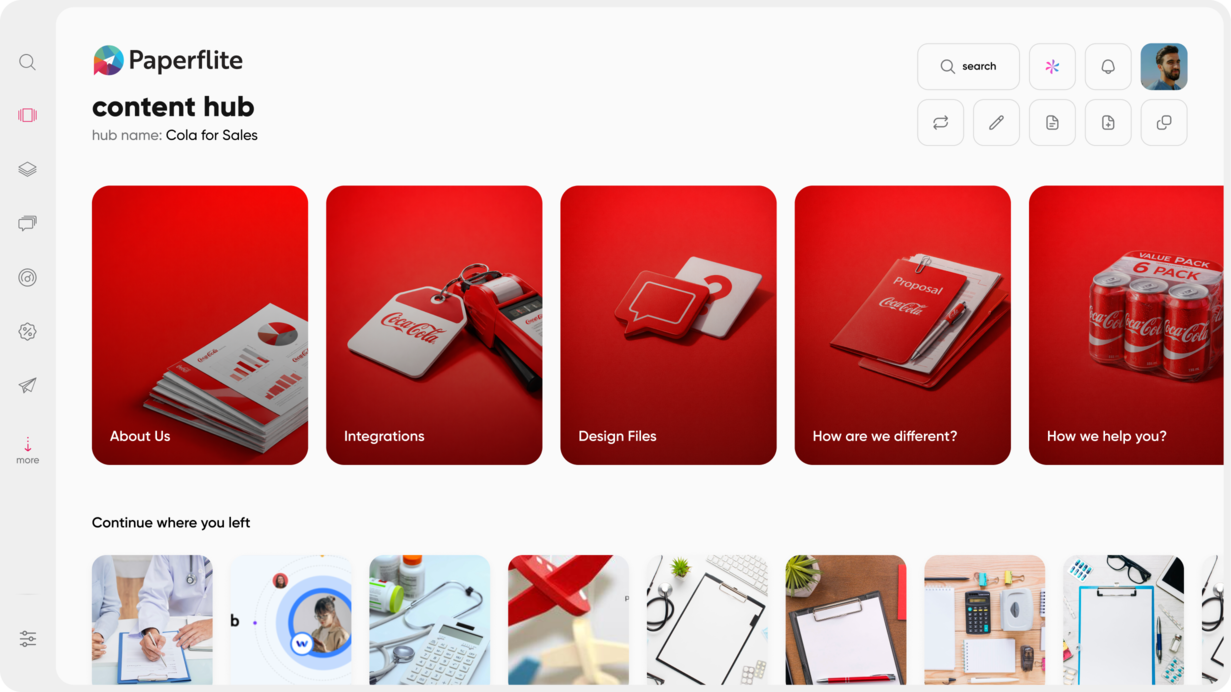
Content Hub with Streams and Collections
Organize your entire content library by audience, vertical, deal stage, or whatever taxonomy makes sense for your team. When a rep needs a fintech case study for an evaluation-stage CFO, they find it in seconds, not because the search is clever (it is), but because the content was organized with intent from the start.
Digital Sales Rooms: One Shared Workspace for the Entire Deal
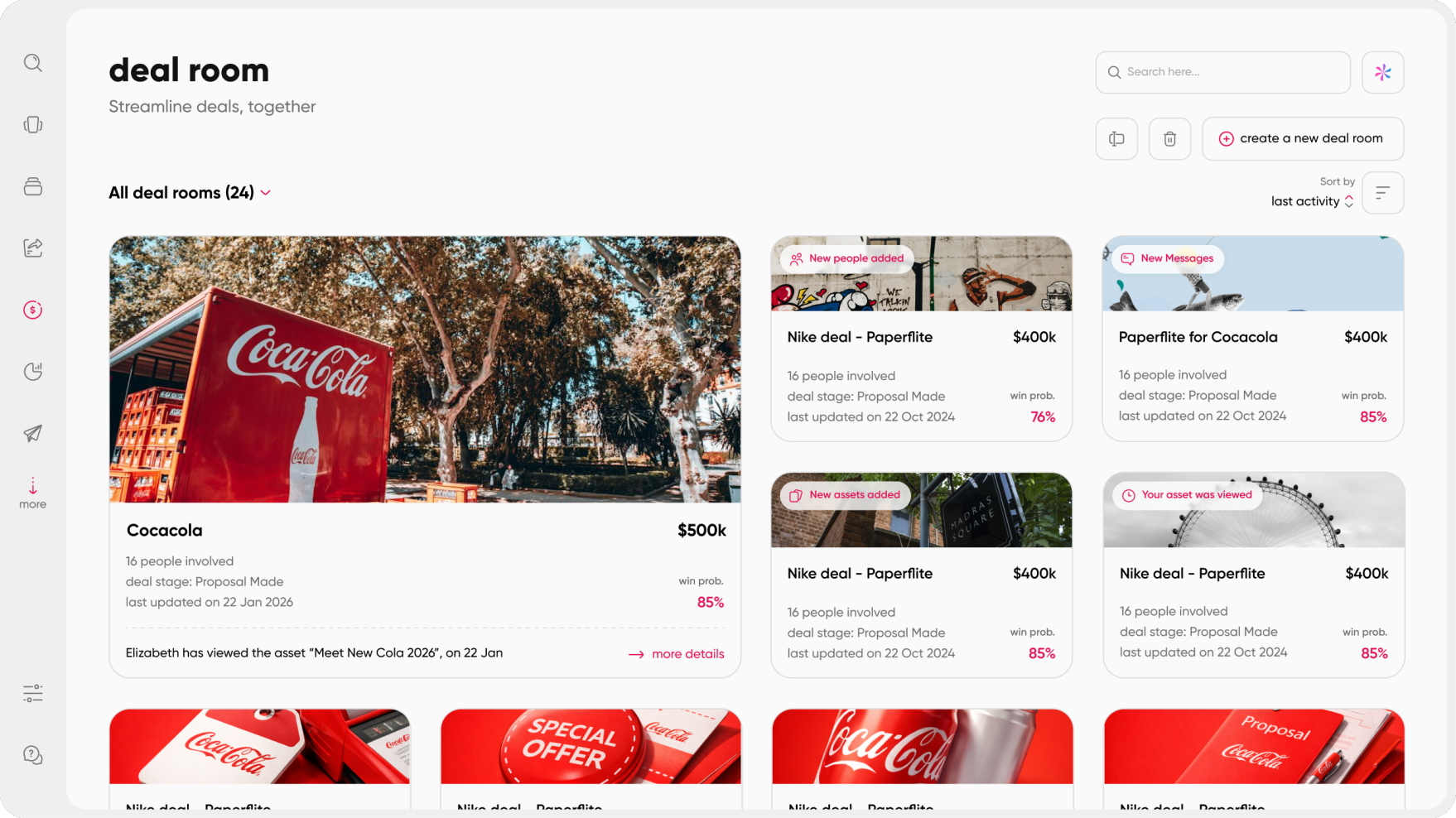
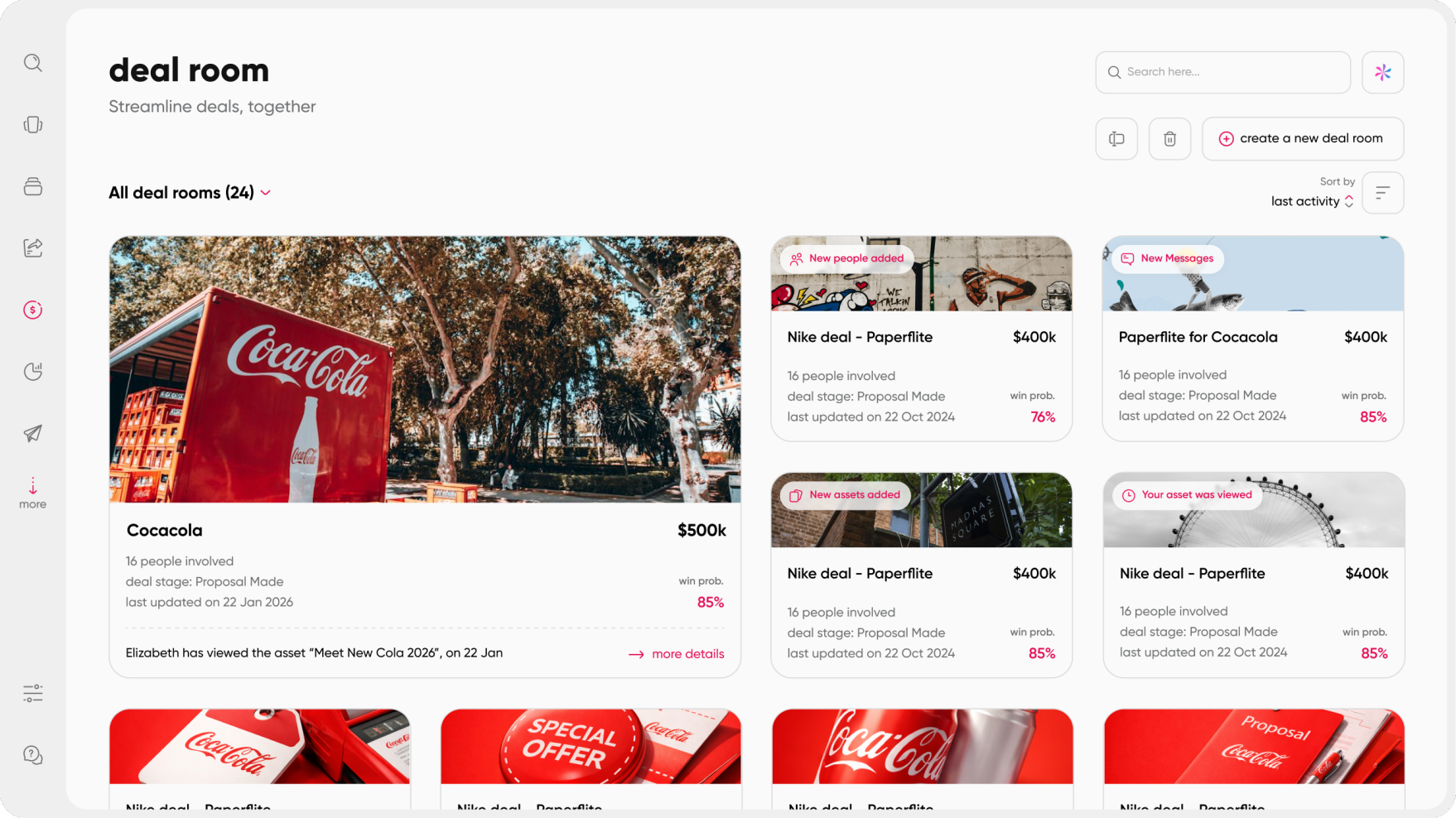
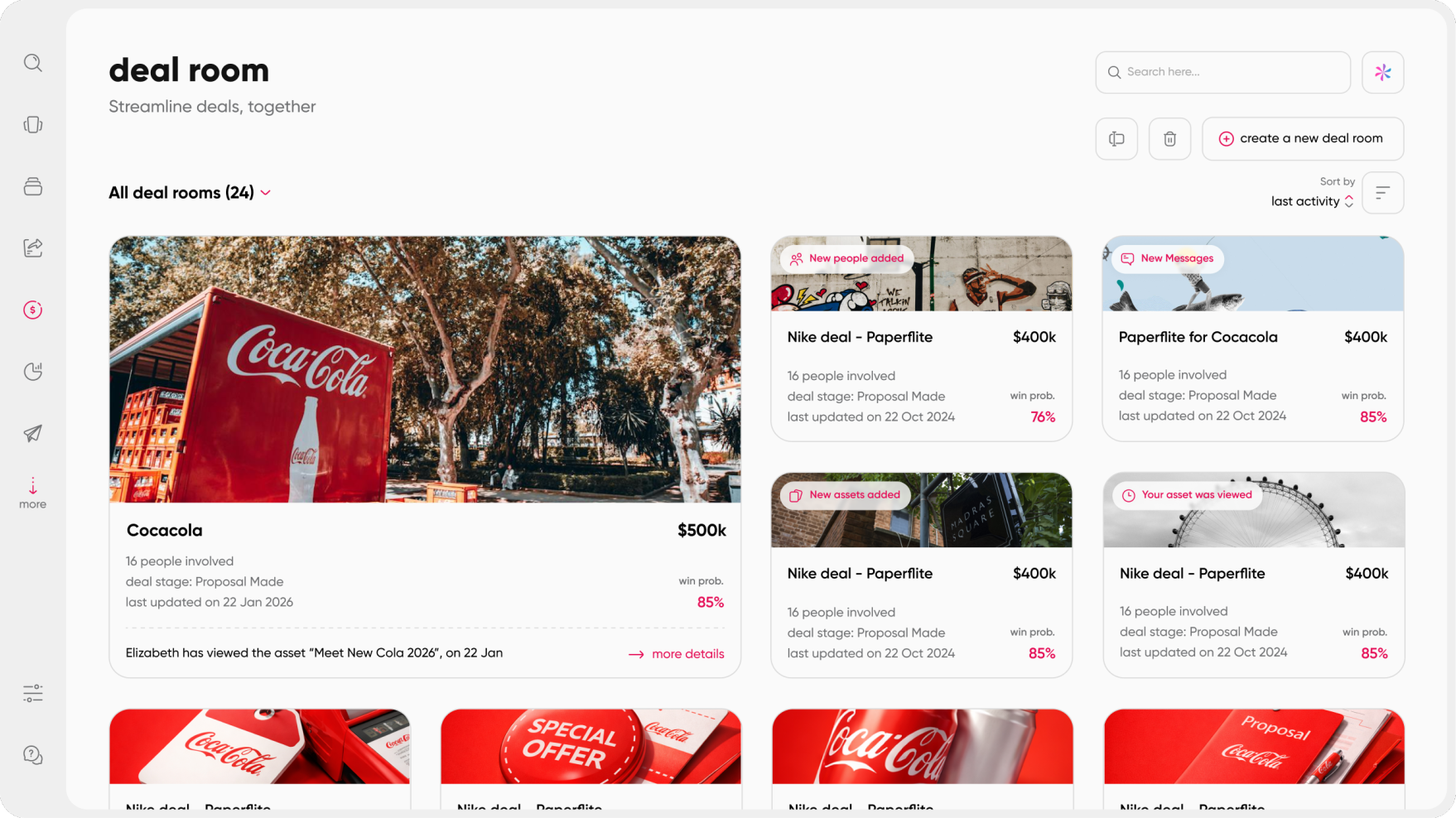
This is where personalization meets deal momentum. A Paperflite Digital Sales Room is not a link dump. It is a buyer-ready workspace where content, stakeholders, questions, and next steps all live in one place.
What that looks like in practice:
- Put the entire deal in one place. Key assets, proof, pricing, and next steps curated for this specific account. No five emails and ten links. Buyers navigate on their own timeline. Sellers stay in control of the process.
- See the full buying committee instantly. Know who is engaged, who is missing, and who just entered the room. Identify champions and silent influencers early. Share the right assets with the right stakeholders and build consensus before procurement shows up with surprises.
- In-room Q&A that keeps decisions moving. Buyer questions and seller answers stay in one place, tied to the deal context. No scattered email threads. No buried file comments. Faster responses, fewer drop-offs, and clean alignment across every stakeholder.
- Mutual next steps, owned by both sides. Make progress visible: milestones, owners, due dates, and follow-through. Buyers know what is next. Sellers stay in control of the process. Fewer stalls, smoother handoffs, faster signatures.
- Real deal momentum beyond opens and clicks. Track what is actually moving the deal forward: depth of engagement, stakeholder spread, and priority signals. Spot risk early, focus your time on deals with traction, and tighten forecasting with evidence, not optimism.
Personalized Microsites in Under Two Minutes
For earlier funnel stages, reps build prospect-specific content experiences with the prospect's name, custom branding, and a curated set of assets selected for this deal. No design skills required. The output is a unique, trackable link that the buyer can return to, navigate, and share internally.
AI-Powered Content Discovery (SEEK)
An LLM-powered search layer sits across your entire content repository. Reps describe what they need in plain language, and the system surfaces the most relevant assets. The days of "I know we have a case study about this somewhere" are effectively over.
Real-Time Engagement Analytics
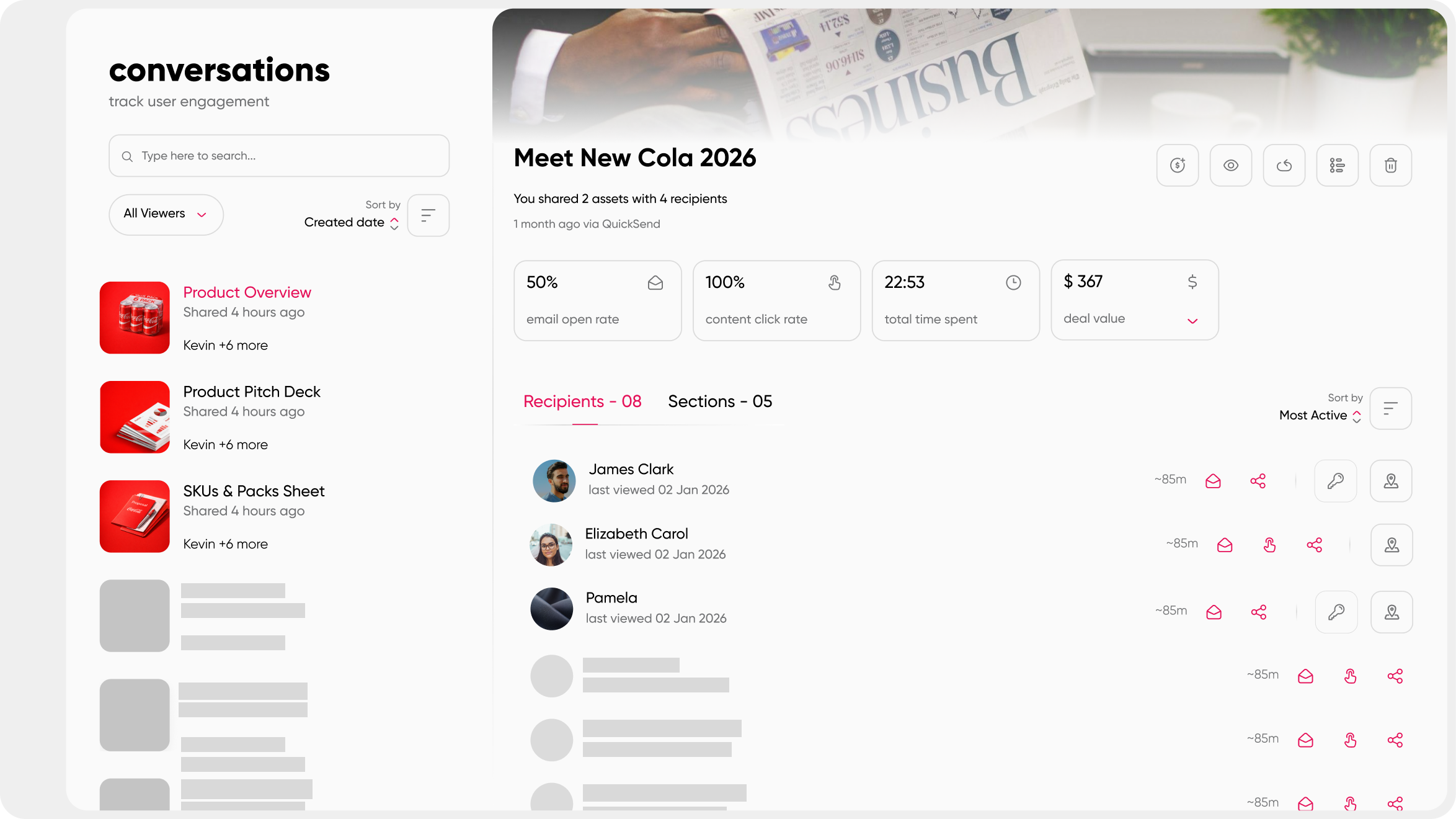
See page-by-page time spent, total time on asset, return visits, and internal shares within the buying organization. When a prospect spends eight minutes on one specific section and comes back three times, your rep knows exactly where to start the next conversation, and the deal room tells you who else on their team has been in there.
CRM Integration That Closes the Loop
Engagement data flows automatically into your CRM: Salesforce, HubSpot, Microsoft Dynamics, Freshsales, Pipedrive, Salesloft, or Eloqua. Reps do not need to manually log what happened after a share. That is what AI-driven sales enablement looks like in practice: automation that gives reps their time back and makes them sharper in the process.
Plans Built for Where Your Team Is Now
Paperflite pricing is straightforward and scales with your team's needs:
- Starter: $30/user/month (or $27.50 annual). Content Hub, personalized microsites, AI-powered content discovery, and per-asset analytics. Minimum 5 users on annual plans.
- Professional: $50/user/month (or $47.50 annual). Everything in Starter, plus CRM and email integrations, secure content distribution, in-depth engagement analytics within your CRM, white labelling, and SSO.
- Advanced: $60/user/month (or $57 annual). Everything in Professional, plus AI-powered content recommendations, content personalization at scale, digital deal rooms, and predictive deal insights. Paperflite's most popular plan.
- Enterprise: Custom pricing. Deep Salesforce and CRM integrations, custom reporting, complete platform branding, language localisation, and custom training.
For teams running long sales cycles with large buying groups, the Advanced plan's digital deal rooms and predictive deal insights are where the personalization story gets particularly compelling. You are not just sending content. You are managing a shared space where the buyer's entire team can find everything they need to say yes.
If you are evaluating whether this fits into a broader revenue motion, the revenue enablement context is worth reading alongside this. Personalized content is one piece of a larger system. Paperflite is designed to be that system.
Conclusion
Most sales teams are not losing deals because they lack content. They are losing them because the right content is reaching the wrong buyer at the wrong time, with no shared space for the buying committee to evaluate and decide together.
Personalizing content for prospects is not a feature request for enterprise teams with dedicated enablement staff. It is how revenue teams compete when buyers self-educate before they ever respond to a follow-up. Know your buyer. Organize your content library. Create a shared buying experience, not a shared file. And use engagement signals across every stakeholder in the deal to keep improving.
If you want to go deeper on building the underlying strategy, sales enablement benefits and the content experience strategy guide are the natural next reads. If you want the infrastructure to make all of this a daily habit rather than a quarterly project with a deal room where your buyers can actually work through the decision, that is what Paperflite is built for.
Frequently Asked Questions
What does personalizing content for prospects actually mean?
It means choosing the right assets, framing the right message, and presenting them in a format matched to who the buyer is, their role, industry, deal stage, and known concerns inside a shared buying workspace where the full committee can engage. Personalization is not about decorating a generic deck with a company name. It is about making every touch feel like it was designed for this specific account at this specific moment in their decision process.
How do you personalize content at scale without spending hours on each deal?
The answer is a well-organized content library with strong tagging and a set of modular content collections built for your most common buyer types. When the right assets are organized by persona, vertical, and deal stage, reps assemble a personalized deal room in minutes, not hours. Templates with swappable sections and platforms that support one-click deal room creation bring the time cost down further.
What types of content should you share at each stage of the buyer journey?
At awareness, share educational content that names the problem without immediately selling: how-to guides, benchmarks, and thought leadership. At evaluation, share industry-specific case studies, comparison guides, and role-matched explainers. At decision, share ROI documentation, security and compliance materials, and implementation timelines, ideally inside a deal room where the buying committee can review everything together. Sending content that matches the wrong stage is one of the most common reasons follow-ups go cold.
What is a Digital Sales Room and why does it matter for personalization?
A Digital Sales Room is a shared, branded workspace where sellers curate content, manage stakeholder questions, track buying committee engagement, and align on mutual next steps, all in one place. Unlike a personalized PDF or a microsite, a deal room is built for the full buying committee, not a single contact. It replaces scattered email threads with a single structured environment and gives sellers real-time visibility into who is engaged, who is missing, and what is moving the deal forward.
How does content engagement tracking improve personalization?
Engagement data tells you exactly which pages a prospect spent time on, which assets they returned to, and whether they shared the content internally with other stakeholders. In a deal room, that data covers every member of the buying committee, not just the contact you emailed. It turns your next follow-up from a generic check-in into a targeted conversation grounded in what the buyer actually did.
What is a personalized content microsite, and when should I use one vs. a deal room?
A personalized microsite is a curated, branded landing page built for a specific prospect, best suited for early outreach and initial follow-ups when the buying committee is still forming. A Digital Sales Room goes further: it adds in-room Q&A, mutual action plans, stakeholder tracking, and a structured workspace for the full committee to evaluate and decide. Use microsites to open the door; use deal rooms to close it.
How do you align content personalization with your CRM?
By using a platform that integrates directly with your CRM, engagement data from shared content and deal rooms flows automatically into deal records. Reps see which assets a prospect engaged with, which stakeholders are active, and what that context means for next steps without anyone manually logging activity. This is how content personalization becomes part of your pipeline management, not a separate workflow.
Do smaller teams need a tool to personalize content, or can they manage manually?
Smaller teams can start with well-organized shared folders and simple templates. Manual personalization is manageable when the deal volume is low. As your pipeline grows, the time cost of building personalized experiences from scratch becomes unsustainable. A platform with content hubs, engagement tracking, deal room creation, and buying committee visibility closes that gap and lets reps focus on conversations rather than content assembly.