How to Create Personalized Content Journeys That Actually Move Buyers
Picture this. Your sales rep just sent a prospect a five-slide deck, a whitepaper, and a product one-pager, all in one email. The prospect opens it, clicks nothing, and the rep stares at the screen with no idea what to do next. That's not a pipeline problem. It's a personalized content journey problem or rather, the complete absence of one.
Most B2B teams produce a lot of content. The challenge isn't volume. It's that the content doesn't reach the right buyer at the right moment in a form that speaks to their specific situation. Reps fire off generic sends. Buyers tune out. Deals stall. And marketing never finds out which assets actually moved the needle.
This guide covers what personalized content journeys actually are, why most teams build them wrong, and the step-by-step process for building ones that track buyer behaviour and tell your reps exactly when to follow up. If you're looking to sharpen your broader content experience strategy, this piece is a strong place to start.
A personalized content journey is a curated sequence of content assets case studies, one-pagers, ROI calculators, demos mapped to a buyer's role, industry, deal stage, and actual engagement behaviour. To build one:
(1) define buyer segments and personas
(2) map existing content to each funnel stage
(3) build a trackable delivery mechanism such as a microsite or digital deal room
(4) track engagement signals to see what each prospect actually reads, and
(5) trigger follow-ups based on what they consumed. That's the full loop.
What Is a Personalized Content Journey?
The phrase gets used loosely, so it's worth drawing a clear line. A personalized piece of content is a single asset tailored to a buyer: a case study from their industry, a one-pager that addresses their specific objection. A personalized content journey is something bigger: an interconnected sequence of assets that adapts across an entire deal cycle based on real signals from the buyer.
Think about how Spotify works. It doesn't play you one song and call it a day. It builds a playlist based on everything it knows about your listening history: what you skipped, what you replayed, what time of day you listen. Your content journey should do the same for your buyers. The assets they engage with shape what comes next. The ones they skip tell you something too.
There's also a scale dimension worth calling out. Research consistently shows that B2B deals involve 6 to 10 decision-makers on average, each entering the process at a different stage with a different set of questions. A content journey built around one persona won't hold up across a full buying committee. The journey has to be flexible enough to speak to the CFO, the CTO, and the end user even within the same account.
One more number that puts the stakes in focus: 71% of buyers expect personalised interactions from the brands they engage with, and they're bringing those expectations into B2B buying. If you want to understand why your prospects deserve a content experience rather than a content dump, that stat is a good place to anchor.
Why Generic Content Sequences Break Down
Here's a number that should give every sales leader pause: 65% of sales reps say they can't find meaningful content to send to prospects, and that gap is actively costing deals. Not because the content doesn't exist; most B2B companies have plenty. The problem is that it isn't matched to the right stakeholder, at the right moment, in a deal-specific context.
A case study written for "enterprise buyers" doesn't speak to the CFO worried about the payback period. It doesn't address the CTO's concern about integration risk. It definitely doesn't reassure the sales manager who's worried about how their team's workflow gets disrupted. One asset can't do all of those jobs at once. But most teams send it anyway, because it's what's available.
The pattern behind this is worth naming: content chaos. Assets are scattered across Drive, Dropbox, SharePoint, and a dozen email threads. Reps are building their own decks because they can't locate the approved version. Marketing with no visibility into what's actually being shared. If you've ever done a sales asset management audit and found five versions of the same case study floating around, you know exactly what this looks like.
Generic sequences also break because they're not built to learn. A batch-and-blast send gives you open rates, at best. It doesn't tell you which slide a prospect spent the most time on, or whether they forwarded the deck to their finance team, or why they went quiet after the third touchpoint. Without that signal, every follow-up is a guess.
The fix isn't more content. It's smarter sequencing. Understanding why sales reps overlook marketing content is the first step toward building a system that actually works.
How to Build a Personalised Content Journey: A Step-by-Step Framework
The five steps below work for individual reps managing a handful of accounts and for marketing teams building content infrastructure for a hundred-person sales org. The fundamentals don't change. The tooling scales.
Step 1: Define Your Buyer Segments and Personas
Start with the segmentation axes that will make the biggest difference in how content needs to feel: industry vertical, company size, buyer role (economic buyer, technical evaluator, or end user), and deal stage. You don't need to build 20 personas. Pick three or four that represent your most common deal types and go deep on those.
Each persona needs a simple content brief: What does this person care about most? What objection do they raise consistently? What format do they prefer: a data-dense PDF, a short video, a two-page one-pager? Your top-performing reps already know the answers to these questions. The work is getting it out of their heads and into a system everyone can use.
Step 2: Map Existing Content to the Funnel
Before you create a single new asset, catalogue what you already have. For each persona, sort your existing content against funnel stages: awareness (thought leadership, how-to guides, industry trends), consideration (case studies, ROI calculators, competitor comparison content), and decision (peer testimonials, pricing context, implementation timelines).
Most teams discover the same pattern: over-indexed on awareness content, under-built at the consideration stage, where deals actually slow down. A prospect who has read your blog for three months and is now comparing three vendors doesn't need another explainer on the problem. They need proof that your solution works for companies like theirs.
A solid sales content management process will surface those gaps and give your team a shared view of what's ready to use, what needs updating, and what needs to be built.
Step 3: Build the Delivery Mechanism
This is where most personalisation advice stops at the asset level and where content journeys actually begin. The delivery mechanism is how the journey is packaged and presented to the buyer. The choice matters more than most teams realise.
A PDF attached to an email tells you nothing after it lands. You don't know if it was opened, which pages were read, or whether it got forwarded to someone with budget authority. A tracked sharing link gives you opens. A personalised microsite gives you the full picture: time on each section, scroll depth, and internal sharing.
Personalised microsites work especially well for high-value accounts.
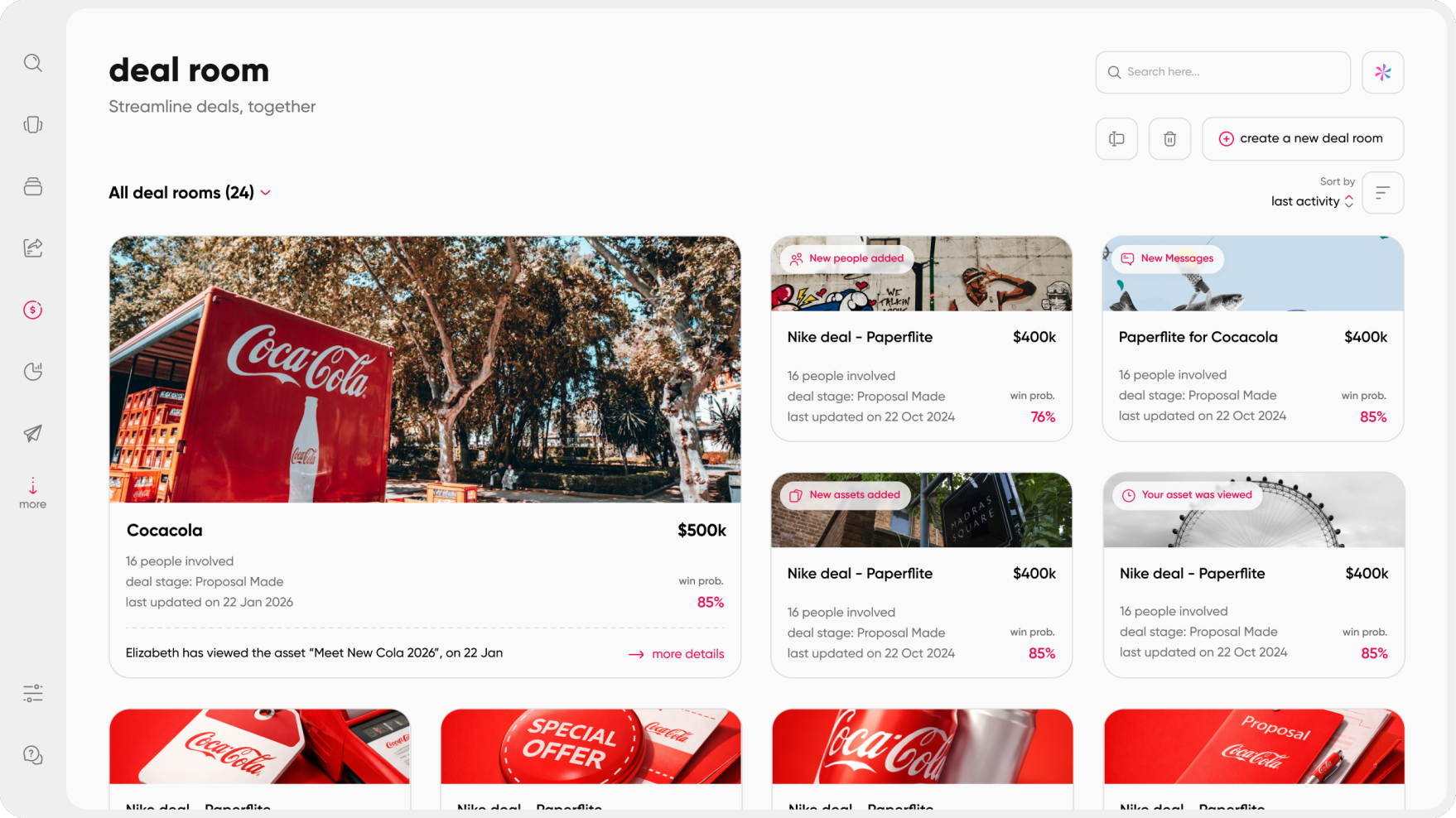
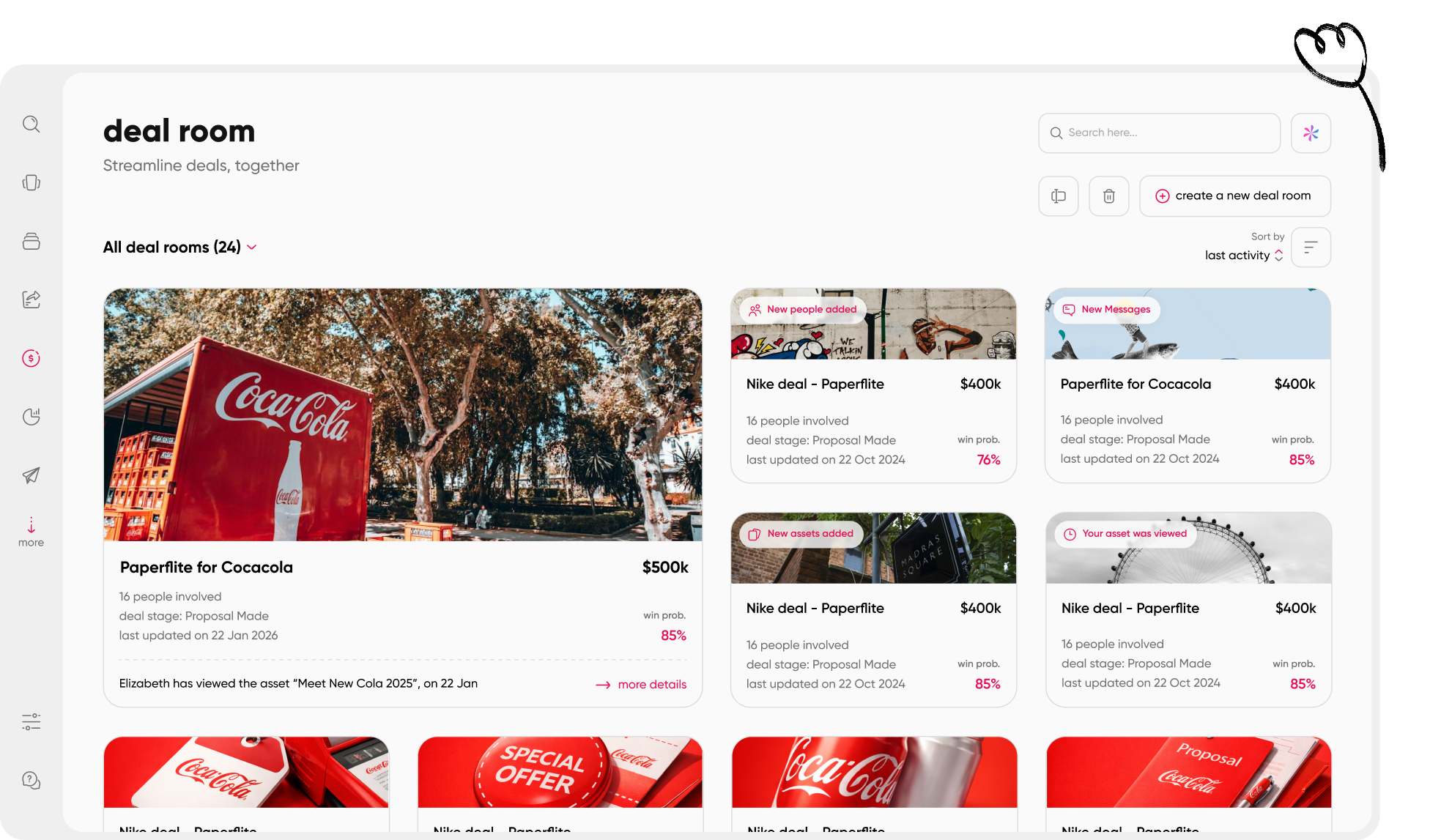
They can be branded to the prospect's company, show only the content relevant to their situation, and update dynamically as the deal progresses without requiring a new send. Digital deal rooms take this further by creating a shared space where both the rep and the buyer can add documents, leave comments, and track mutual milestones, reducing the "buried in email threads" problem that quietly kills enterprise deals.
The right content hub infrastructure makes this possible at scale, so the mechanism isn't rebuilt from scratch for every account.
Step 4: Track Engagement Signals
This is the step most teams skip. It's also the most valuable one.
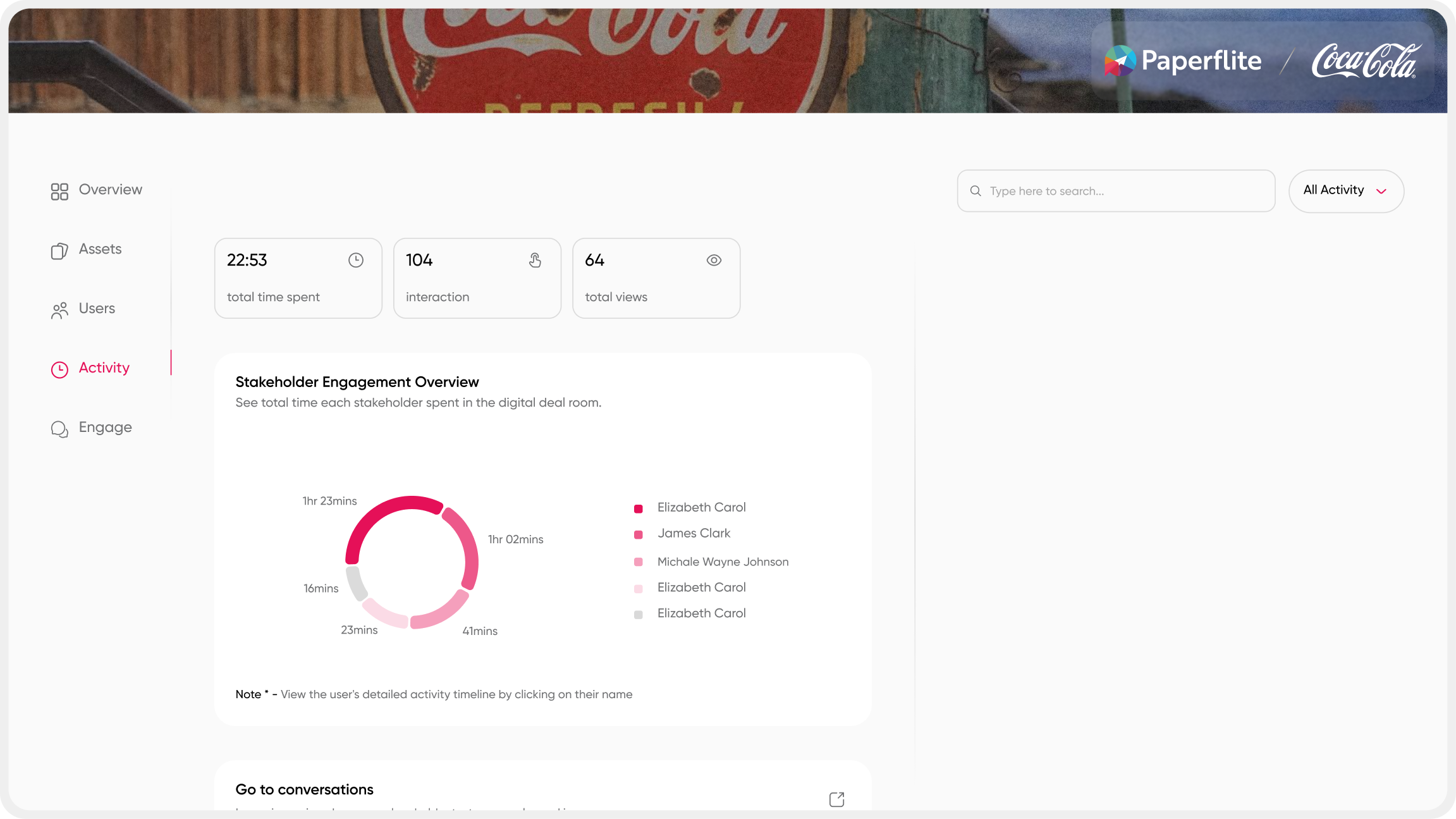
Engagement signals tell you which assets a buyer consumed, how long they spent on each one, what they skipped, and whether they passed the content to someone else in their organisation. That data turns a content send from a one-way delivery into a two-way conversation, one where the buyer is telling you, through their behaviour, exactly what they're thinking.
High time-on-asset for a consideration-stage case study? That prospect is comparing vendors. They're building an internal case. A quick note sharing a second proof point from the same industry can push them forward. Zero engagement after three sends? The content isn't landing, or the prospect isn't a real fit. Either way, you know sooner rather than three months into a dead pipeline.
Personalisation that doesn't loop back into sales action is just decoration. The signal has to become the follow-up. Which brings us to Step 5.
Step 5: Trigger Follow-Ups Based on What They Read
A rep who knows their prospect spent six minutes on a pricing page doesn't need a generic check-in script. They write: "I saw you spent some time looking at the pricing detail happy to walk you through what that looks like for a team your size, and what the ROI typically looks like in the first 90 days." That's a different conversation than "just following up."
Build simple playbooks tied to engagement patterns. If a prospect consumes an awareness-stage asset twice, send a consideration-stage case study and invite a discovery call. If they spend significant time on a competitive comparison, follow up with a pointed differentiation message. If they forward content internally, ask to be introduced to the other stakeholders directly.
This is where the content journey and the sales motion converge. The assets you send, and the signals they generate, become the sales conversation guide. Understanding how AI drives sales enablement can help teams build these trigger playbooks at scale without requiring a rep to manually monitor every content send.
What Personalised Content Journeys Look Like in Practice
Here's a scenario that plays out in plenty of B2B sales cycles. A mid-market SaaS company is trying to close a deal with a seven-person buying committee at a financial services firm. The selling team has one rep and one marketing contact. The buying team has a CFO, a CTO, a compliance officer, two sales managers, and two end users.
Without a content journey, the rep sends everyone the same one-pager and waits. With a content journey, each stakeholder gets something different.
The CFO gets an ROI calculator pre-populated with industry benchmarks and a one-page cost-of-inaction summary. The CTO gets a security architecture brief and a short note from the rep on how the integration works with their current stack. The sales managers get a use-case walkthrough from a peer company in financial services, with a testimonial from someone at a comparable firm in a comparable role. The compliance officer gets a data handling summary and a short FAQ on regulatory alignment.
Same deal. Same product. Four different content experiences, each one speaking to what that person actually needs to say yes internally. That's role-based hyper-personalisation in practice, and companies doing it consistently are reporting 93% revenue lifts from personalised content experiences and 26% higher open rates on email touchpoints with personalised subject lines.
How Paperflite Helps You Build Personalised Content Journeys at Scale
Most teams that want to build content journeys hit the same wall: content is scattered, sharing is untracked, and reps have no visibility into what buyers are actually reading. Platforms built for this problem bring those three layers together. If you're looking for a beginner's guide to sales enablement as broader context, that's worth a read first. For teams ready to act on content journeys specifically, here's what a purpose-built platform looks like.
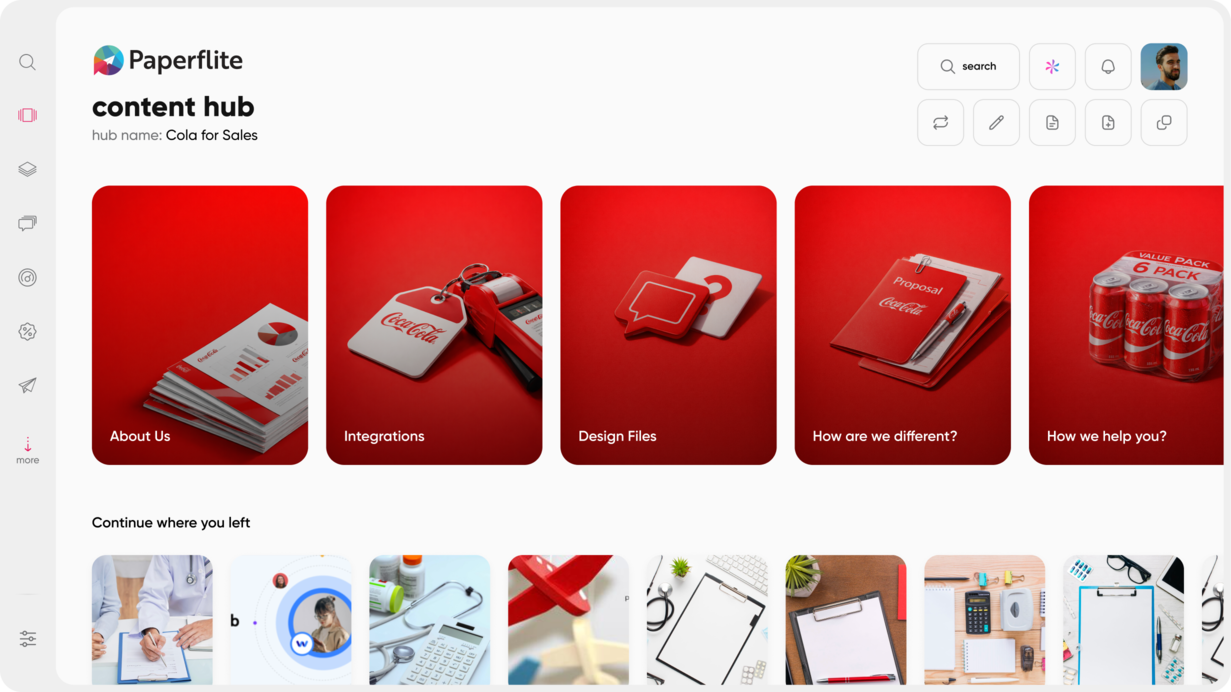
Paperflite is built around the sales content workflow from first touch to closed-won. Its Netflix-like Content Hub organises assets so reps can find the right case study, one-pager, or video in seconds by persona, by industry, or by asking in plain language using SEEK, the platform's built-in LLM for content discovery. ("Show me a mid-market fintech case study" actually works.)
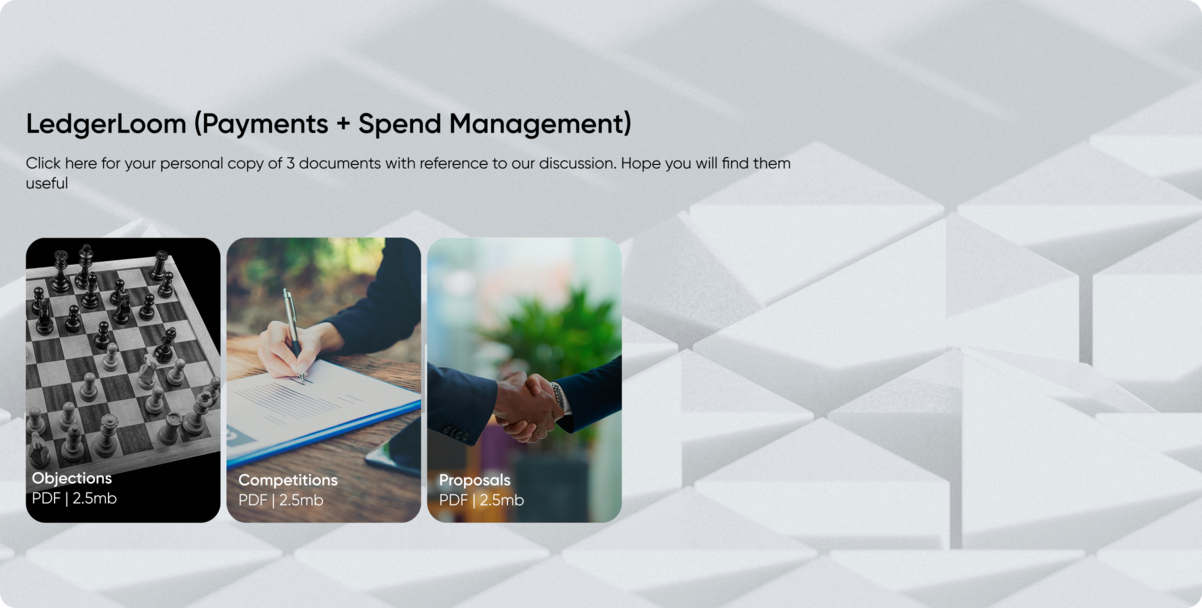
Paperflite's personalised microsite feature lets reps and marketers build branded, curated content experiences for specific prospects without a developer or design team. The prospect's logo, a custom intro message, and only the assets relevant to their situation, all in one shareable link.
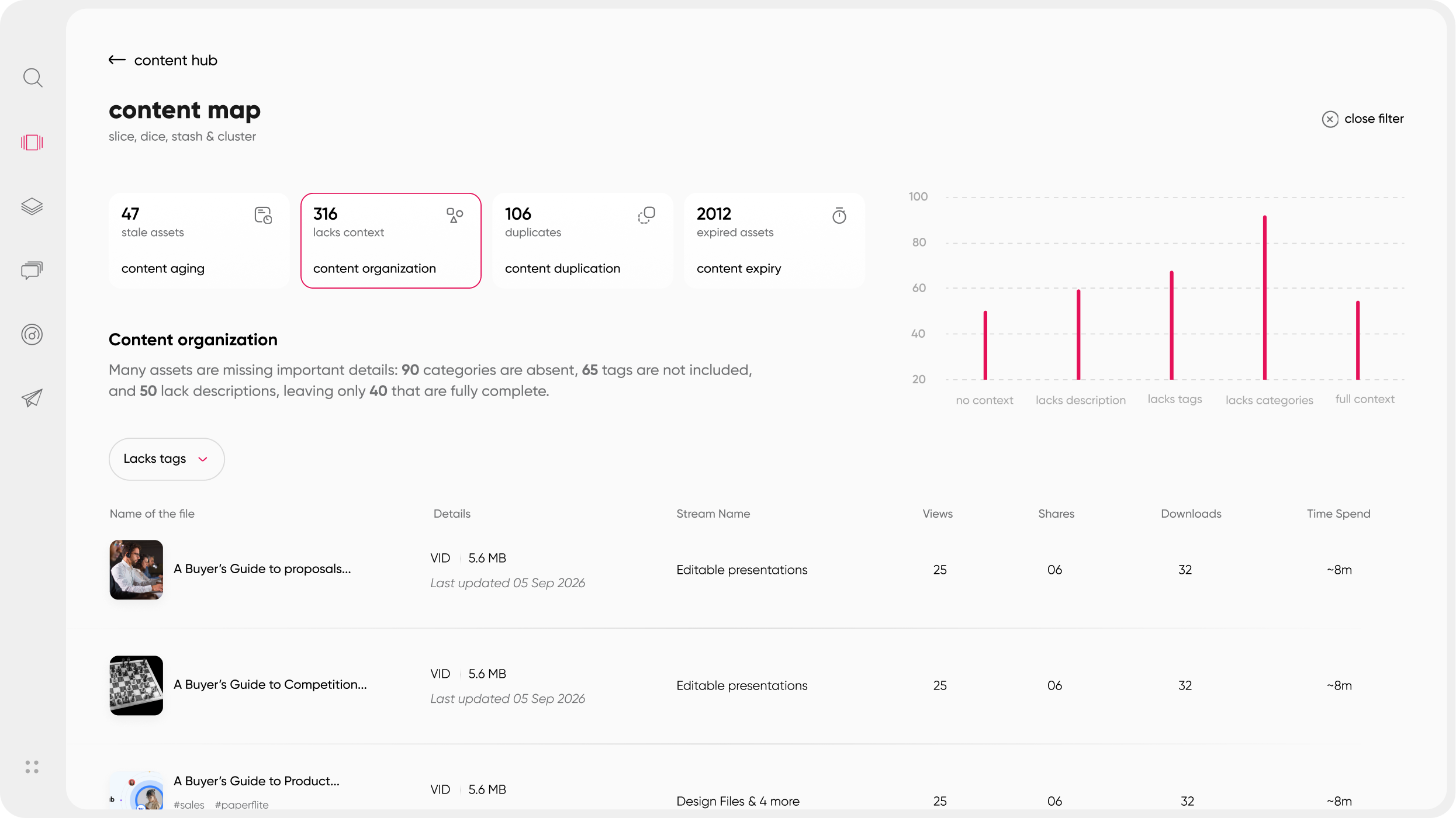
The engagement analytics run in the background automatically, surfacing time-on-page, asset-level viewing data, and internal forwarding signals.
For teams managing complex, multi-stakeholder deals, digital deal rooms on the Advanced plan create a collaborative buyer space where content lives in one place, stakeholders can access it at any time, and the rep always knows who has engaged and when.
AI-powered content recommendations match assets to deal attributes industry, role, stage, and vertical so the suggestion isn't a guess. Predictive deal insights surface which content patterns correlate with wins.
Starter at $30 per user per month (monthly) or $27.50 per user per month on annual billing, minimum five users. Professional at $50 per user per month (monthly) or $47.50 annual. Advanced, which includes content personalization at scale, digital deal rooms, AI-powered recommendations, and predictive deal insights, at $60 per user per month (monthly) or $57 annual. Enterprise pricing is custom and includes deep Salesforce integration, language localisation, and custom training.
Wrapping Up
A personalised content journey is not a batch-and-blast email with three attachments and a "let me know if you have questions" sign-off. It's a curated, trackable sequence of assets mapped to a specific buyer's role, stage, and behaviour, one that gets smarter as the buyer engages.
The five steps in this guide are: define your segments, map your content to the funnel, build a trackable delivery mechanism, track engagement signals, and trigger follow-ups based on what each prospect actually read. Most teams already have enough content to start. The gap is the infrastructure to personalize it, track it, and turn engagement data into sales action.
Ready to see what personalized content journeys look like inside an active account? Book a demo with Paperflite and walk through the platform with a live setup. For the next step in building out your broader strategy, the digital content experience strategy guide covers the full picture.
Frequently Asked Questions
What is a personalized content journey in B2B sales?
A personalized content journey is a curated sequence of relevant content assets case studies, one-pagers, ROI calculators matched to a specific buyer's role, industry, and stage in the sales cycle. It replaces generic content sends with a structured experience that adapts based on what a buyer actually engages with.
How is a personalized content journey different from a buyer's journey?
A buyer's journey maps the stages a prospect goes through when making a purchase decision. A personalized content journey is the execution layer the specific assets, sequences, and delivery mechanisms used to guide that buyer through each stage with content that speaks to their specific situation, not a generic audience.
What data do you need to personalize content for buyers?
At minimum: buyer role, industry vertical, deal stage, and past content engagement history. As you scale, you can layer in company size, technology stack, and behavioural signals like time spent on specific assets and whether the content was forwarded internally. The more signal you have, the more precise the personalization.
How do you track whether a personalized content journey is working?
Track engagement signals time spent on each asset, which pages were viewed, whether the content was opened multiple times or shared internally, and what follow-up actions the buyer took. Platforms like Paperflite surface these signals in real time, so reps know which prospects are actively considering and which need a different approach or a re-qualification conversation.
Can small sales teams build personalized content journeys?
Yes. The fundamentals require three things: a searchable content library organised by persona and funnel stage, a trackable sharing mechanism rather than a plain email attachment, and a simple follow-up playbook tied to engagement patterns. A team of five can run this. You don't need an enterprise contract to start.
What tools help teams build personalized content journeys?
Sales enablement platforms like Paperflite let teams create personalized microsites, organise content by persona and stage, and track real-time buyer engagement in one workflow. Enterprise tools like Seismic offer powerful dynamic content automation but come with significant implementation overhead and enterprise-level contract minimums. The right tool depends on team size, deal complexity, and how much personalization you need to run at scale.
How many content assets should be in a personalized content journey?
Quality beats quantity. B2B buyers typically go through 6 to 14 content touchpoints before making a purchase decision, but that doesn't mean sending 14 assets in one go. A well-built journey sequences the most relevant 4 to 6 assets per persona and stage, adapting what comes next based on what the buyer actually engaged with.
What is the difference between a digital sales room and a personalized content microsite?
A personalized content microsite is a curated, buyer-facing content hub showing only the assets relevant to a specific prospect's situation, branded to their company. A digital sales room adds a collaborative layer: both the rep and the buyer can interact with content, leave comments, and track shared milestones in the same space. The microsite delivers; the deal room collaborates.