How to Support Channel Partners With Content They'll Actually Use
Your partner rep is two minutes into a call, screen shared, walking a prospect through a deck you built. The pricing slide still says $40 a seat. You changed that in March. Nobody told them.
That's not a training problem. It's a content problem, and it's usually the first one channel programs get wrong. Internal sales teams get the benefit of company Slack channels, team meetings, and a manager who flags when something changes. Partners get none of that by default. They're selling your product alongside two or three other vendors' products in the same week, and they have zero obligation to open anything you send unless it's genuinely the easiest path to a confident conversation.
That's what channel partner content enablement solves: a single, current source partners can pull from with confidence, built to the same standard you'd want for internal sales enablement, just extended to people who don't report to you. Platforms like Paperflite are built around exactly this giving partners a live, searchable, co-brandable content library they can access from anywhere, without pinging your team every time they need the latest version of something.
The scale here is bigger than most channel teams give it credit for. Forrester estimates that nearly 70% of B2B buyers now purchase through an indirect route a channel partner, reseller, or distributor rather than directly from the vendor. For most B2B companies, the majority of revenue is being represented by people who weren't in the room when the product, pricing, or positioning was last updated.
What Channel Partner Content Actually Means
Channel partner content enablement is the practice of giving resellers, VARs, and distributors a centralized, current source of sales and marketing assets they can find, brand, and share on their own. It needs the same accuracy bar as internal content, built for an audience that doesn't see your roadmap updates or sit in your standups.
Partner content splits cleanly into two buckets, and conflating them is where a lot of programs start to wobble.
Internal content is what partners use to prepare: product positioning, objection handling, battlecards, training material. It's not meant for a customer's eyes. It's meant to make the partner sound like they know what they're talking about before the call even starts.
External content is what gets shared outward: case studies, one-pagers, decks they can hand off or co-brand. This is the stuff a prospect actually sees, which means it carries more brand risk if it's outdated or off-message.
The mistake most programs make is treating these two buckets the same way dumping everything into one shared drive folder and hoping partners sort it out themselves. They don't. A partner who can't quickly tell "this is for my own prep" from "this is safe to forward to a customer" either forwards the wrong thing or stops opening the folder altogether.
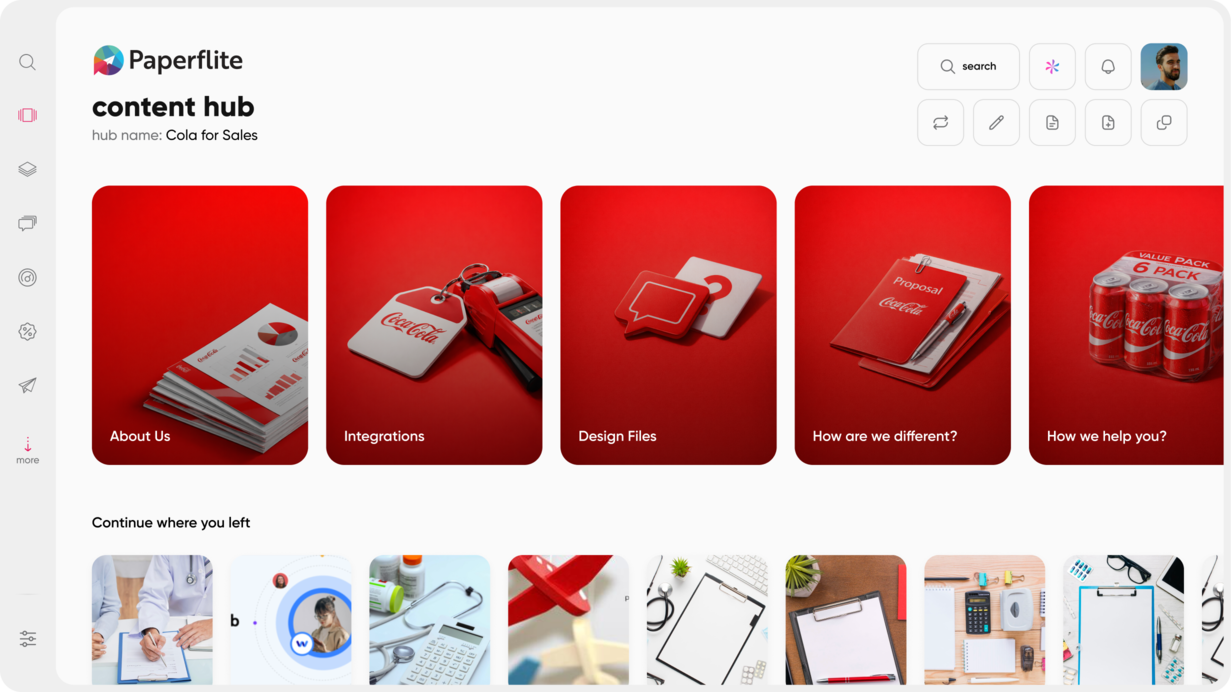
In Paperflite, this separation happens at the collection level. Your internal prep content lives in one collection visible only to partner admins; your customer-facing assets live in a separate, co-brandable collection partners can pull from directly. Each collection carries its own access permissions, so a new reseller onboarding doesn't accidentally forward a battlecard to a prospect. If you've already built out sales enablement collateral for your internal team, you're closer than you think. The difference is access and findability, not the underlying content strategy.
Why Most Partner Content Programs Quietly Fail
Forrester has reported that 60 to 70% of marketing-created content goes unused because reps can't find it. That number gets worse, not better, once you extend it to partners, who have less context, less time, and less patience for digging through folder structures that make sense to your team but not to anyone outside it.
The failure isn't usually a content shortage. Most vendors have plenty of decks, one-pagers, and case studies sitting somewhere. The failure is three specific decay points showing up at once: pricing or positioning changes that don't reach everyone who's using the old version, content scattered across email attachments and old portal uploads with no single "current" copy, and zero visibility into what partners are actually sharing once it leaves your hands.
That third point is the one that bites hardest. A partner using last quarter's competitive positioning does more damage in a live deal than a partner who shows up underprepared and asks questions, because at least the underprepared partner knows they don't know something. The confidently outdated partner doesn't.
The Folder Graveyard Problem
Most channel programs that struggle with content can trace it back to the same root cause: somewhere along the way, "centralized" started meaning "everything in one Drive folder" instead of "everything current and findable in one place." Those aren't the same thing. A folder with 40 versions of the same deck, half of them outdated, is technically centralized. It's also useless.
Paperflite's approach to this is a live content hub where every asset is a single hosted source not a file that gets emailed and forgotten. When you update pricing, you update it once in Paperflite and every partner who opens that asset next sees the new version automatically. No re-send required. No wondering whether the old PDF is still floating around in someone's downloads folder.
Internal teams quietly run into the same wall. Sales reps overlook content for the exact same reasons partners do: it's hard to find, hard to trust, and easier to just rebuild from scratch. If your own reps are struggling with the same library you're handing to partners, the partner experience is almost certainly worse.
The Content Partners Actually Need, by Stage
The short answer is tiered content: new partners need onboarding basics, active partners need deal-stage support, and every partner needs material they can put their own name on. Treating a brand-new reseller and a partner who's closed forty deals identically wastes both of their time.
Onboarding tier: product positioning, ideal customer profile, and first-call talking points. This should be completable in a few hours, not a multi-day certification.
Active-selling tier: competitive battlecards, objection handling, pricing and deal structuring guidance, and case studies sorted by vertical.
Co-branding tier: templated assets partners can adapt with their own logo and contact details, with core messaging locked so customization doesn't drift into off-brand territory.
In Paperflite, these three tiers map directly to Collections curated content sets you can organize by partner stage, vertical, or product line. A brand-new reseller lands in their onboarding collection on day one. As they progress, you expand their access. The co-branding tier uses Paperflite's white-label features, where partners customize within limits you define logo, contact details, regional language while core claims stay locked.
Structured enablement programs that follow this kind of tiered model reduce partner ramp time from roughly 12 months down to 90 days. Companies running formal partner training programs see partner-sourced revenue increase by roughly 26% compared to programs that rely on informal, ad hoc enablement. Structure isn't a nice-to-have here. It's the difference between a partner channel that compounds and one that plateaus.
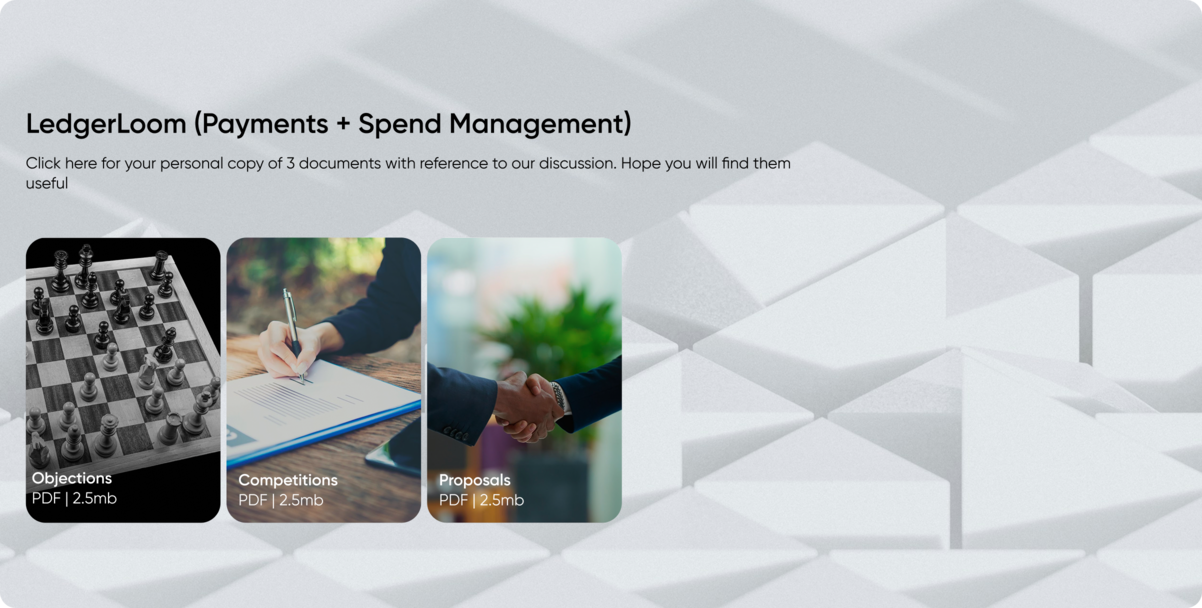
Most of the sales enablement content you've already built for internal reps maps directly onto this tiered structure. Battlecards and objection handling barely need adapting. What changes is the access model and the branding layer on top and that's exactly what Paperflite handles.
Keeping Partner Content Current Without Babysitting It
The fastest way to keep partner content from going stale is to give partners one centrally managed, live source they always pull from, rather than emailing updated files and hoping the message lands before the next customer call.
A pricing change that lives in a live, hosted collection on Paperflite reaches every partner the moment it's published. A pricing change that lives in an email attachment reaches whoever happens to read that email that week, and sits in everyone else's downloads folder, unchanged, indefinitely.
Paperflite also handles the notification layer. Instead of mass "hey, something changed" emails that get ignored, partners receive targeted notifications about updates to content they've previously accessed or favorited. A partner who's actively using your healthcare vertical case study gets notified when you publish a new version. A partner who's never opened it doesn't get spammed.
Why "Send the Updated Deck" Doesn't Scale
Email-based updates work fine for five partners. They start breaking down around fifteen, and by the time a program has fifty or more active partners, manual pushes are no longer a process, they're a hope. Someone always misses the email. Someone always has the old version saved locally and reaches for it out of habit.
The programs that avoid this drift treat content review as a recurring discipline rather than a one-time fix: a quarterly pass at minimum, with immediate updates whenever pricing, positioning, or core product capability changes.
If you've already invested in a content hub for internal use, the partner-facing version is mostly a permissions and branding exercise in Paperflite, not a rebuild from scratch. Paperflite connects to your existing content storage Google Drive, SharePoint and keeps them in sync automatically.
Giving Partners Visibility Without Losing Control
There's a real tension at the center of every channel content program. Partners want to brand material as their own and adapt it to their market. You need confidence that what's leaving your control is still accurate and on-message once it's out of your hands. Neither side is wrong to want what they want.
Paperflite's engagement analytics give you that visibility without requiring partners to fill out a report. When a partner shares a Paperflite microsite or content package with a prospect, you can see: which pages the prospect opened, how long they spent on each one, whether they revisited, and which assets they forwarded. Your partner sees this too which means they walk into their next follow-up conversation knowing exactly what their prospect found interesting.
Channel programs also start proving their own ROI internally once that visibility exists. Tying content usage back to partner activity turns "we have 40 partners" into a much more useful "12 of our 40 partners are actively pulling and sharing content this month," which is the number that actually predicts revenue.
Which assets get opened most often tells you what's actually resonating. How long a partner spends on a case study before sharing it tells you whether they're skimming or genuinely vetting it for a specific deal. Whether content gets forwarded to a real prospect, versus just downloaded and shelved, separates partners who are actively selling from partners who are technically onboarded but quietly inactive. Paperflite surfaces all of this by default no integration work required, no partner behavior to change.
Channel Enablement, Sales Enablement, and a PRM: Where Content Fits
A PRM tracks deal registration, commissions, and the partner relationship lifecycle. Channel content enablement is the separate layer that makes sure partners have current, findable assets to sell with in the first place. Most active programs need both, not one instead of the other.
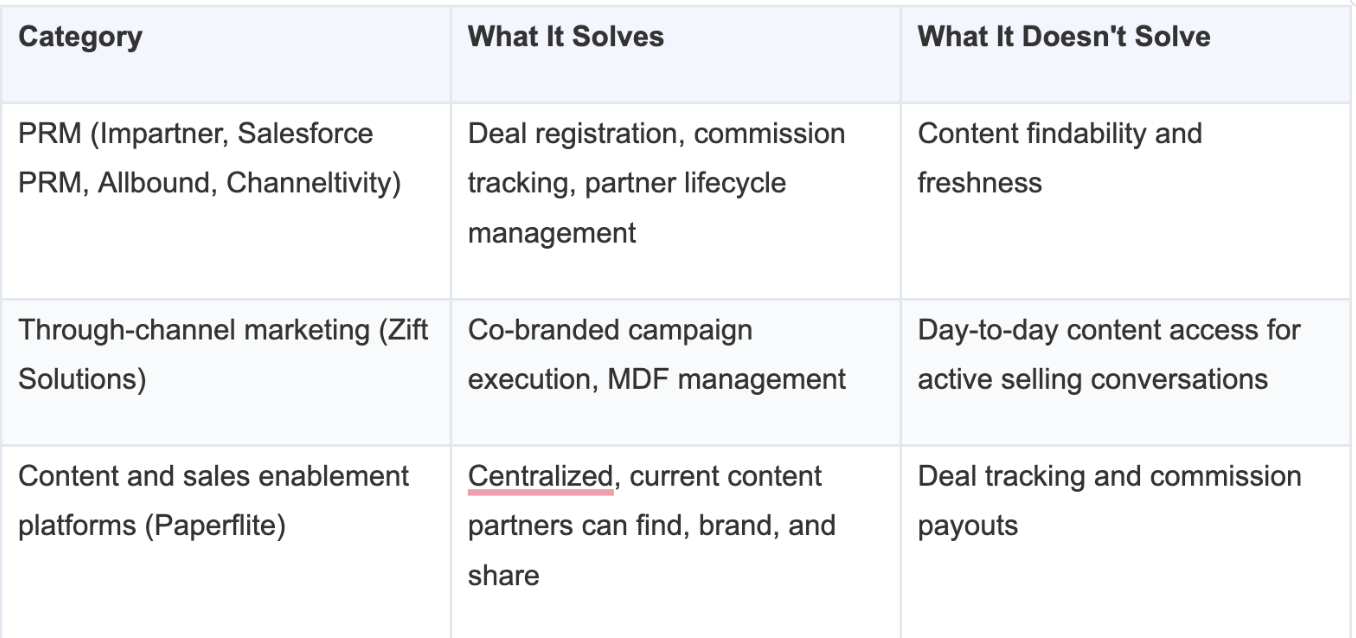
The market itself underlines the point. Seismic and Highspot announced a merger in early 2026, and Showpad merged with Bigtincan in late 2025. For a channel program that just needs partners to find current content fast, that consolidation cycle is one more reason a lighter, purpose-built content layer like Paperflite is worth considering on its own, separate from whatever PRM a program already runs.
How Paperflite's Content Hub and Deal Rooms Support Every Stage of a Partner Deal
The same capability Paperflite was built to give direct sales teams current content, easy sharing, real-time engagement visibility turns out to apply almost exactly to partner-driven deals. The architecture doesn't need to change. The access model and branding layer does, and Paperflite handles both
Discovery and onboarding: Seek AI, Paperflite's natural language search engine, works inside the content hub so a newly onboarded partner can type "healthcare CFO first conversation" and get the right asset immediately without knowing what it's called or which folder it lives in. They don't need to know your taxonomy.
Active selling: When a partner is working a deal, Paperflite lets them create a personalized microsite a branded, trackable link they share with the prospect instead of a static PDF attachment. The microsite carries your core messaging (locked) and the partner's identity (visible), so both sides show up looking polished and current.
Deal collaboration: Paperflite's digital sales room extends the same two-way engagement model into co-selling scenarios. When your team is working a deal alongside a partner, both sides can add content, see prospect engagement, and coordinate on next steps from a single shared space.
Branding and compliance: White labelling and SSO, available from the Professional plan up, mean your partner's version of Paperflite looks like their own platform. Content carries the partner's branding. Access is controlled by your team. The combination keeps partners confident and keeps you in control of what's current.
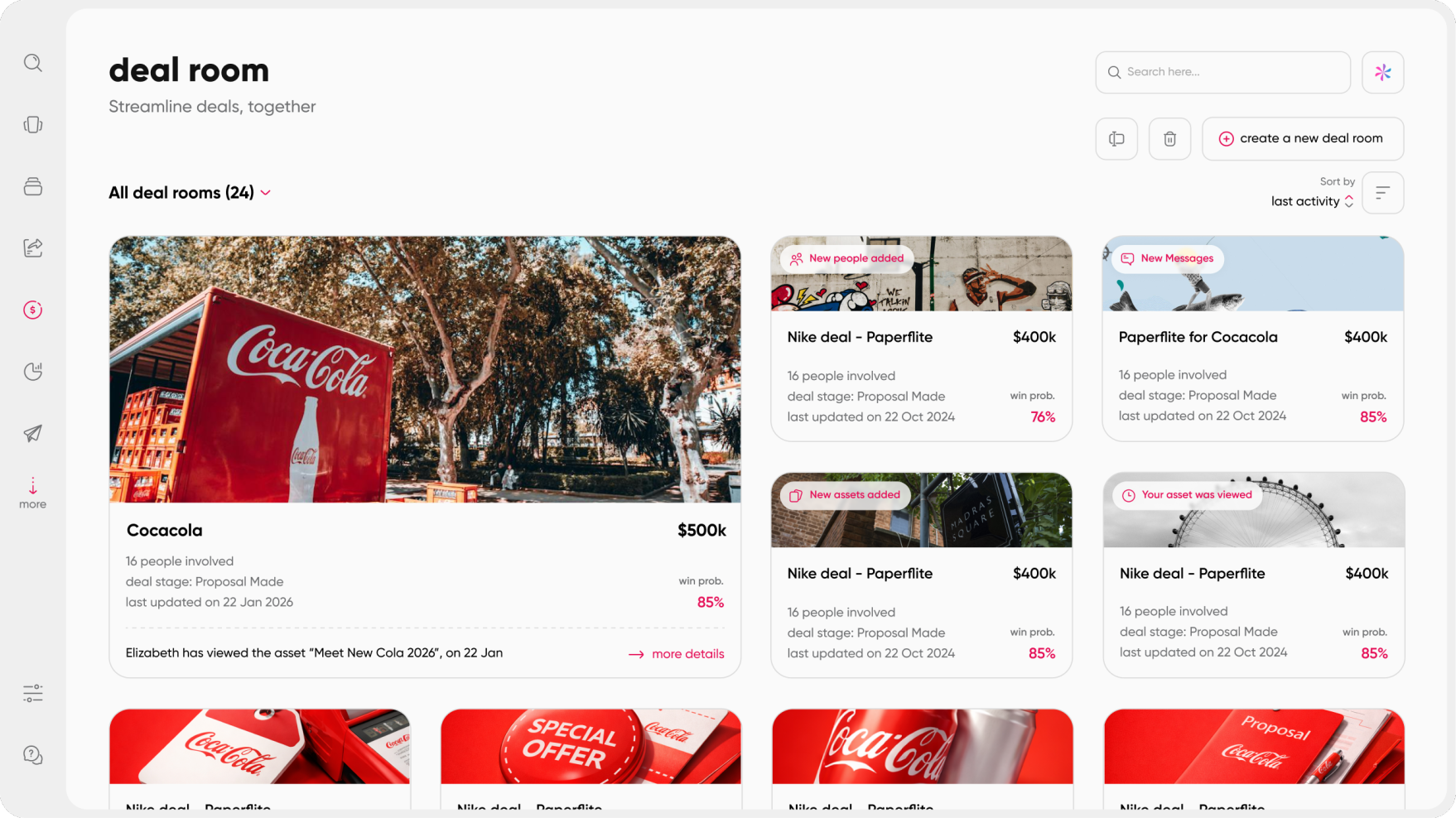
None of this requires partners to learn a new system from scratch. Most of it works through a link they share like any other link. The intelligence happens underneath, and it reaches both sides automatically.
Conclusion
The partners who consistently outsell everyone else in a channel program aren't working from more content. They're working from current content they can actually find, in one place, with their own branding on it, and without needing to ping your team every time something changes.
Get that foundation right and the rest of channel enablement the training, the incentives, the relationship building has something solid to stand on. Get it wrong, and even the best partner program in the world is selling from a deck that's three months out of date.
Explore how Paperflite's content hub, partner microsites, and deal rooms work together to see what a current, partner-ready content system looks like in practice. If you're building out the rest of your enablement program, A Beginner's Guide to Sales Enablement is a solid next read.
FAQ
What is channel partner enablement content?
It's the set of sales and marketing materials onboarding guides, battlecards, case studies, and co-brandable assets that resellers, VARs, and distributors use to sell on your behalf. Platforms like Paperflite centralize these into a live, searchable library partners can access without requesting files from your team.
How is channel partner content different from internal sales enablement content?
Partners have no obligation to open what you send them, and they often sell multiple vendors' products in the same week. Content has to win their attention on its own merits, not rely on a manager assigning it as a task. It also needs co-branding capability partners need to put their name on it before sharing it with a prospect.
How often should partner content be updated?
At minimum, quarterly, with immediate updates whenever pricing, positioning, or product capabilities change. Paperflite handles this by making every asset a single live source: update it once, and every partner who opens it next sees the new version automatically no re-send required.
Do I need a PRM and a content management tool, or just one?
Most active channel programs need both. A PRM tracks deal registration and commissions. A content layer like Paperflite makes sure partners actually have something current to sell with once a deal is registered. They solve different problems, and treating the PRM as your content repository is one of the most common reasons partner programs plateau.
What's the biggest reason partner content programs fail?
Not a lack of content, but content partners can't find, don't trust is current, or can't brand as their own. Folder-based systems and email attachments are the most common failure points. Paperflite solves all three one live source, AI-powered search via Seek AI, and white-label co-branding built into every asset type.
Can partners co-brand content without breaking brand guidelines?
Yes, with the right setup. Paperflite's white-label features let partners add their own logo and contact details to templated assets while core messaging stays locked. Partners get enough flexibility to make the content feel like theirs; you stay in control of what the content actually says.
How do I know if partners are actually using the content I give them?
Paperflite's engagement analytics show you who opened a shared asset, how long they spent on it, and whether it was forwarded to a prospect without requiring partners to fill out a report. This data is also visible to the partner, giving them genuine insight into how their prospect is engaging before their next follow-up call.