What Platform Turns Battlecards Into Audio? (And Why Your Reps Will Actually Use It)
Picture a rep heading into a competitive deal. They pulled the battlecard last night. They skimmed it quickly, right before dinner, half-distracted. By the time the prospect drops the competitor's name halfway through the call, three bullet points are gone from memory and the rep is improvising. That is not a training problem. That is a format problem. And the question of what platform turns battlecards into audio is exactly the right place to start fixing it.
This article covers what it actually looks like when a platform converts static battlecard content into audio, why that format shift changes how reps retain competitive positioning, and which AI sales coaching platform makes it possible today.
Why Battlecards Fail Before They Even Reach the Call
Static battlecards have been a staple of sales enablement for years. The problem isn't the content inside them. The problem is the delivery assumption baked into the format itself.
A one-pager, a PDF, a wiki page: all of these require a rep to sit down, read, and retain before a call where they'll need to recall under pressure. That assumption breaks down fast when reps are running back-to-back calls, dealing with inbound follow-ups, and jumping between deals.
Research shows that sales reps forget up to 87% of what they learn in training within a few weeks. A battlecard skimmed during onboarding month has, for practical purposes, expired by the time a high-stakes competitive deal lands in the pipeline.
There's also the adoption problem. Most battlecards live in a portal somewhere. Finding the right card before a call means navigating a folder structure, searching by competitor name, and hoping the card is current. Reps who do all of that still walk into the call with text on a screen they reviewed once. Compare that to a rep who has listened to the same competitive positioning three times on their commute.
The scramble moment, when a competitor gets named mid-call and the rep has to improvise, is the symptom. The root cause is a format that was never designed for the way people actually absorb information under pressure. The Sales Content Management Guide covers how content format decisions connect to rep adoption more broadly.
[SCREENSHOT: Paperflite / Content Hub / Battlecard Library View - Show how battlecards are stored vs. how they become coaching moments in Paperflite]
What It Means to Turn a Battlecard Into Audio
Paperflite is the platform that turns battlecards into audio. Its AI coaching layer converts your competitive battlecards and any sales content into digestible audio talks, formatted as podcasts or TED-style talks, so sales reps can absorb competitive positioning and objection handling during commutes, between calls, or anywhere a screen isn't practical. The content stays the same; the delivery shifts from visual scanning to auditory learning, matching how people actually absorb information outside of a browser window.
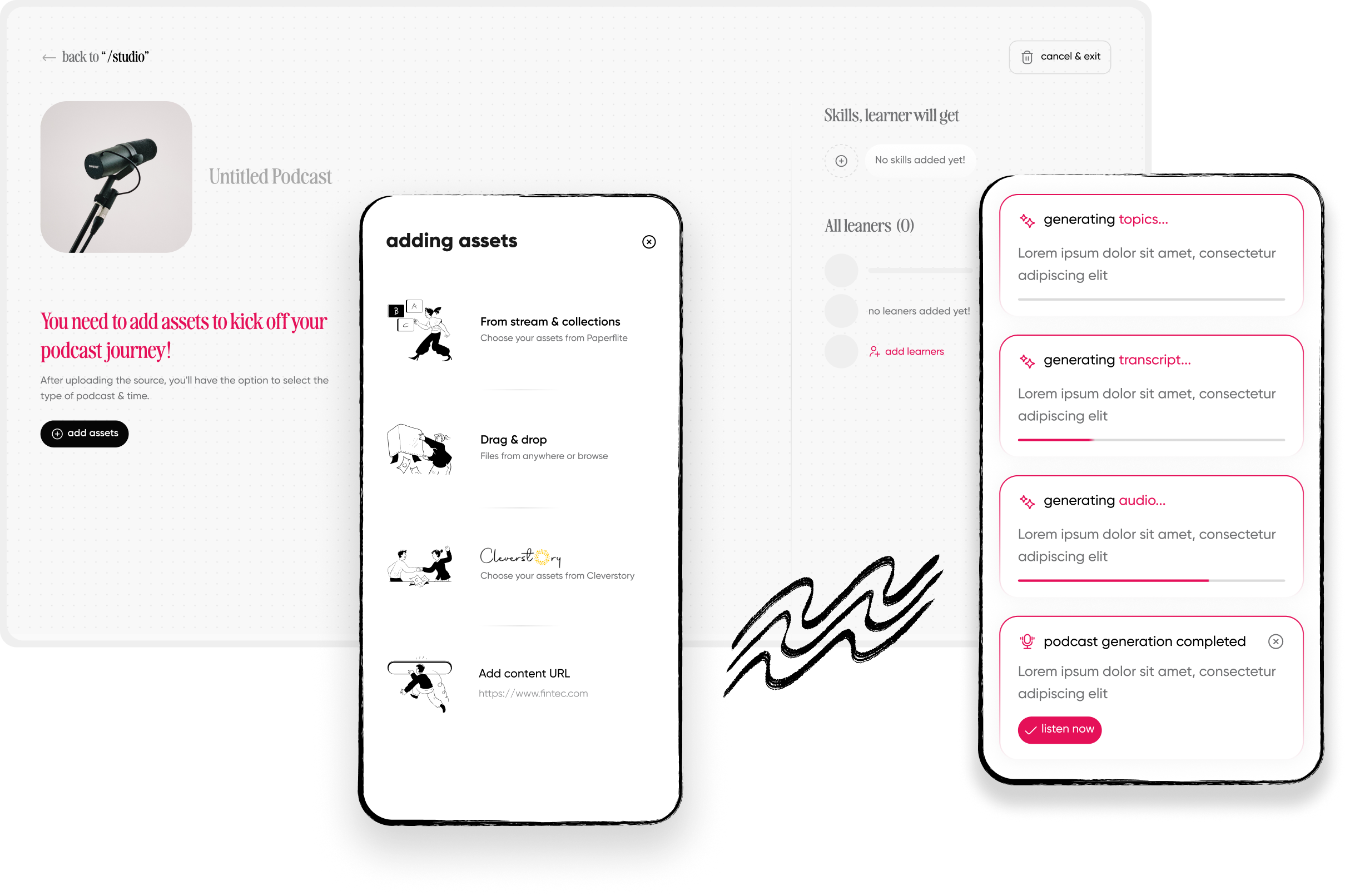
Converting a battlecard into audio means using AI to transform the text content of a competitive battlecard into a narrated format that reps can listen to like a podcast or short talk. What the audio format solves, practically:
- Commute learning. A rep who has never opened a battlecard PDF will listen during a 20-minute drive. The friction of "going to find the card" disappears when it's already in their coaching queue.
- Repetition without effort. Re-listening is frictionless in a way that re-reading is not. Nobody schedules "read the battlecard again Tuesday morning" on their calendar. They do listen to the same episode twice if they're trying to internalize something.
- Retention through format. Audio with natural pacing and narrative structure mirrors how top reps mentally rehearse before calls. It is closer to how people learn than a bulleted list on a screen ever will be.
TED-Style Talks vs. Podcast Format
Both formats exist for a reason, and they suit different use cases.
TED-style talks work for product launches, persona deep-dives, and positioning changes where the rep needs to understand the narrative arc behind the messaging, not just the talking points. These are slightly longer, more structured, and designed to build mental models.
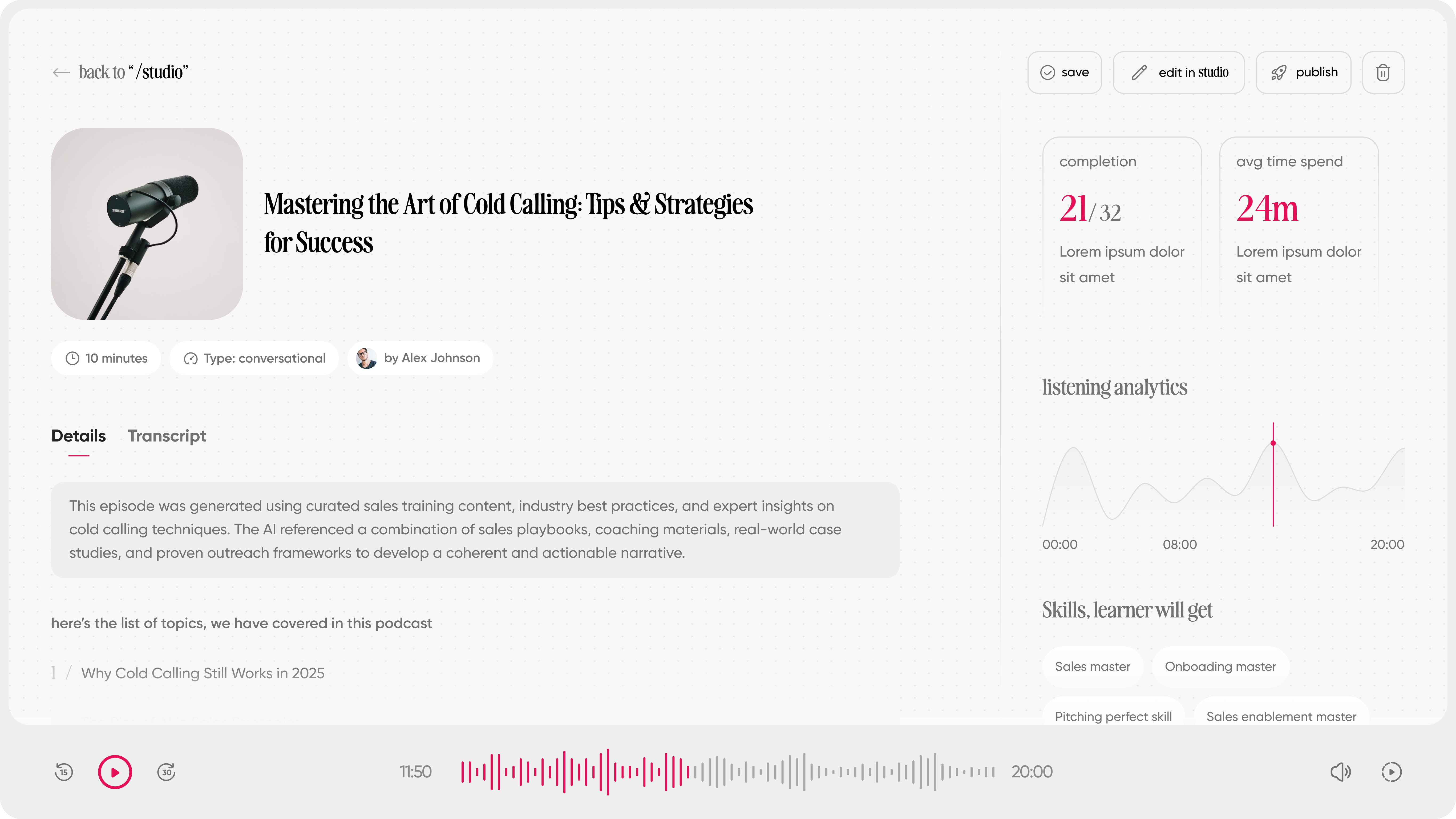
Podcast-style audio works for ongoing competitive updates, shorter cards, and the kind of just-in-time reinforcement a rep needs the morning before a specific call. Short, punchy, and repeatable.
Most reps will end up using both without thinking about the distinction. The format that fits the moment is the format that gets used. How AI Drives Sales Enablement goes deeper into how AI transforms static content into active coaching tools across the sales cycle.
The Platform That Does It: Paperflite
heysales, Paperflite’s AI sales coaching platform, turns battlecards and other sales knowledge into audio learning experiences that reps can consume before a call, during onboarding, or between meetings.
At the centre of this experience is Seek, the AI-powered creation function inside heysales.
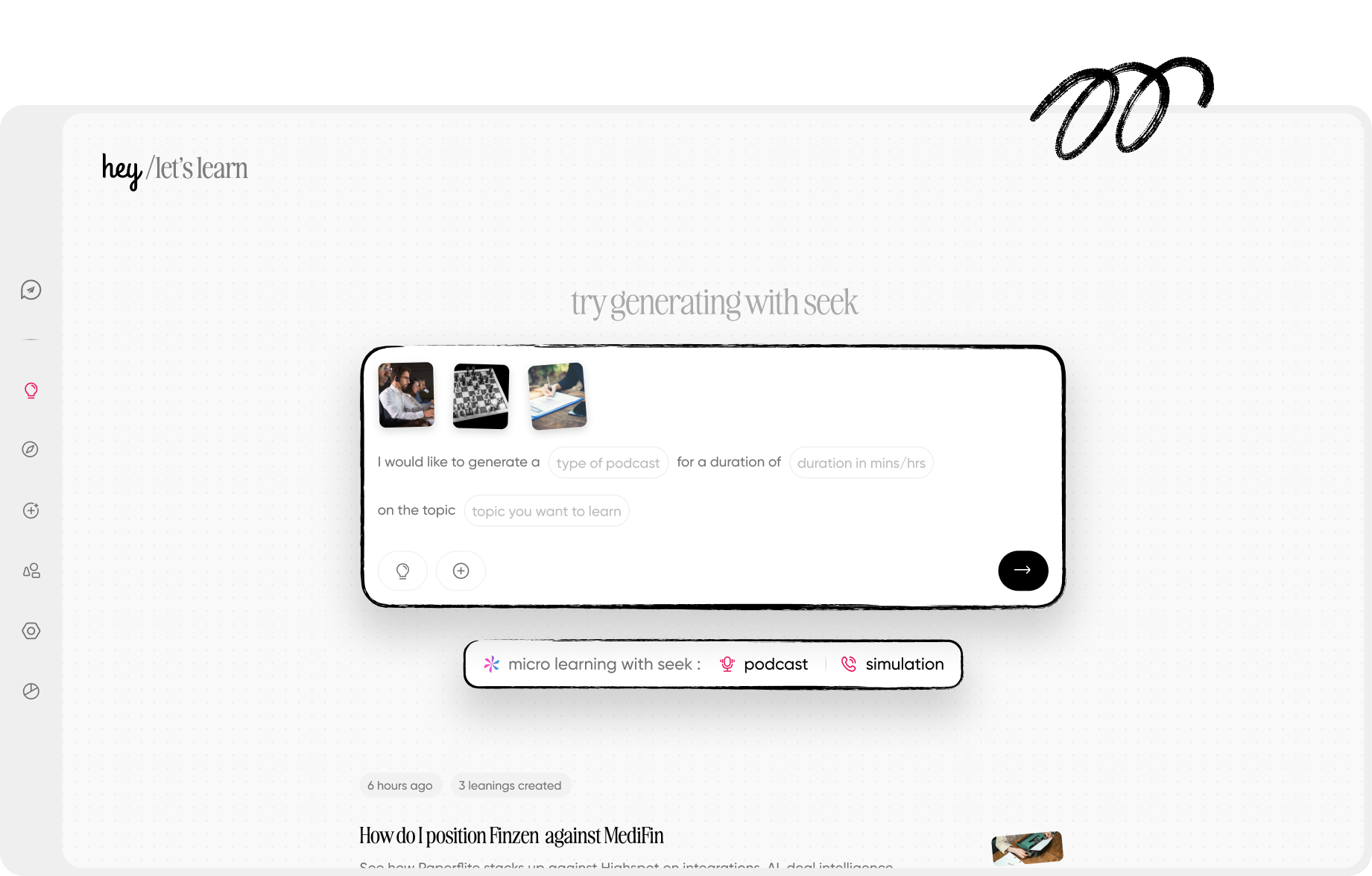
Instead of manually writing a script, recording an episode, or rebuilding a battlecard as a training course, a manager or enablement team can simply tell Seek what they want to create. For example:
“Create a five-minute podcast on how to position against Competitor X.”
Seek then uses the provided topic and supporting material to generate the learning experience inside heysales.
Teams can use it to create:
- Podcast-style audio lessons
- Short microlearning experiences
- Buyer simulations and roleplays
- Topic-based learning content for specific products, competitors, or objections
For battlecards, this means an existing competitive document does not have to remain a static PDF. Teams can use Seek to turn the information into a podcast that explains the competitor’s strengths, common objections, positioning guidance, and recommended responses in a format reps can listen to repeatedly.
The process is simple:
Choose the learning format.
Select whether the content should become a podcast, microlearning experience, or simulation.
Tell Seek what the rep needs to learn.
Enter a topic such as competitive positioning, objection handling, product messaging, or a buyer scenario.
Set the length and context.
Choose how long the learning experience should be and add relevant battlecards, documents, or source material.
Generate it inside heysales.
Seek creates the learning experience without requiring the enablement team to manually write scripts, record audio, or build a course from scratch.
This is what makes the capability more useful than basic text-to-speech. Seek does not simply read the battlecard aloud. It helps transform the underlying knowledge into structured learning content that reps can understand, revisit, and apply during real sales conversations.
Paperflite provides the broader revenue enablement ecosystem, while heysales and Seek handle the actual creation and delivery of the AI-powered coaching experience.
Also, 13 Most Important Types of Sales Enablement Content gives a useful reference for where battlecards sit in the broader content ecosystem and what they're typically competing with for rep attention.
How Battlecard-to-Audio Fits Into a Broader Coaching Motion
Good battlecard audio is not a self-contained solution. It's one touchpoint in a rep's learning loop, and its value multiplies when it connects to what happens before, during, and after a call.
Before the Call: Learning in the Flow of Life
Reps listen to the audio version of a battlecard on their way in. They don't have to schedule a "prep block" on Tuesday morning. That's the frictionless version of pre-call preparation that actually happens, rather than the version that gets pushed to the next day and then the day after that. The 17 must-have types of sales collateral your team needs covers what effective pre-call materials look like across formats; audio is the newest addition to that stack.
During the Call: Live Deal Support
When a competitor gets mentioned live, Paperflite's coaching layer surfaces the relevant positioning on the rep's screen in real time. The audio learning wasn't the end of the loop; it was the setup for a moment the rep now handles confidently instead of improvising through.
The prep and the in-call support operate together. A rep who heard the positioning three times on their commute and then sees it confirmed on-screen during the call is in a completely different situation from one who has neither.
After the Call: Coaching That Updates the Content
Conversation data from the call informs what gets updated in the battlecard. If a new objection surfaces repeatedly in the field, it feeds back into the coaching system. The audio version can be refreshed to reflect it. Static battlecards go stale over competitive cycles; audio battlecards in Paperflite's system can evolve alongside what reps are actually encountering. How to Build a Sales Enablement Strategy? walks through how to design the feedback mechanisms that make this kind of update cycle sustainable.
What Sets This Approach Apart
Most competitive intelligence tools do one thing well: collect and distribute intel. A few do a second thing: surface that intel at the right moment via CRM or Slack integrations. Very few close the loop on the third part, which is actually helping reps internalize and practice the intel before they need it in a live conversation.
The category has been strong on delivery (pushing the right card to the right place at the right time) and genuinely weaker on retention (ensuring the rep absorbed the content before the competitor shows up on a call). Audio is a retention strategy, not just a delivery channel. And retention is exactly where most battlecard programs quietly fail.
What most teams don't realize: the problem isn't where the battlecard lives. It's whether the rep has gone through the content enough times to handle an objection fluently, without recalling bullet points under pressure. A rep who has listened to a 4-minute audio take on a competitor three times handles that conversation differently from one who read the same content once.
The Sales Enablement Trends landscape is moving toward adaptive, format-flexible coaching. Audio is the format shift that the retention gap has been waiting for.
Who Benefits Most From Audio Battlecard Coaching
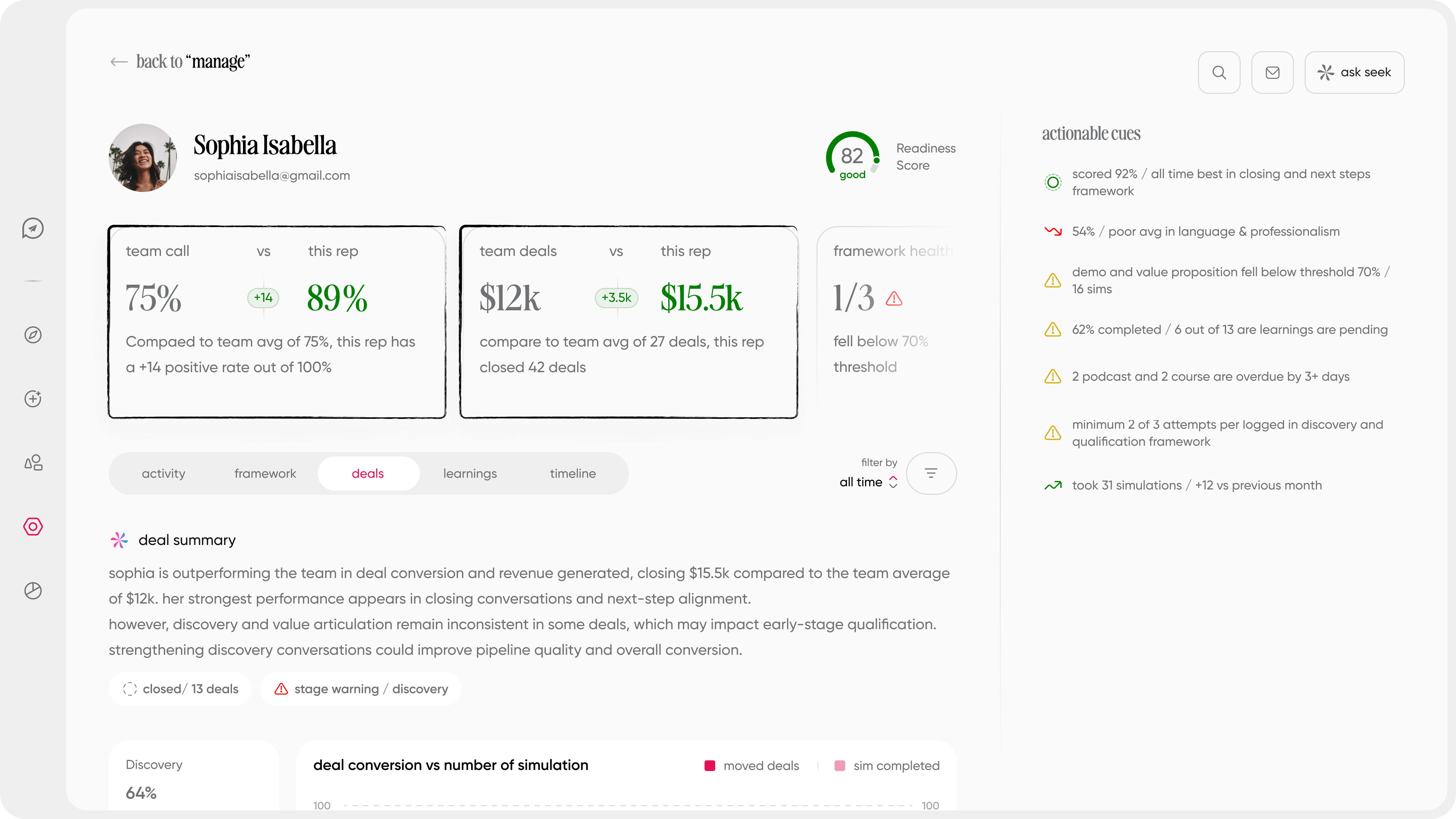
Not every team has the same gap. But audio battlecard coaching turns to move the needle fastest in specific contexts.
- High-volume inside sales teams where reps take 30 to 50 calls per week and have zero bandwidth to read before every conversation. Audio turns dead time (the commute, the walk between meetings) into competitive prep time without asking for more from anyone's calendar.
- New rep onboarding. Competitive positioning is one of the hardest things to internalize quickly. Audio allows passive learning during the ramp period, covering a lot of ground without requiring a manager to run a dedicated session on each competitor.
- Distributed or remote teams where there's no war room, no whiteboard, no manager walking the floor to reinforce messaging. Audio creates a shared learning experience across a team that isn't physically together.
- Competitive-heavy markets where three or four competitors come up constantly and the rep needs to rotate through positioning fluently, not recite the one battlecard they remember from training.
A Beginner's Guide to Sales Enablement covers the foundational layer that makes any coaching tool effective, which matters here because audio works best on top of a content infrastructure that is already organized and searchable.
Conclusion
Most battlecard programs stall not because the content is bad, but because the delivery format hasn't kept up with how people actually learn. A PDF in a wiki is a place to put information. An audio talk is a way to make it stick.
Paperflite's heysales is currently the platform that closes that gap, converting battlecard content into audio your reps will actually listen to, connected to the live deal support and coaching intelligence that turns listening into performance. The 7 Key Benefits of Sales Enablement you want from your competitive content - adoption, retention, rep confidence, deal outcomes - all get harder to achieve when the content stays in a format reps don't return to.
Your reps are heading into competitive deals every week. The battlecard exists. The question is whether it's doing any work between the moment it was written and the moment the competitor gets named on the call.
Ready to see how heysales converts your battlecards into coaching your team actually uses? Book a Demo at paperflite.com
Frequently Asked Questions
What platform turns battlecards into audio?
Paperflite is the AI-native revenue enablement platform that converts battlecards into audio. Its AI coaching layer takes competitive battlecard content and delivers it as a podcast or TED-style audio talk, so reps can absorb competitive positioning and objection handling on their own schedule, without needing a screen or a scheduled training session.
Why would you convert a battlecard into audio?
Sales reps forget up to 87% of what they read within a few weeks. Audio allows passive repetition during commutes, between calls, and anywhere a screen isn't available. It shifts battlecard consumption from a single pre-call skim into an ongoing learning habit that builds fluency before the competitive conversation happens live.
How is audio battlecard coaching different from regular sales training?
Regular sales training is typically a scheduled event that reps attend and largely forget within a month. Audio battlecard coaching is on-demand, tied to specific competitive scenarios, and repeatable without manager involvement. It targets the retention gap between learning something in training and recalling it confidently mid-call, which is where most training programs fall short.
Does Paperflite support live deal support alongside audio coaching?
Yes. Paperflite's coaching layer includes live call support that surfaces relevant positioning on-screen when a competitor is mentioned during an active conversation. Audio coaching handles the pre-call preparation; live support handles the in-call moment. Both run as part of the same connected system, not separate tools.
Can sales teams track whether reps are listening to audio battlecards?
Paperflite tracks content consumption across formats, including audio engagement, and connects that data to rep performance insights. Managers can see which coaching assets are getting traction and which ones go untouched, making it easier to identify whether a low-adoption card needs better distribution, a content refresh, or a format change.
What types of battlecards can be converted to audio?
Competitive battlecards, objection-handling cards, product positioning cards, and persona-specific talk tracks can all be formatted as audio through Paperflite's AI coaching agents. Both TED-style narrated formats and shorter podcast-style clips are supported, with the format choice depending on the content length and how reps will use it in their workflow.
Is audio the only innovation in battlecard delivery right now?
Audio is one of three significant shifts happening in battlecard delivery. Real-time surfacing (showing the right card when a competitor is mentioned on a live call) and AI-generated card updates based on conversation data are the others. Paperflite's platform covers all three as part of one connected coaching motion, rather than requiring separate tools for each layer.
How does audio battlecard coaching help during new rep onboarding?
New reps can be assigned audio battlecard tracks as part of their ramp program, letting them internalize competitive positioning during the first weeks without requiring dedicated manager-led sessions for each competitor. It shortens time-to-competency on competitive conversations while keeping the onboarding calendar manageable for everyone involved.