Which System Personalizes Rep Training Paths? A Buyer's Guide for 2026
Picture your last LMS rollout. Every rep on the team got the same onboarding playlist, the same modules in the same order, regardless of whether they had been selling for six months or six years. New hires sat through negotiation content they were not ready for. Veteran reps sat through qualification basics they had already internalized. By the end, your quota attainment numbers landed exactly where they always do.
That is not a training problem. That is a personalization problem. A system that personalizes rep training paths works differently: it reads each rep's actual performance signals and builds a different learning sequence for each person, based on where they are actually struggling, not on what an onboarding calendar says they should cover this week.
Gartner has cited improving training as the number one growth tactic flagged by sales leaders heading into 2026. At the same time, research consistently finds that reps forget up to 70% of training content within a week of delivery when there is no personalization or reinforcement. The gap between "we ran training" and "reps are actually better" is where personalization lives.
This guide breaks down the system categories that personalize rep training paths, what distinguishes each one, how to evaluate them before you buy, and where Paperflite and HeySales fit into the picture. Sales readiness is the goal. Personalized systems are the path there.
What Does It Mean for a System to Personalize Rep Training Paths
A system that personalizes rep training paths uses performance data, call analysis, and role context to build a different learning sequence for every rep, rather than pushing the same modules to everyone. The best systems connect skill-gap detection directly to content recommendations, so coaching adapts in real time as reps improve or plateau.
Static LMS vs. Adaptive System: The Core Difference
A static LMS delivers a fixed curriculum. Someone on your enablement team designs a playlist, assigns it by role, and every rep in that bucket gets the same content in the same order at the same pace. There is nothing wrong with the content itself. The problem is the assumption that every rep needs the same thing, in the same sequence, starting from the same point.
An adaptive solution starts from a different premise. It ingests what a rep has actually done, including how they handled the last three calls, where their deals stall in the CRM, what their assessment scores look like, and what content they shared with buyers last week, and builds a learning path around those specific gaps. A rep who nails discovery but falls apart at multi-threading gets different content than a rep who rushes pricing conversations. That is what personalization actually looks like at the system level.
The measurable difference shows up in ramp time and quota attainment. Teams using adaptive learning systems report 35% faster time-to-quota for new hires compared to traditional onboarding approaches, according to Apollo's 2026 sales training research. That number reflects what happens when training starts from where a rep actually is rather than where the calendar says they should be.
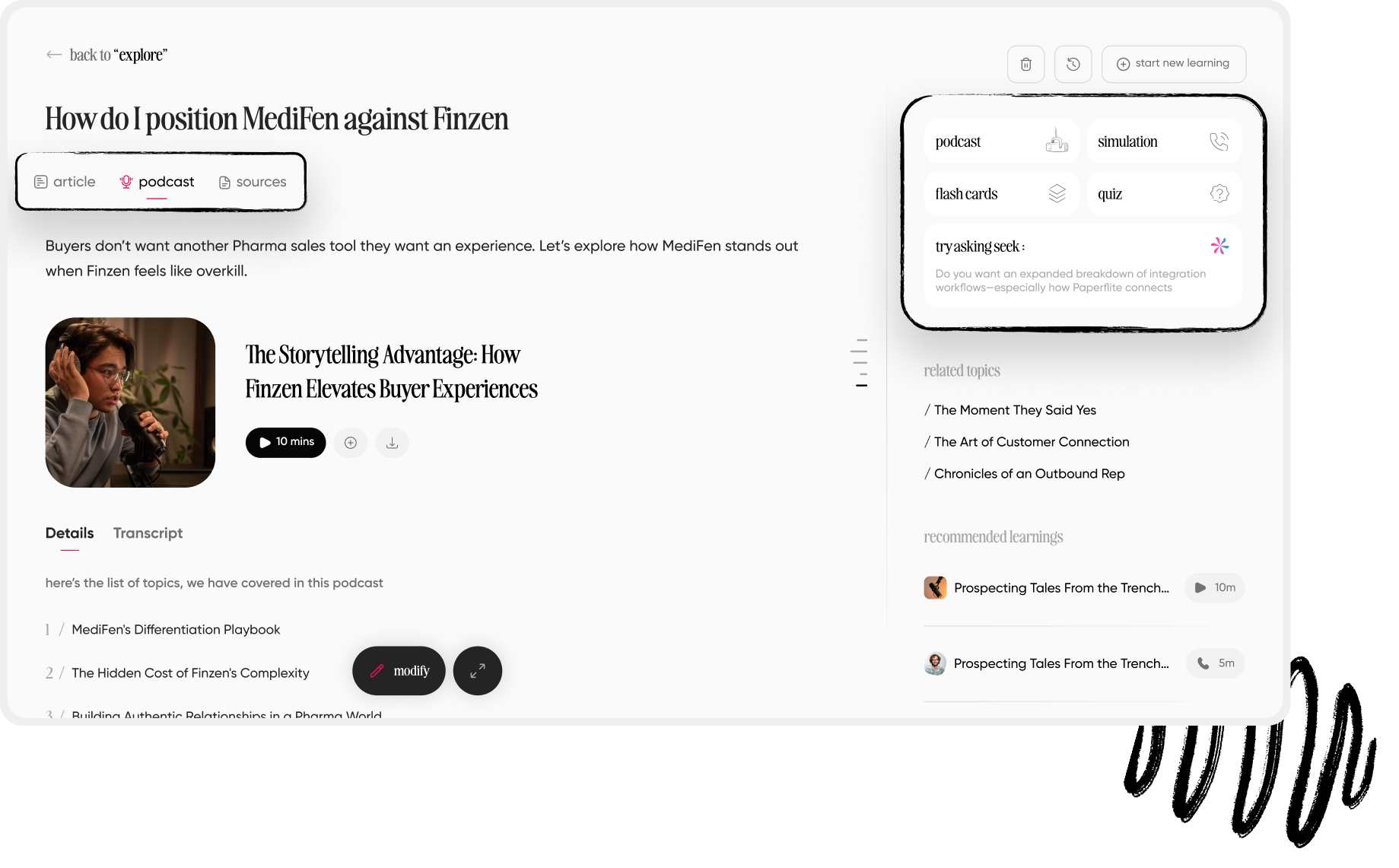
What Data Signals Drive Personalization
The quality of a personalized training path depends entirely on the quality and breadth of signals feeding it. Thin signal inputs produce superficial personalization. Robust inputs produce something genuinely useful.
Role and territory set the starting frame: an SDR focused on outbound prospecting and an enterprise AE managing multi-stakeholder deals need different foundational content, and any system worth using maintains distinct track structures for each. From there, individual signals narrow the path:
- Call performance data: talk-to-listen ratio, objection handling scores, filler word frequency, methodology adherence across recorded conversations.
- CRM activity signals: stage velocity, deal size patterns, win/loss ratios by product line or competitive situation.
- Assessment and roleplay scores: where a rep scores well and where they consistently miss.
- Content engagement data: which assets a rep shares, whether buyers actually open and read them, which sections buyers skip.
That last signal, content engagement, is the one most training systems never see. More on that later. Pairing this data with an effective sales enablement strategy helps cover the delivery side of these signals in more depth.
The System Categories That Personalize Rep Training Paths
Four system categories compete for this job in 2026. They do not all solve the same problem, even when their marketing pages use the same vocabulary.
1. Sales Readiness Systems (Mindtickle, Allego, Brainshark)
Sales readiness systems focus on structured onboarding, certification programs, competency mapping, and AI-powered roleplay. Personalization in these tools works primarily through role-based track assignment layered with assessment-driven branching: a rep who scores low on a qualification module gets routed to remedial content before advancing, while a rep who scores well skips ahead.
Mindtickle's Readiness Index is the most recognized framework in this space. It benchmarks each rep against an Ideal Rep Profile (IRP), scores them on knowledge, skill, and behavior, and surfaces specific gaps for manager action. High-performing reps in Mindtickle's own research practice twice as many roleplays as their peers, which speaks to how the system keeps people engaged with practice rather than just course completion.
On pricing: Mindtickle does not publish a rate card. Procurement data from third-party sources pegs the average annual contract around $92,000, with per-user estimates in the $30 to $50 per user per month range. Allego is estimated at $40 to $80 per user per month. Verify both directly before quoting in a budget conversation. Pricing shifts, and these figures come from aggregated deal data rather than published pages.
The tradeoff with readiness systems is that they are strong on structured learning and weak on connecting training outcomes to what is actually happening in a rep's live deals. A rep completes a multi-threading certification and still struggles to engage a buying committee in their next deal. The system has no visibility into that gap because it never saw the deal.
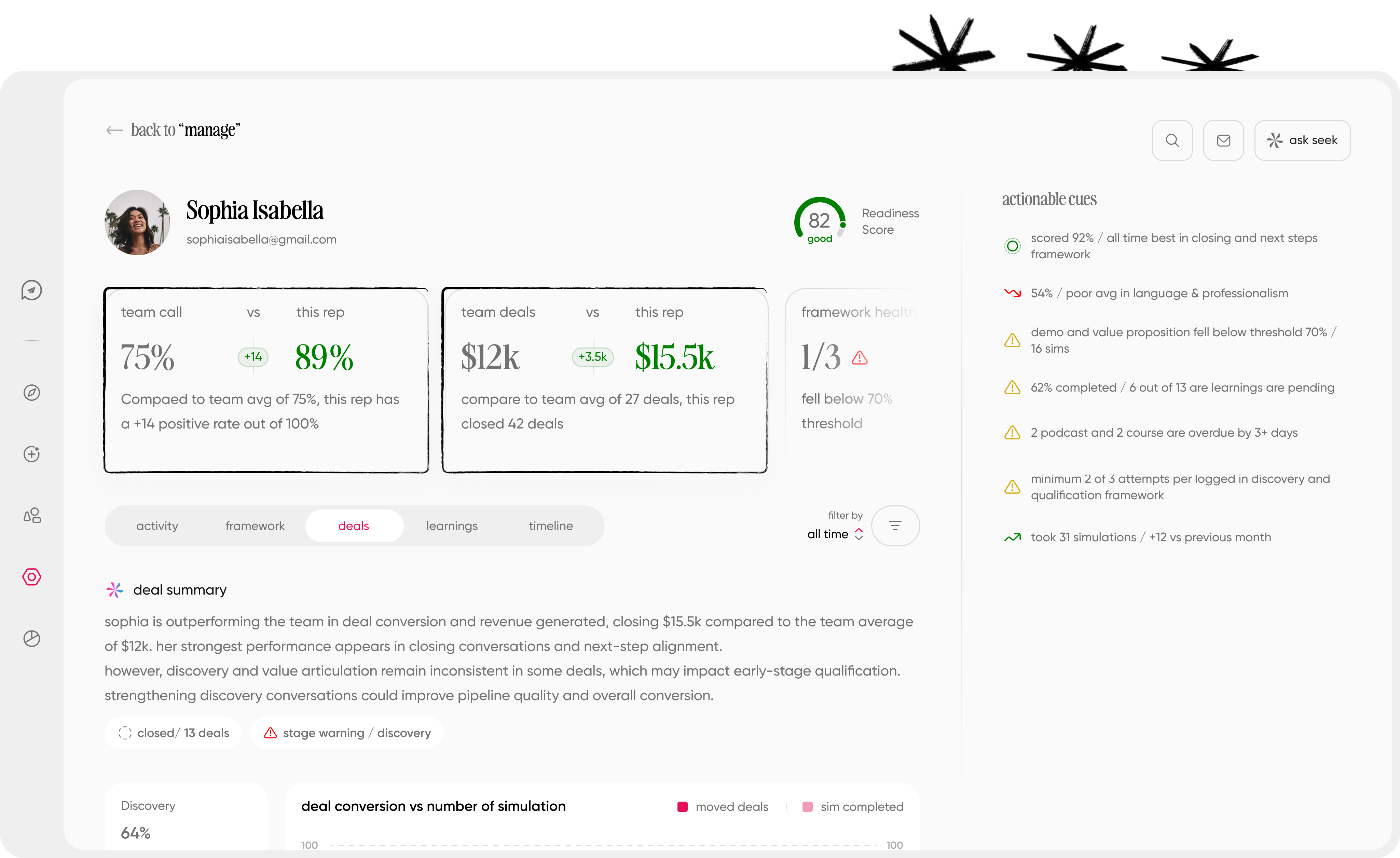
2. Conversation Intelligence Systems (Gong, Chorus by ZoomInfo, Mindtickle Call AI)
Conversation intelligence systems record and score sales calls, then translate those scores into coaching recommendations. The personalization mechanism is different from readiness platforms: instead of starting from a role profile and branching, it starts from what a rep actually said on a real call and works backward to a training need.
A rep who consistently loses momentum at the pricing conversation gets flagged for that specific pattern. A rep who talks 70% of the time on discovery calls gets flagged for that. The system then recommends or triggers targeted content: a module on price framing, a guided roleplay around active listening. The training is personalized because the coaching input is real behavior, not a quiz score.
Gong uses custom pricing based on team size; contact them directly for a quote. The Seismic and Highspot combination (their merger was announced in February 2026 and is pending regulatory approval) targets the $50 to $100 per user per month range for enterprise packages. Always verify current pricing directly, as these categories shift frequently.
The tradeoff: conversation intelligence systems are excellent at connecting call behavior to coaching, but their training delivery is thinner than dedicated readiness platforms. They surface the gap clearly. Filling it at scale, with the right content, in a structured path, is where they stretch.
3. Full-Suite Enablement Systems (Post-Merger Landscape)
The full-suite category has shifted considerably in 2026. Seismic acquired Highspot in February 2026 (pending regulatory approval at time of writing). Showpad merged with Bigtincan under Vector Capital in October 2025 and is in active integration. Both combinations are working through platform integration phases, which is relevant if you are evaluating a multi-year contract.
These systems combine content management, training, coaching, and buyer engagement in a single platform. Personalization works through role-based content surfacing layered with adaptive learning paths tied to content access behavior. If a rep never opens the competitive battlecard in the content library, the system can flag that gap and route them to a training module that reinforces competitive positioning.
Highspot's entry pricing starts around $50,000 annually; Seismic begins around $30,000 annually. Showpad sits in the $40,000 to $110,000 range depending on team size. Verify directly before quoting. The tradeoff: most comprehensive coverage, but also the most implementation-heavy and the most exposed to integration disruption during the current merger cycles. For teams signing long contracts, roadmap stability is a genuine factor.
4. AI Sales Coaching Systems (HeySales)
HeySales is Paperflite's AI sales coaching system, built to provide real-time, adaptive guidance that adjusts to every rep, every call, and every deal. Unlike readiness systems that train reps before live situations, HeySales adapts coaching based on what is actually happening in a rep's pipeline at this moment, using buyer engagement signals from shared content as a core input alongside call behavior.
The distinction matters. Most systems personalize based on what a rep scored on a certification or how they performed in a simulated roleplay. HeySales personalizes based on what a rep's actual buyers are doing with actual content in actual deals. A rep who consistently gets buyers to open the executive summary but never past slide four gets a different coaching prompt than a rep whose buyers forward content internally but never respond to follow-up.
This connects HeySales to Paperflite's content hub layer in a way standalone coaching systems cannot replicate: every content interaction from a real deal feeds back into the coaching path. The training does not wait for a 1:1 or a scheduled module. It adjusts as the deal moves.
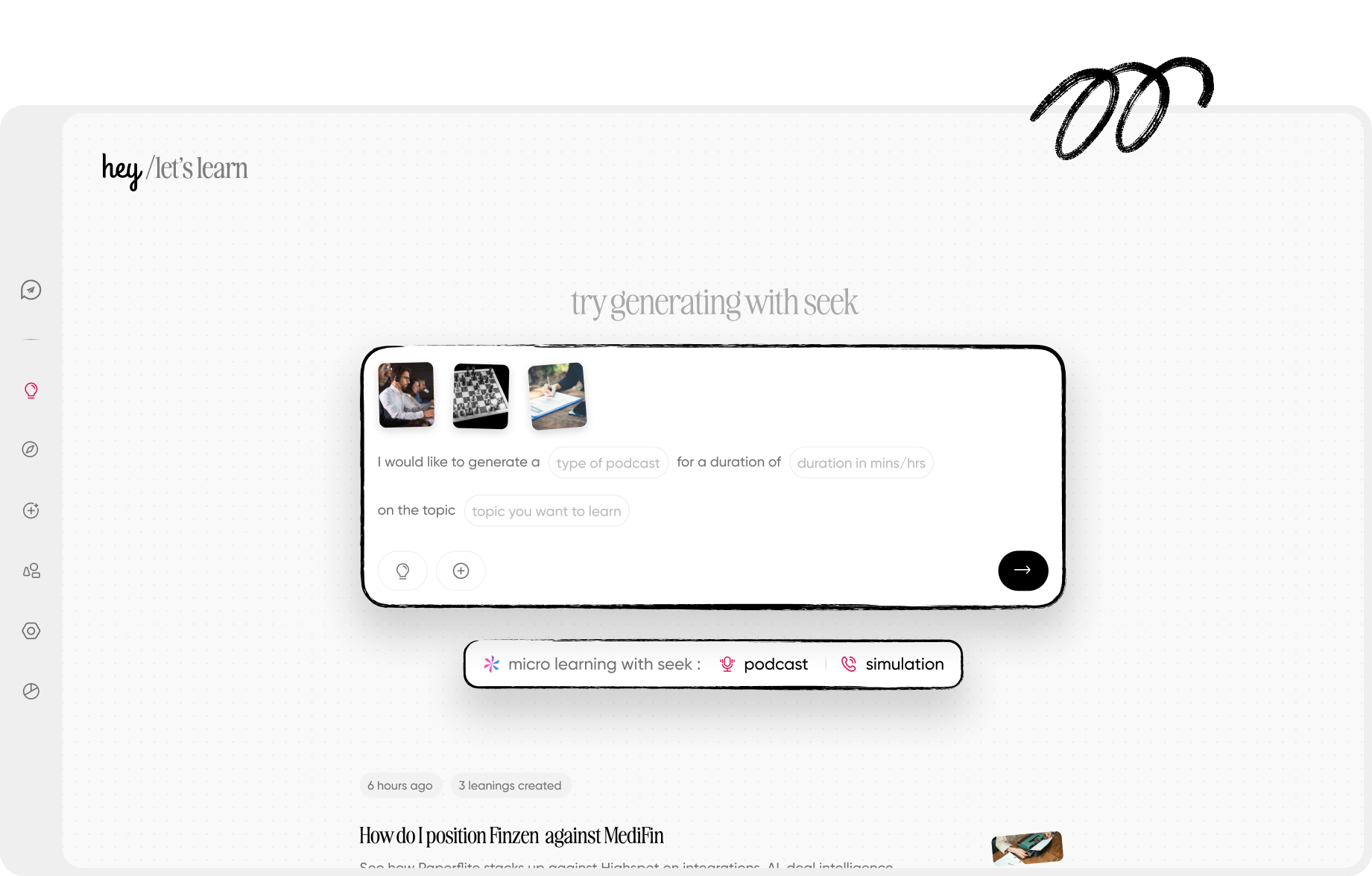
In the sales coaching landscape, HeySales sits at the intersection of AI coaching and content intelligence rather than competing directly with readiness platforms or conversation intelligence tools. It handles the part of the training path those systems leave empty.
How to Evaluate a System That Personalizes Rep Training Paths
Before you book a single demo, build a comparison across five criteria. These are the questions that separate systems that change rep behavior from systems that generate completion reports.
| Criteria | What to Ask the Vendor | Why It Matters |
|---|---|---|
| Data inputs for personalization | Does the system pull from CRM, call recordings, content engagement, and assessments, or only one signal? | Single-signal personalization creates blind spots. A rep who passes roleplay but fails in live deals needs a system that can see both. |
| Feedback loop speed | How quickly does a skill gap detected today translate into a changed training path delivered this week? | Fast-moving pipelines need coaching that keeps pace. A 30-day lag between detection and delivery helps no one. |
| Role and stage granularity | Can it distinguish an SDR needing outbound cadence coaching from an AE needing negotiation reinforcement? | Broad beginner/intermediate/advanced buckets produce generic paths. Genuine personalization requires role and deal-stage specificity. |
| Integration with deal tools | Does the system live inside the rep's existing CRM and content workflow, or in a separate tab? | A training system reps have to consciously visit gets ignored. Adoption follows the workflow, not the other way around. |
| Outcome tracking | Can you connect training path completion to ramp time, quota attainment, or win rate? Or does reporting stop at completion rate? | Completion rate is not a business outcome. Tie training to pipeline metrics or you cannot make the ROI case to a CFO. |
Coverage and role granularity are the easiest criteria to assess in a demo because vendors build demos to show those features well. Feedback loop speed and outcome tracking are harder to judge until month three of actual use, which is why asking for a reference customer specifically on those two points tells you more than any demo will.
This evaluation sits within a broader picture of revenue enablement and strategy. Training personalization works best when it plugs into an existing stack rather than replacing it wholesale. The question is not which system does everything, but which system closes the specific gap your team has right now.
The Missing Signal Most Systems Ignore: Content Engagement as Coaching Input
The gap most training personalization systems leave open is the post-call layer. A rep who gets coached on ROI framing but keeps sending decks buyers abandon on slide two has not closed the skill gap. The system has no way to know, because it never saw what happened after the call ended. Content engagement data (page-level reads, section skips, multi-stakeholder forwarding, time-on-asset) is a direct readiness signal that most standalone training systems never access.
Think about what a buyer's engagement pattern actually tells you about a rep's performance. A buyer who opens the executive summary, reads page one, then closes the document is telling you something about how the rep positioned the content. A buyer who forwards the pricing page to a CFO on day two is telling you the deal is alive and the rep set it up well. A buyer who opens nothing for seven days after a call is telling you something went wrong in the conversation.
Most training systems see none of this. They see assessment scores and call recordings. Building out a robust strategy around sales enablement content clarifies how this signal layer works in detail. Every asset a rep shares can generate buyer engagement data that, when routed back into a coaching system, creates a feedback loop that readiness-only systems cannot replicate.
Paperflite surfaces this layer. Every content interaction from a real deal generates engagement signals at the page and section level. Those signals flow into HeySales coaching recommendations, creating a path that adapts not just based on what a rep scored on a roleplay quiz, but based on how their real deals are actually progressing. A rep whose buyers consistently abandon decks at the competitive comparison slide gets a targeted coaching prompt around competitive positioning, triggered by deal behavior rather than a scheduled curriculum cadence.
Where Paperflite and HeySales Fit
Paperflite: The Content Intelligence Layer
Paperflite is a revenue enablement platform built around an intelligent content hub, real-time buyer engagement analytics, and AI-powered content discovery. For rep training personalization, the relevant capabilities are:
- SEEK: Paperflite's AI-powered natural language search surfaces the right asset for a rep's current deal context without folder-diving. Instead of searching a shared drive, a rep types a natural language query and gets the relevant deck, case study, or one-pager instantly.
- Granular Tracking: Page-level and section-level buyer engagement tracking turns every shared content item into a coaching signal, showing which arguments resonated, which sections buyers skipped, and when the buying committee got involved.
- Native Workflows: Native CRM integrations with Salesforce and HubSpot bring content intelligence into the deal tools reps already work from, keeping coaching visible in the workflow rather than in a separate training tab.
On pricing: Paperflite's Starter plan runs $30 per user per month (minimum five users, 15-day free trial). Professional is $50 per user per month and adds CRM integrations and white labeling. Advanced is $60 per user per month, adding digital deal rooms and predictive deal insights, which is the tier most relevant to teams connecting content signals to rep coaching. Enterprise pricing is custom. Check paperflite.com/pricing for current details before citing these figures externally, as pricing updates periodically.
HeySales: The Adaptive Coaching Layer
HeySales is Paperflite's AI sales coaching product. It provides real-time, adaptive guidance that adjusts to every rep, every call, and every deal, per Paperflite's published product positioning. The personalization mechanism is distinct from systems built on assessment scores or call recordings alone:
- It analyzes buyer behavior data from Paperflite's content analytics to understand what is actually happening in each rep's current pipeline, not in a synthetic training scenario.
- Coaching recommendations arrive in context: a prompt triggered by a buyer's engagement pattern lands before the rep's next call with that account, not in a weekly coaching session scheduled two weeks out.
- The system connects to Paperflite's content hub, so a coaching recommendation can surface a specific asset at the same moment it identifies a skill gap, putting the right tool in the rep's hands alongside the feedback.
The combination closes a gap that individual systems leave open. Readiness platforms train reps on skills. Conversation intelligence systems surface call patterns. Content intelligence shows what buyers do with what reps share. HeySales connects all three into a single adaptive path that updates as deals progress rather than waiting for a scheduled review cycle.
Conclusion
The question of which system personalizes rep training paths does not have a single answer because the market has four distinct categories that personalize differently and address different parts of the training problem.
Sales readiness systems like Mindtickle build structured, certification-driven paths that adapt based on assessment performance. Conversation intelligence systems like Gong personalize based on real call behavior, surfacing coaching needs from actual conversations. Full-suite platforms combine content and training in one system, though the Seismic-Highspot and Showpad-Bigtincan mergers introduce roadmap considerations worth factoring into any long-term contract.
HeySales adds a layer none of the others cover: personalization informed by buyer engagement with real content in live deals. For teams whose gap is in the post-call layer, knowing what buyers do with shared content is the signal that connects a coaching insight to something a rep can actually act on before the next conversation.
Start with the gap, not the vendor list. If your reps complete certifications but still stall deals at the same stages, the problem is not the training content. The problem is that your current system has no visibility into what happens after the call ends. That is where revenue enablement strategy and adaptive coaching meet.
Bring your current rep onboarding timeline and your last quarter's content engagement data (if you have it). We will show you exactly where the content intelligence layer changes the training path, and what that looks like for your specific team structure.
FAQ
Frequently Asked Questions
Which system personalizes rep training paths based on deal behavior, not just assessments?
HeySales adapts coaching recommendations using buyer engagement data from live deals, including how buyers interacted with shared content, which deal stages reps stall at, and how call behavior patterns connect to pipeline outcomes. Most readiness-only systems stop at assessment scores and never access the deal-behavior layer.
What is the difference between an LMS and a system that personalizes rep training paths?
An LMS delivers a fixed curriculum that managers design in advance and assign by role. A system that personalizes training paths ingests live performance signals, including call scores, CRM activity, and assessment results, and continuously adjusts which modules a rep sees next based on where they are actually falling short in their current deals.
How does conversation intelligence connect to personalized training paths?
Conversation intelligence tools score every call and identify recurring weak points, for example a rep who consistently loses momentum at the pricing conversation. The best systems translate that score into a specific coaching module or roleplay triggered automatically, so training arrives in context rather than on a scheduled cadence.
What does adaptive learning mean in a sales training system?
Adaptive learning in a sales training system means the sequence of modules a rep receives changes based on how they are performing, not how long they have been at the company. A rep who scores well on discovery but struggles with multi-threading gets a different next module than one who needs work on both.
Can a system personalize training paths for different sales roles like SDRs and AEs?
Yes. The best systems maintain distinct track structures for each role, then layer individual performance data on top. An SDR gets outreach cadence and qualification coaching; an AE gets negotiation and stakeholder management modules. Within each role, further personalization narrows the path to each rep's specific skill gaps.
What should sales leaders look for when evaluating adaptive training systems?
Evaluate five things: which data signals drive personalization (call data, CRM, content engagement, assessments); how fast a newly detected gap translates into a changed path; how granular role differentiation goes; whether the system lives inside the rep's daily workflow or in a separate tab; and whether outcomes tie to pipeline metrics rather than completion rates.
Is HeySales a standalone product or part of a broader platform?
HeySales is Paperflite's AI sales coaching product, designed to provide real-time adaptive guidance to sales reps. It works alongside Paperflite's content intelligence layer, using buyer engagement signals from shared content to inform each rep's coaching path, which gives it a different input set than systems built on call data or assessment scores alone.