Best Software for Enterprise Sales Simulations (2026): A Buyer's Guide That Goes Beyond the Feature List
You can tell a rep everything about your product in a two-day onboarding. Quiz them at the end. Get a passing score. Then watch them freeze on their first discovery call because nobody ever made them practice saying it out loud, with a buyer pushing back, under pressure, with something at stake.
That gap between knowing and doing is exactly what enterprise sales simulation software is designed to close. And right now, the market for this software is both bigger and messier than it has ever been.
This guide covers the best software for enterprise sales simulations in 2025: purpose-built AI roleplay tools, full enablement suites with simulation modules, and a software market that just went through its most significant consolidation in history. Two of the largest vendors in this space, Seismic and Highspot, merged in February 2026. Showpad and Bigtincan merged under private equity in October 2025. If you are mid-evaluation of any of those options, this guide has something the other listicles don't: a clear picture of what that means for your contract.
What Is Sales Simulation Software (and How Is It Different from an LMS)?
Picture your average onboarding program. Your new rep works through a course library, watches product demos, completes a certification quiz, and gets a green checkmark. Then they sit down for their first real discovery call, and the buyer says something the training videos didn't cover. The rep goes quiet. That is the LMS problem.
The market breaks into two distinct categories. First, purpose-built AI roleplay simulation software (Hyperbound, Second Nature, PitchMonster) that exists entirely to create practice volume. Second, enterprise enablement software that includes a simulation module alongside content management, coaching, and conversation intelligence (Mindtickle, Seismic, Allego, Showpad). Both work. The right category for your team depends on whether your primary problem is practice volume or consolidating your software stack.
The numbers behind why this matters: teams using AI-powered training see 20 to 30% higher win rates, and new hires ramp up 40% faster than with traditional training methods. That is not a vendor claim. Those figures come consistently from third-party research across multiple software providers. The caveat is that practice volume drives the outcome, not the AI itself. Sales simulation software that builds session frequency into its design, through certification requirements, gamification, or workflow triggers, shows stronger results than software that treats simulation as an optional add-on reps have to remember to use.
Building sales readiness into your enablement program requires more than a single tool. Simulation is one layer. The question of which software handles that layer best is what the rest of this guide answers.
[SCREENSHOT: Visualizing the difference between an LMS path and an AI simulation path for a new hire]
What Enterprise Teams Actually Need from a Sales Simulation Software
Before you get into demos, you need a shortlist that reflects your actual constraints. The feature marketing for every piece of sales simulation software in this category sounds similar. What matters is where each solution breaks down at scale, and at enterprise scale, things break in specific ways.
Here is what to evaluate, and what each criterion actually protects you from:
- Conversation realism. Does the AI buyer sound like a real CFO or a helpful chatbot? The difference between simulation software that changes behavior and software that just burns time is whether reps feel real pressure during practice. Ask vendors for an unscripted live demo, not a curated walkthrough.
- Latency. Lag time kills immersion. A pause of more than two seconds between your rep's response and the AI's reply trains reps to talk at a system, not with a person. Test this under realistic conditions.
- Scenario breadth. Enterprise selling involves more than cold calls. Your reps need to practice discovery with a VP of Engineering, multi-stakeholder demos, procurement negotiations, and competitive displacement conversations. Ask how many of those scenario types the software supports out of the box.
- Scoring tied to your methodology. A generic scorecard is not useful. Whether your team runs MEDDPICC, Challenger, or Value Selling, the simulation software should score rep performance against your actual playbook, not a default rubric.
- Integration depth. Sales simulation software that lives in a separate tab from your CRM and coaching stack is software reps will stop using within 60 days. Native integration with Salesforce, Gong, Outreach, or your existing stack is not optional at enterprise scale.
- Enterprise security. SOC 2 Type II, GDPR compliance, and data residency options are baseline requirements for most enterprise procurement teams. European data residency specifically is a filter that eliminates several otherwise capable software options.
- Time to value. This one is often buried in fine print. Purpose-built simulation software (Hyperbound, Second Nature, PitchMonster) can be live in two to four weeks with a committed champion. Enterprise enablement software (Mindtickle, Seismic, Showpad) requires eight to sixteen weeks minimum before meaningful rep adoption, and that is the floor for a well-resourced implementation.
Four questions to ask every vendor before you schedule a second demo:
- Is AI roleplay native to your software, or is it a third-party integration?
- How does practice performance connect to coaching analytics and manager dashboards?
- What does total cost of ownership look like in year one, including implementation, content creation, and enablement headcount?
- What happens to our contract if your software vendor is acquired or merged with another company?
That last question matters more right now than at any point in the last decade. Read the next section before your next vendor call.
The 2026 Market Context Buyers Need to Know
Two mergers. Six months apart. Both under private equity. If you are evaluating Seismic, Highspot, Showpad, or Bigtincan right now, here is what happened and what it means for your purchase decision.
In February 2026, Seismic acquired Highspot under PE firm Permira, with Seismic CEO Rob Tarkoff leading the combined company. In October 2025, Vector Capital merged Showpad with Bigtincan (which had already acquired Brainshark), consolidating three enablement brands under a single owner. Both pieces of software continue to operate independently. Both vendors are telling buyers everything will be fine. Neither can tell you exactly what the combined product roadmap looks like in 2027.
Procurement data from PE-backed software mergers shows a consistent pattern: prices rise 12 to 18 months after close, and product roadmaps consolidate around the surviving brand. That does not mean you should avoid this software. It means you should buy it differently than you would have 18 months ago.
Practical advice for buyers in 2026: negotiate exit clauses tied to material changes in the software, including forced migration between product lines. Understand whether you are buying the pre-merger feature set or the post-integration roadmap. Ask specifically which team owns the AI simulation module in each combined offering, because native simulation software behaves very differently from an acquired feature that has been rebranded.
Searches for "Highspot alternatives" have spiked since the acquisition. That is a rational response. When two of the biggest vendors in a category merge, every buyer mid-evaluation has to requalify whether the software they were buying still exists as they understood it. This guide takes that seriously.
For a deeper look at how revenue enablement and sales enablement differ in how organizations structure their software stack, and why that distinction matters when consolidation shrinks your options, the linked resource covers it in full.
Stay current on sales enablement trends as this software market continues to consolidate through the rest of 2026.
Best Software for Enterprise Sales Simulations in 2025
Seven options worth your evaluation time. Each is assessed on what it does best, where it has real limitations, and verified pricing only. If we could not confirm a pricing number from procurement data or public sources, it is listed as custom.
1. Mindtickle
Best for: enterprise teams where top reps significantly outperform the rest and you need to close that gap through structured coaching, onboarding, and AI practice at scale.
Mindtickle is the software to consider when your problem is rep inconsistency, not content findability. The core product is built around the idea that if you can figure out what your top performers do differently, and then build a system that trains every rep to do the same things, you have a scalable coaching operation rather than a manager-dependent one.
The Readiness Index is the feature that earns the most attention in enterprise evaluations. It is a dashboard that scores every rep on product knowledge, skill certifications, and call quality simultaneously, giving managers a single view of who is ready to close and who needs work before a pipeline review. The AI Role-Play module lets reps practice objection handling against a simulated buyer, scores their responses, flags weak areas, and tracks improvement over time. At 2 million role plays completed and a decade of rep behavior data informing the coaching engine, this is not a lightweight addition to a content management tool. Simulation is central to what Mindtickle's software does.
The limitations to understand before signing: Mindtickle does not publish pricing. Average annual contract is approximately $92,000 based on 34 tracked procurement deals from Vendr and Prospeo data. Per-user pricing lands at approximately $30 to $50 per user per month per ITQlick analysis. Enterprise deployments at 200-plus users commonly run $400,000 to over $1,000,000 annually once global rollout and integrations are layered in. Implementation support in the base contract is capped at 40 hours per contract term, a number that complex enterprise rollouts burn through in the first month. Setup limits of 15 profile fields, 5 user groups, 1 SSO application, and 5 automation rules in the base contract mean anything beyond those defaults costs extra. Budget 8 to 16 weeks minimum before meaningful rep adoption.
2. Hyperbound
Best for: enterprise revenue teams that need to scale realistic pitch practice without burning out managers; also strong as a candidate evaluation tool for hiring.
Where most sales simulation software creates generic AI buyers from templates, Hyperbound builds roleplay scenarios from your actual sales calls. The AI studies thousands of your real conversations to surface the patterns that top performers use, then creates practice simulations your reps can run anytime. The result is software that generates practice that feels specific to your company's deals, not a generic objection-handling course.
Hyperbound's software covers multi-party simulations, multilingual roleplays in 25-plus languages, and automatic scoring tied to your methodology. It connects to Salesforce, Gong, Outreach, Salesloft, and major meeting platforms. The Kota feature acts as an AI deal coach that reads across your CRM data, call history, and coaching signals to surface deal-specific guidance, so the gap between practice and live execution narrows.
Hyperbound is purpose-built practice and coaching software. It does not try to be a full content management system. For teams whose primary gap is the volume and quality of rep practice, that focus is a feature. For teams that need simulation integrated into a broader content and coaching ecosystem, Mindtickle or Seismic may be a better fit.
Pricing: custom depending on team size and configuration. Contact for an enterprise quote.
3. Second Nature
Best for: teams that need video-based, face-to-face simulation software (including Zoom and Teams meeting practice) and want an avatar-driven experience that replicates visual selling dynamics.
Second Nature takes a different approach to simulation software than most competitors. Where Hyperbound and PitchMonster focus on voice-based roleplays, Second Nature uses 3D animated avatars to replicate eye contact, visual cues, and the specific dynamics of a video call. For enterprise teams that sell through Zoom demos or stakeholder presentations rather than phone calls, this distinction matters. Reps can practice reading the room, not just handling objections.
The software supports multilingual scenarios and relatively straightforward scenario creation from existing product content. It works for both enterprise and mid-market team sizes.
The limitation to investigate during evaluation: user reviews flag occasional scenario drift, where the AI's responses change unexpectedly mid-session even when running the same scenario. Specifically ask about scenario consistency, branching logic, and whether the software allows you to lock down the AI persona's behavior in high-stakes certification scenarios.
Pricing: not publicly listed. Contact for pricing.
4. Seismic (now includes Highspot)
Best for: large enterprises with 100-plus reps, complex products, dedicated enablement teams, and a need for document compliance, version control, and structured play adherence at scale.
The February 2026 Highspot acquisition makes Seismic the largest content management and enablement software in the category, used by over 2,200 companies. The combined software includes AI roleplay through Aura AI, Seismic Learning (formerly Lessonly), digital sales rooms, meeting intelligence, and the full Highspot content management capability.
The honest picture for buyers: Seismic's AI roleplay capability through Aura AI is not native to a coaching engine the way Mindtickle's software is. Competitive reviews consistently note it feels integrated rather than foundational. The merger integration is also ongoing. Buyers who were evaluating Highspot as a standalone product are now evaluating combined software that is still mid-integration. Ask specifically about the role-play and coaching roadmap post-merger, not the pre-merger Highspot feature set.
For organizations where content governance, version control, and document compliance are the primary requirements and coaching is secondary, Seismic is still the strongest software option in the category.
Pricing: no public rates. Multiple tiers available; contact for details. Procurement data (Vendr) puts the average Highspot annual contract at approximately $91,460 pre-merger. Implementation runs $15,000 to $45,000, with content migration adding another $8,000 to $25,000. Total cost of ownership typically runs 15 to 30% above the initial subscription quote.
5. Showpad (now includes Bigtincan and Brainshark)
Best for: field sales teams with offline requirements and mid-market B2B organizations that want content management and coaching software under one roof without Seismic-level complexity.
The October 2025 Vector Capital merger brought Showpad, Bigtincan, and Brainshark together into a single software offering. Showpad's historical strength is in field sales content management and buyer engagement, particularly for teams operating in environments where offline access matters, like manufacturing floors, hospitals, and remote locations. The Bigtincan merger adds Brainshark's training content creation tools to that foundation, potentially making this a stronger all-in-one option for teams that were previously buying content and coaching software separately.
GenieAI powers content discovery and workflow support during active deals. Showpad Coach handles onboarding, training, and coaching on the learning side. The Shared Spaces feature creates branded, interactive deal rooms where buyers access relevant content throughout the sales cycle, giving reps visibility into engagement.
The merger caveat here mirrors Seismic: PE-backed software integration takes 12 to 18 months to stabilize. Roadmap continuity through 2026 and 2027 is uncertain. Users also note higher implementation complexity compared to purpose-built simulation software.
Pricing: custom enterprise quotes. Annual contracts typically range from $60,000 to $100,000 based on marketplace procurement data, approximately $30 to $50 per user per month.
6. Allego
Best for: enterprise teams that need video-based training content creation, peer learning, and coaching integrated into a single software solution without buying into a sprawling suite.
One quarter of Dow Jones Industrial Average companies use Allego, which says something about its credibility at large-enterprise scale. The software's distinctive approach is turning existing content, including recorded calls, presentations, and product knowledge sessions, into video-based training that reps actually engage with. Digital sales rooms let sellers collaborate with buyers around relevant content. Conversation intelligence surfaces coaching opportunities from real calls.
Allego's software sits between the purpose-built simulation tools and the large enterprise suites. It has more depth than Hyperbound or PitchMonster in terms of content and coaching breadth, but less implementation overhead than Mindtickle or Seismic. For teams that have a strong preference for video as a learning format and need peer coaching to be part of the system, Allego is a genuine contender.
Pricing: a la carte, meaning you buy what you need rather than a fixed software bundle. That flexibility can be a budget advantage or a cost-creep risk depending on your procurement discipline. Contact Allego directly for pricing; no public rates.
7. PitchMonster
Best for: teams that need deliberate practice at scale without replacing their existing LMS, and particularly for organizations where European data residency and compliance are non-negotiable.
PitchMonster is purpose-built simulation software for roleplay and coaching. There is no content management system, no digital sales room, no CRM feature set. What you get is scenario creation from your product docs, call transcripts, and website content; four difficulty levels of AI buyer (including an "Insane mode" for high-stakes call prep); MEDDPICC-based scoring templates; and an AI coach that runs Socratic debriefs after each session rather than just delivering a scorecard.
That last feature is genuinely differentiated. Most sales simulation software tells reps what they did wrong. PitchMonster's AI coach asks questions that make reps work out for themselves what they would change, a coaching approach that drives faster behavior change than feedback alone.
For enterprise teams above 500 reps, multi-region deployments, or organizations that need dedicated CSM support, pricing moves to a custom enterprise quote. The software holds SOC 2 Type II certification and offers European data residency, which makes it one of the few purpose-built simulation software options that survives a rigorous enterprise security review.
Pricing: per-seat annual licensing with volume tiers. Custom pricing for enterprise rollouts above 500 reps or multi-region deployments.
Where Paperflite Fits in Your Sales Simulation Stack
Most enterprise sales simulation software helps reps practice before they get in front of a real buyer. That is the core job: give reps a safe place to handle objections, run discovery, answer pricing pushback, and build confidence before the conversation actually matters.
heysales by Paperflite is built for that readiness layer.
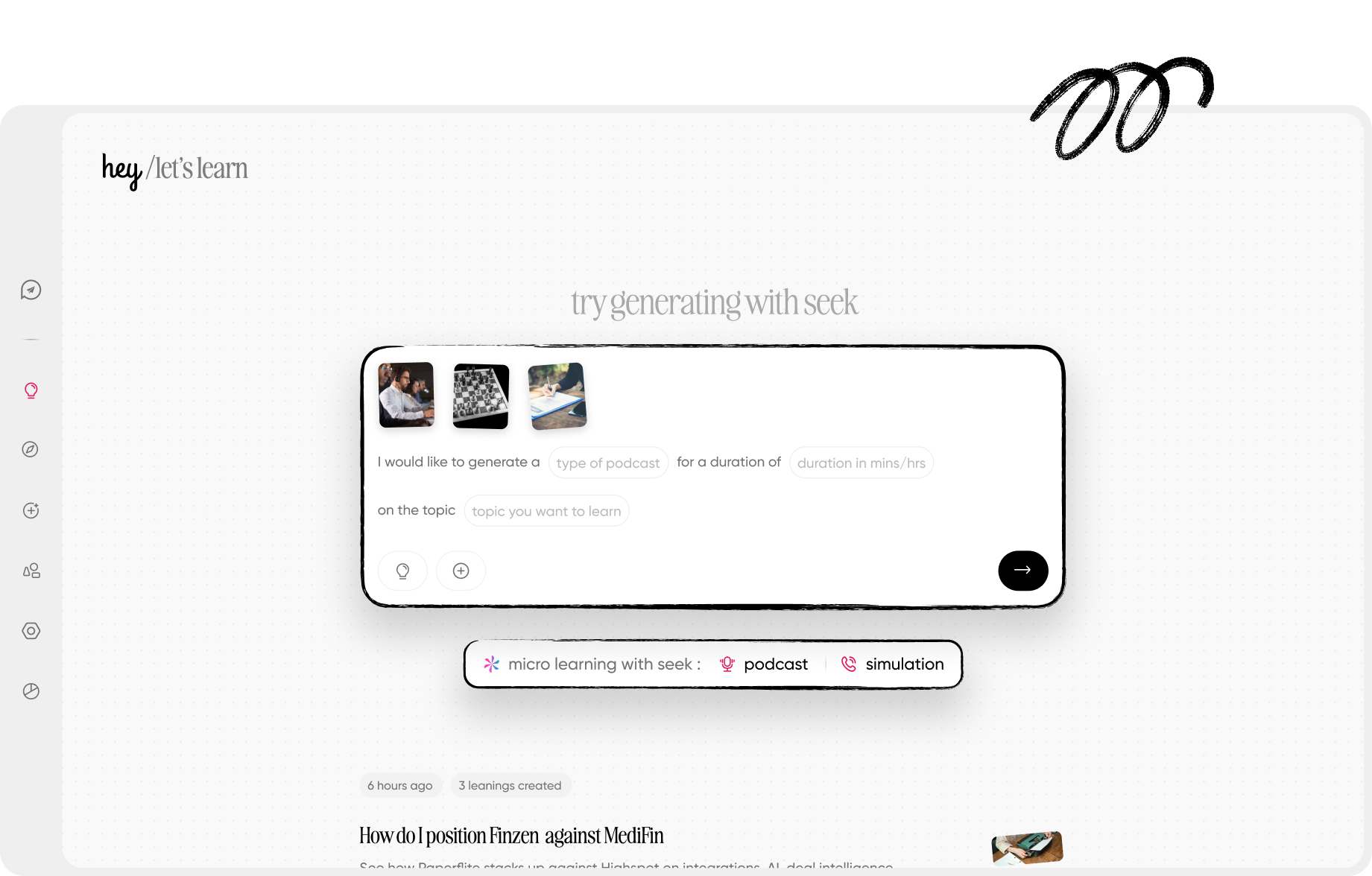
With heysales, revenue teams can create realistic AI buyer simulations that mirror the conversations reps actually face in the field. A new rep can practice discovery with a skeptical CFO. An account executive can rehearse a renewal conversation before walking into a tough call. A sales manager can see where reps are struggling, whether that is objection handling, value articulation, competitive positioning, or confidence under pressure.
The point is not to replace sales managers. The point is to stop making managers the bottleneck for every practice session.
Instead of waiting for a manager to run roleplays manually, reps can practice repeatedly with AI buyers, get scored on their responses, and improve before they reach the live call. Managers then get a clearer view of who is ready, who needs coaching, and where the team is breaking down across common sales scenarios.
That makes heysales different from traditional LMS-style training. It is not just another place to watch videos, complete modules, and collect completion badges that make everyone feel productive while nothing changes. heysales focuses on the moment where sales training usually fails: when the rep has to say the right thing out loud, under pressure, with a buyer pushing back.
For enterprise teams, this matters most in complex sales environments where reps need to practice more than generic cold calls. Healthcare sales teams need to handle clinical, procurement, and compliance-sensitive conversations. SaaS reps need to defend value against competitors. Customer success teams need to manage renewals and expansion conversations without sounding scripted. heysales gives teams a way to train for those moments before they happen in the pipeline.
Paperflite then connects that readiness layer to the buyer engagement layer.
Once the rep leaves the simulation and enters a real deal, Paperflite helps them share the right content with the right stakeholders through personalized buyer experiences. Reps can package case studies, product videos, proposals, security documents, competitive comparisons, and follow-up material into one buyer-facing destination. Paperflite tracks how buyers engage with that content, including what they open, how long they spend, what they return to, and who else gets involved.
That is where the stack becomes more useful than standalone simulation software.
heysales shows whether your reps are ready for the conversation. Paperflite shows how real buyers respond after the conversation.
If a rep struggles with pricing objections in heysales, and Paperflite shows that three stakeholders keep revisiting the pricing deck, the manager has a very specific coaching opportunity. If a buyer spends time on an implementation case study, the rep knows the next follow-up should focus on rollout, risk, and proof instead of sending another generic product overview into the void.
Together, heysales and Paperflite close the loop between practice, coaching, content, and buyer engagement.
Sales simulation software helps reps get better before the call. heysales does that with AI-powered roleplay and coaching. Paperflite carries that intelligence into the real buyer journey, so teams can see what happens after content is shared and coach reps based on actual deal behavior, not CRM guesswork and optimistic pipeline notes.
Conclusion
The right enterprise sales simulation software depends on three things: what your actual problem is, which category of software solves it, and whether you are buying at a moment when two of the biggest software vendors in the market are mid-integration under private equity ownership.
If rep inconsistency is the problem, Mindtickle or Hyperbound's software. If field sales content and offline access are the priority, Showpad. If you need content and coaching in one governed software solution at large enterprise scale, Seismic. If you need purpose-built simulation software with a clean compliance posture and European data residency, PitchMonster. If none of those perfectly fit your stack, Allego and Second Nature are genuine alternatives worth a demo.
What none of this software handles is the buyer-facing layer after the rep leaves the practice environment and enters a real deal. That is where sales coaching tools and content intelligence work together, and where revenue enablement strategy starts to look different from simple rep training.
If you want to see how content intelligence works alongside your simulation software investment, start with Paperflite.
Ready to close the gap between rep readiness and buyer engagement?
See what Paperflite adds to your sales simulation stack. See Paperflite in Action
Frequently Asked Questions
What is the difference between sales simulation software and sales training software?
Sales training software (an LMS) delivers structured content for reps to learn from: videos, courses, quizzes, certifications. Sales simulation software puts reps into practice scenarios with AI buyers that push back, interrupt, and handle objections the way a real prospect would. Most high-performing enterprise teams use both. The LMS handles knowledge transfer; the simulation software handles the skill of applying that knowledge under pressure in a real conversation.
How much does enterprise sales simulation software cost?
Enterprise pricing for simulation software is almost universally custom. Based on verified procurement data: Mindtickle averages approximately $92,000 per year across tracked deals; Showpad runs approximately $60,000 to $100,000 annually; Hyperbound and PitchMonster offer per-seat or credit-based enterprise models at custom rates. Implementation costs for enterprise software suites typically run 1.5x to 2x the annual license in year one, so factor that into your total cost of ownership before signing.
Does AI roleplay actually improve sales performance?
Research from multiple third-party sources consistently shows teams using AI-powered simulation software see 20 to 30% higher win rates and new hires ramp 40% faster than with traditional methods. The critical variable is practice volume, not the AI itself. Sales simulation software that drives high session frequency through gamification, certification requirements, or workflow integration shows stronger outcomes than software treating simulation as optional.
What is the difference between Mindtickle and Hyperbound?
Mindtickle is full revenue enablement software covering training, coaching, content management, and conversation intelligence, with AI roleplay as one module inside a larger system. Hyperbound is purpose-built AI roleplay and coaching software that connects practice directly to live deal intelligence. Mindtickle suits organizations that want unified software under one roof and can absorb an 8 to 16 week implementation. Hyperbound is faster to deploy and better for teams whose primary problem is scaling practice volume without burning out managers.
What happened to Highspot in 2026?
Seismic acquired Highspot in February 2026 under PE firm Permira, with Seismic's CEO leading the combined company. Both pieces of software continue to operate independently, but integration is ongoing. Buyers who were evaluating Highspot are now evaluating Seismic's combined software offering. Procurement advisors recommend negotiating exit clauses in multi-year contracts, given the roadmap uncertainty that PE-backed software mergers typically introduce 12 to 18 months post-close.
What should enterprise buyers ask during a sales simulation software demo?
Ask whether AI roleplay is native to the software or a third-party integration. Ask how practice performance connects to live deal coaching and manager dashboards. Ask for the actual implementation timeline before reps are actively using the software, not the vendor's best-case estimate. Ask what total cost of ownership looks like in year one including implementation, content creation, and enablement headcount. And ask directly: what happens to our contract if your software company is acquired or merged with another vendor?
Can sales simulation software replace sales managers for coaching?
No, and the best simulation software does not try to. What this software removes is the volume constraint on practice: reps can run 50 roleplay sessions without booking a manager's calendar once. Managers still own the quality layer, reading aggregate performance data from the software and stepping in for the high-leverage coaching conversations that require human judgment. The goal is to free managers from repetitive review tasks so they can focus on the development work that actually requires them.