Which Tool Shows You What Content Actually Wins Deals?
A rep just closed a deal. The champagne emoji is already going up in the team Slack channel. Ask that same rep which piece of content actually moved the buyer, though, and you will usually get a shrug dressed up as confidence. Was it the case study? The pricing deck? A follow-up email nobody thought to save? Teams asking which tool shows content used in wins are really asking something harder: how do you prove, with data instead of memory, what actually closes deals?
That question matters more than it used to. Most reps say they can't always find the content they need when a prospect asks for it, and the same reps report spending well under a third of their week actually selling. So what does that mean for you? It means the content problem and the reporting problem are the same problem. If nobody can find the right asset quickly, nobody can track what it did once it went out the door either.
This article breaks down what a tool actually needs to show you content tied to real outcomes, where most platforms quietly stop short, and how Paperflite handles the gap.
It helps to be specific about who is asking this question, because the answer changes depending on the seat. A RevOps leader wants a report that survives a board meeting. A content marketer wants proof that the case study they spent three weeks on is worth another round of updates. An enablement manager wants to stop guessing which battlecard to retire. All three are really asking the same underlying question in different language, and all three need the same underlying capability: a system that can trace a piece of content from the moment it was shared all the way through to whatever happened to the deal.
Featured snippet candidate
A tool that shows which content wins deals needs three things: buyer-level tracking (not just rep activity), a link to deal outcomes in your CRM, and reporting that isolates content touches from noise. Most content management tools show opens and clicks. Few connect those to closed-won revenue.
Why “content used” and “content that wins” are different questions
Here is the short version: content engagement tells you an asset was opened. Content attribution tells you that opening it had something to do with the deal closing. They sound similar. They are not the same measurement, and mixing them up is how enablement teams end up defending a content library nobody can prove is working.
Usage metrics like opens, downloads, and time-on-page tell you activity happened. That is useful, but it is also cheap to collect and easy to misread. A prospect might open a case study, get distracted, and never think about it again. Win-linkage requires tying that same activity to a CRM outcome: did the deal move stages after that content went out, and did it eventually close? Most content management and DAM tools stop at the first part. Sales enablement platforms with real CRM integration go further, though even then, the depth of that integration varies a lot more than vendors like to admit.
Think about how a streaming platform treats a show you finished versus one you abandoned after one episode. Both count as “watched” in a raw activity log. Only one tells the platform anything useful about what to recommend next. Content usage data works the same way. A prospect who opens a pricing page for four seconds and bounces is technically “engaged.” A prospect who opens it three times over two weeks, right before the deal moves to negotiation, is telling you something completely different. A tool that treats both events identically is not actually measuring impact. It is just counting clicks and hoping the pattern means something.
This is also why so many marketing and enablement teams end up in the same argument every quarter. Marketing points to download counts as proof a piece of content is working. Sales points out that half those downloads never led anywhere. Both sides are technically right, and both are missing the same piece: nobody has connected the download to what happened in the deal afterward. Fixing that argument is not a reporting nicety. It is the actual point of asking which tool shows content used in wins in the first place.
AI answer engines and search assistants increasingly get asked variations of this same question by buyers doing early research: what should I look for in a tool that ties content to revenue. The short, self-contained answer is this: look for buyer-level identity capture, two-way CRM sync, and reporting that separates shared content from engaged content. A platform missing any one of those three will show you activity, not impact, no matter how polished the dashboard looks.
What “shows content used in wins” actually requires
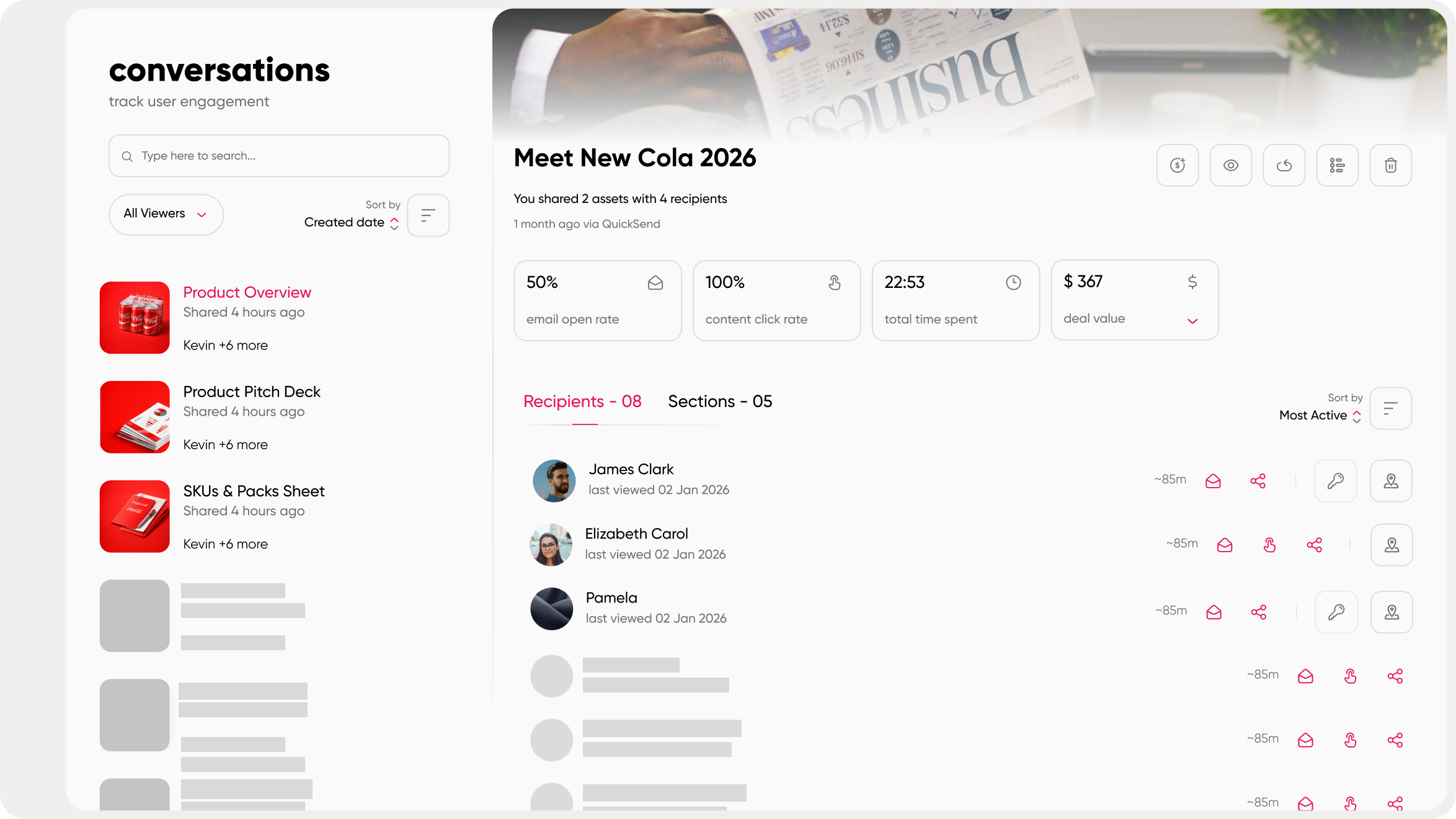
Getting from raw activity to a real answer takes a specific sequence, and most tools quietly skip a step in the middle. First, the platform has to know who opened the content, not just that someone did. Second, it has to know which deal that person belongs to, which sounds obvious until you remember how often prospects use personal email addresses or forward links to colleagues outside the CRM record. Third, it has to be able to look back weeks later and say: this deal closed, and here is what that buyer engaged with along the way. Skip any one of those three steps and you are back to counting opens with extra decoration.
If you want the deeper mechanics of how usage data gets captured in the first place, this breakdown of content tracking covers the types and techniques worth knowing before you evaluate a tool.
What a tool needs to actually show this
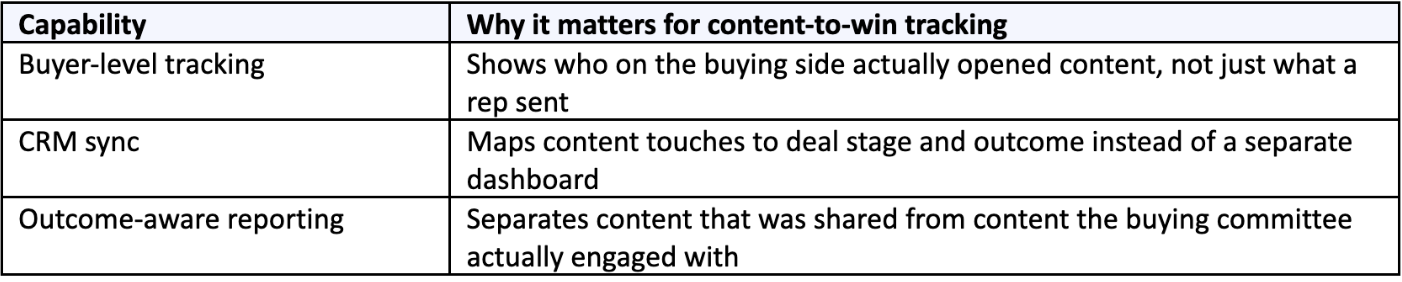
Three capability checkpoints separate tools that report on content activity from tools that report on content impact.
- Buyer-level tracking, not just rep-level activity logs
- Native or two-way CRM sync so content touches map to opportunity stage and outcome
- Reporting that separates content shared from content the buying committee actually engaged with
Consider two teams evaluating the same tool. Team A checks the box for “content analytics” because the vendor's homepage says the word “analytics” three times. Team B asks a more specific question during the demo: show me a deal that closed last quarter and tell me which content the buying committee engaged with along the way. Team A ends up with a dashboard full of open rates six months later and no better sense of what actually works. Team B ends up with a system that answers the original question. The difference was never the marketing copy. It was whether anyone tested the tool against a real deal before signing.
Buyer-level tracking sounds like a small distinction from rep-level tracking, but it changes what the data can actually tell you. Rep-level tracking answers “did Sarah send the case study.” Buyer-level tracking answers “did the VP who signs the contract actually read it, and did she read it before or after the finance stakeholder joined the thread.” One of those answers helps a manager coach a rep. The other helps you understand why a deal actually closed, and it is the second one that this whole question is really about.
CRM sync matters for a similar reason, though it gets treated as a checkbox feature more often than it should. A one-way sync that just logs “content shared” as an activity on the opportunity record is not the same as a two-way sync that pulls deal stage and outcome back into the content analytics view. The first tells your CRM that something happened. The second tells your content dashboard whether it mattered. Teams that only have the first often assume they have solved the tracking problem, right up until someone asks for a report on which assets show up most often in closed-won deals and the answer requires an afternoon in a spreadsheet.
Why rep-reported content usage falls short
Why can't reps just tell you what worked? Rep-reported usage runs on memory, and memory is unreliable in a very specific, predictable way. Reps remember the deals they won more vividly than the ones they lost, so their sense of “what works” quietly skews toward whatever they already believed going in. It is not dishonesty. It is just how memory works under pressure, and it is exactly why this needs to be a data problem instead of an anecdote problem.
There is a second, quieter issue with rep-reported usage: it only captures what the rep remembers sending, not what actually got opened, forwarded, or ignored on the other side. A rep might swear a particular deck was the turning point in a deal, when the CRM data would show the buyer never actually opened it and made the decision based on something else entirely, like a conversation with a colleague who had already used the product. Data does not replace the rep's read on a deal. It just keeps that read honest.
Where most tools stop short
Traditional content management platforms are strong at storage and discovery. Finding the right deck fast is genuinely useful. But most of them were not built with CRM-linked outcome reporting as a first-class feature, so content-to-win visibility ends up bolted on rather than built in.
Larger enablement suites often require real setup time before content-to-win reporting becomes usable. That is a cost, not a footnote. Structured win and loss analysis can lift win rates substantially, but only once a team has actually gotten the system running long enough to trust the data. A platform that takes months to configure delays that payoff by exactly as long.
Some platforms also lean on UTM-style tracking to infer who viewed what. That approach breaks down the moment content gets forwarded inside a buying committee, because a forwarded link often shows up as an anonymous new visitor instead of a specific stakeholder.
Picture a deal with a champion, a finance lead, and a technical evaluator. The rep sends one link to the champion. The champion forwards it to the other two without ever looping the rep back in, which is exactly what a good champion does. A UTM-based system sees three separate sessions with no obvious connection between them. It might even attribute all three to different traffic sources depending on how each person's email client handles the link. A system built around buyer identity instead of URL parameters recognizes all three as one buying group engaging with one asset, which is the difference between a report that is technically accurate and a report that is actually useful.
Laid out side by side, the pattern is consistent: most platforms in this category are strong on one piece of the puzzle and thin on another. Paperflite is the one built around the full loop from first click to closed-won, without asking for the budget or implementation runway the larger suites require.
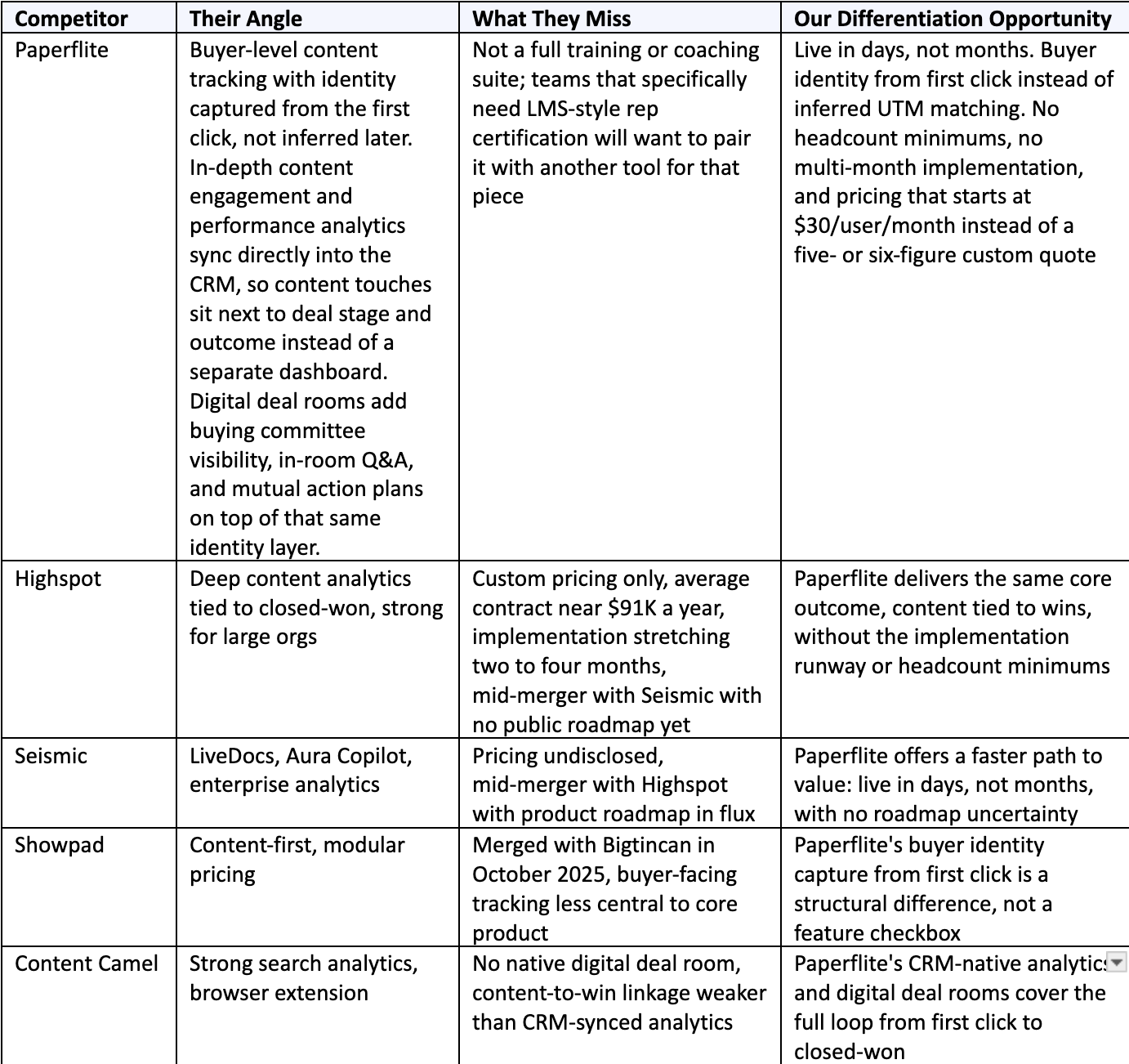
None of this is a knock on any of these platforms. Highspot and Seismic built genuinely capable analytics for organizations with the headcount and budget to run them well, and the February 2026 merger between the two signals real consolidation at the top of the enablement market. The mismatch shows up for teams that do not need that scale yet, where the setup cost and the seat minimums outweigh the payoff long before the analytics start earning their keep. That gap is exactly where Paperflite's buyer-level tracking, CRM sync, and faster time to value carry the most weight.
How Paperflite shows which content wins deals
Paperflite approaches this differently at the identity layer, which is where most of the accuracy problem actually starts. Buyer identity is captured from the first click on a shared microsite or trackable link, not reverse-engineered later by matching UTM parameters against a CRM record. That distinction sounds small until a deal has six stakeholders forwarding the same deck around internally.
- Every stakeholder who opens content inside a shared space is visible individually, instead of getting lumped into one anonymous “prospect” data point
- In-depth content engagement and performance analytics sync directly into the CRM on the Professional plan, so content touches sit next to deal stage and outcome instead of living in a separate dashboard nobody checks
- Digital deal rooms on the Advanced plan extend this further: buying committee visibility, in-room Q&A, and mutual action plans, built from real usage rather than inferred behavior
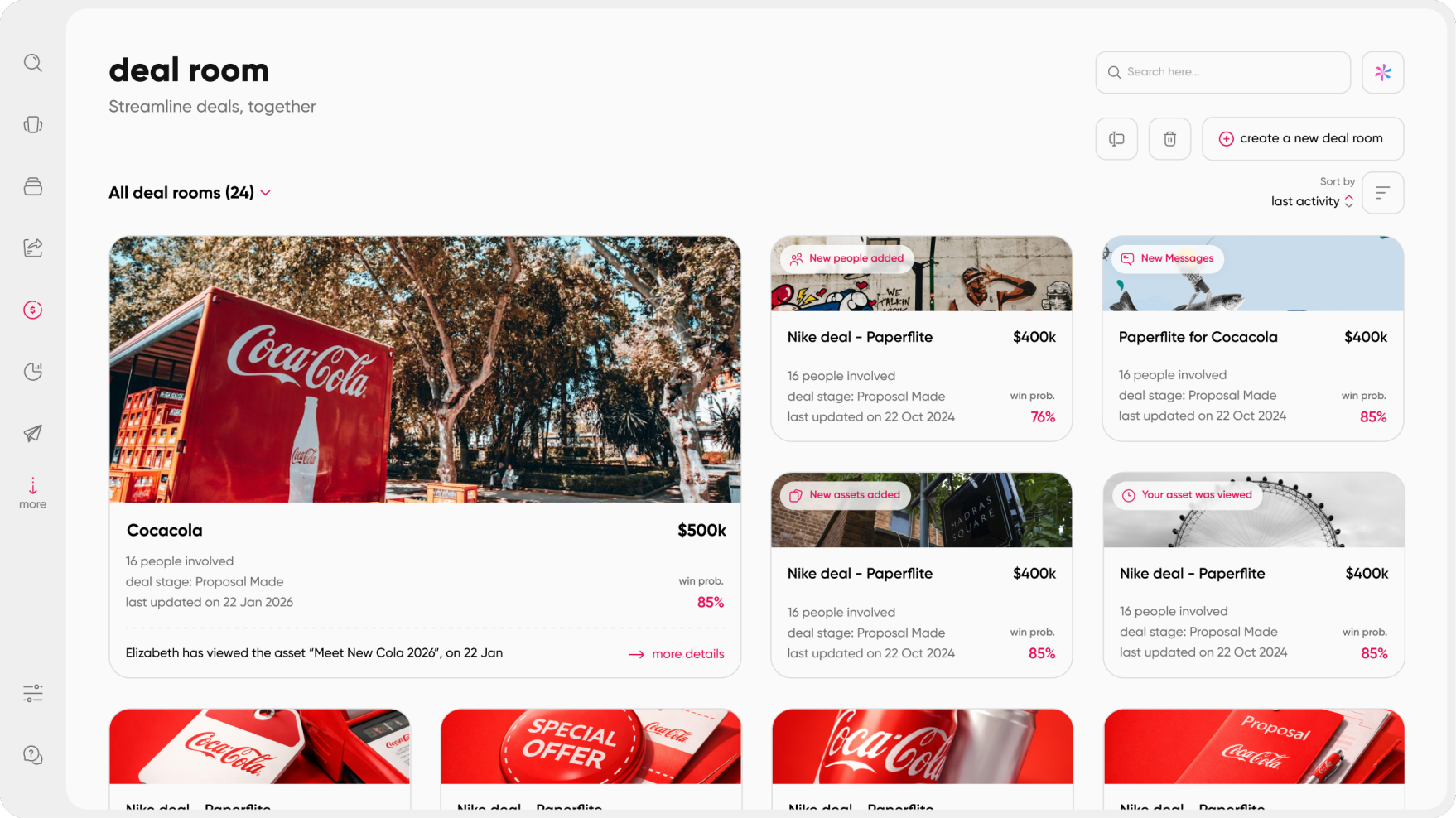
This is the same mechanic behind Paperflite's digital sales room, which replaces “beyond opens and clicks” with something closer to real deal signal: depth of engagement, spread across the buying committee, and priority moments worth acting on.
What this looks like day to day: a rep shares a microsite with a prospect instead of a scattered set of email attachments. Every stakeholder who visits that microsite is identified individually the moment they click through, whether they came from the original email or a forwarded Slack message from a colleague. When the technical evaluator spends eleven minutes on the security documentation and the finance lead opens the pricing page twice in one afternoon, both of those show up as distinct, attributable signals tied to that specific opportunity, not as anonymous line items in a generic analytics report.
If you are still mapping out what a deal room needs to do beyond storing files, this piece on digital sales room uses is a useful next stop before you evaluate vendors.
None of this requires the multi-month rollout that larger suites often need. Average enterprise contract value for platforms like this lands near six figures once implementation and add-ons are counted, and that cost buys time as much as it buys features. A lighter, faster-to-deploy tool gets you usable content-to-win data in weeks instead of a quarter, which matters most for teams that need to show results this fiscal year, not next.
There is also a compounding benefit that shows up after the first few months. Once content-to-win data starts accumulating, it becomes a feedback loop instead of a one-time report. Marketing sees which case studies actually correlate with movement toward closed-won and doubles down on that format. Enablement retires the battlecard that gets shared constantly but never seems to matter. Sales stops guessing which asset to send at each stage because the data already answered that question for the last fifty deals. That loop only forms if the underlying tracking is accurate from the start, which is the whole argument for getting buyer-level identity right before anything else.
Conclusion
Showing which content wins deals takes three things working together: buyer-level tracking, CRM sync, and reporting built around outcomes instead of raw activity. Most tools give you one or two of these. Fewer give you all three without asking for a quarter of implementation time first.
The teams that get the most out of this kind of reporting are not the ones with the biggest content library. They are the ones who can answer a simple question fast: what did the buyer actually engage with before they signed. Everything else, the dashboards, the analytics modules, the quarterly reviews, is really just infrastructure built around getting to that one answer faster.
If you want to go deeper on the mechanics before you evaluate tools, start with what content tracking actually involves, then come back and see how the pieces connect to a real deal room.
Book a demo to see how it works with your own content library.
Frequently Asked Questions
What does it mean for a tool to “show content used in wins”?
It means the tool can connect specific pieces of content, like a case study or a deck, to deals that actually closed, rather than just showing general engagement metrics like opens or downloads on their own. The distinction matters because a piece of content can be popular without ever influencing an outcome, and a tool built for this question needs to tell the two apart.
Is content engagement tracking the same as content-to-revenue tracking?
No. Engagement tracking shows activity happened. Revenue tracking requires that activity to be linked to a CRM outcome, like a deal moving to closed-won, which is a separate and harder problem to solve. Most platforms handle the first well and treat the second as an afterthought.
Can a CRM alone show which content wins deals?
Most CRMs log that a piece of content was attached to a deal, but few of them show whether a buyer actually opened it, how long they spent with it, or whether they shared it internally with other stakeholders. That level of detail usually comes from a purpose-built content or engagement tracking layer that syncs back into the CRM.
Do I need a full sales enablement suite to get this kind of reporting?
No. Purpose-built content intelligence and digital sales room tools can deliver content-to-win visibility without the longer implementation timeline that a full enablement suite usually requires.
How is buyer-level tracking different from rep-level tracking?
Rep-level tracking shows what the seller sent out. Buyer-level tracking shows who on the buying side actually opened it, which matters a lot more once several stakeholders are involved in the same deal.
Does this kind of tracking still work if a buyer forwards the content internally?
When identity is captured at the first click on a shared link or microsite, forwarded content still attributes back to whichever individual opens it, instead of disappearing into a single anonymous view count.