The Real Reason Your Reps Are Losing Winnable Deals in 2026
Pull up your calendar right now and count the calls on it for this week. For a rep carrying a typical B2B pipeline, that number is somewhere between eight and fifteen. Now ask how many of those calls they will walk into having reviewed the CRM, checked what content was shared in the last two weeks, looked up the stakeholders on the invite, and thought about how to open the conversation.
The honest answer, across most sales organizations, is two or three. Not because the reps are undisciplined. Because doing that preparation properly takes twenty to thirty minutes per call, and the time does not exist in a day already running at capacity.
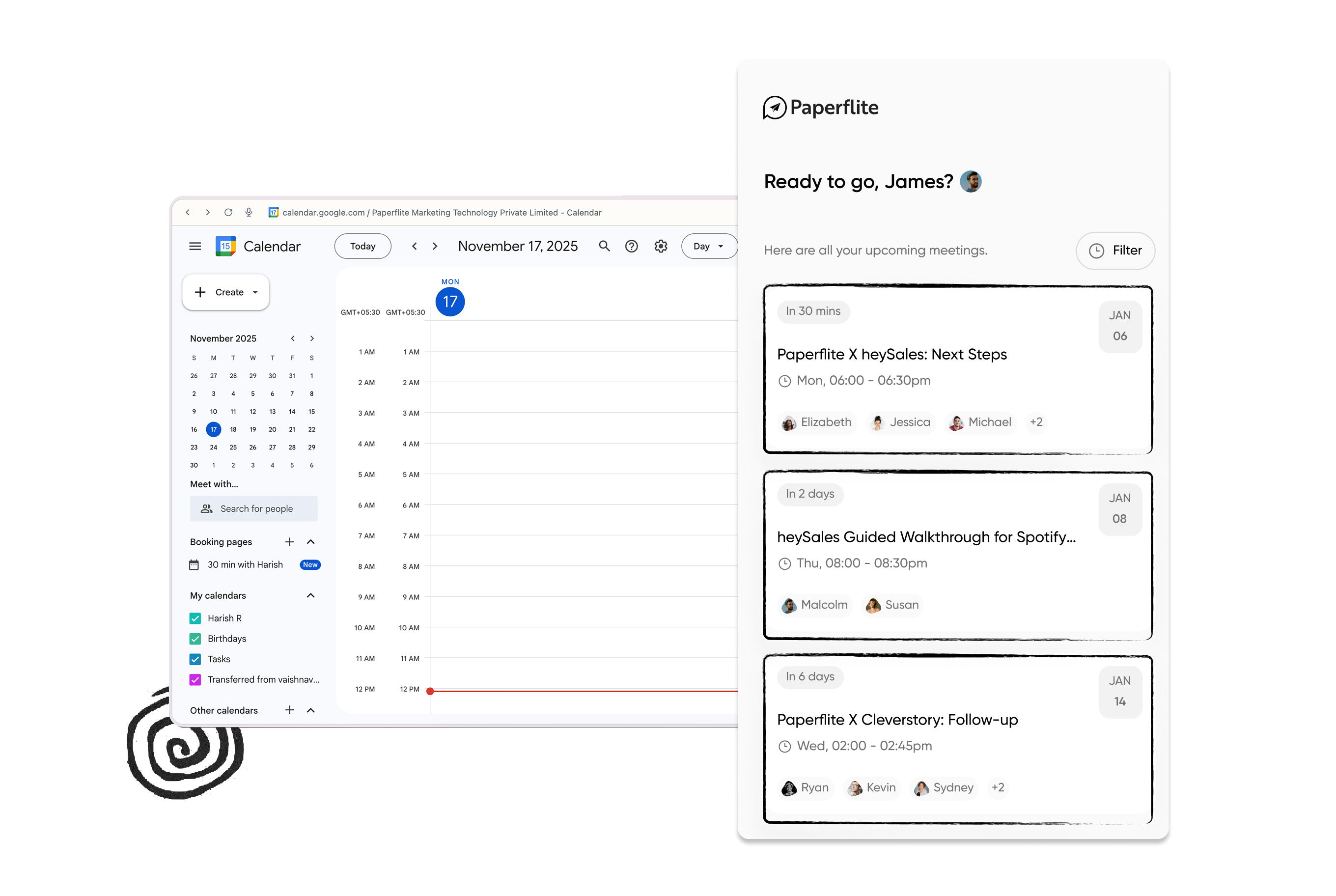
Per Salesforce's Fifth Edition State of Sales report, reps spend only 28% of their week actually selling. The rest goes to administrative work, internal meetings, and the kind of manual research that should either be automated or eliminated. Pre-call preparation sits squarely in that second category: work that consumes time without producing anything that a better system could not surface automatically.
The result is a predictable pattern. Reps join calls with surface-level context. They ask questions the prospect already answered. They reference content without knowing whether it was opened. They miss signals that were sitting in the stack, visible, unread. Deals that should have advanced do not. Pipeline reviews reconstruct what happened instead of deciding what to do next.
This is not a coaching problem. It is a preparation infrastructure problem. And the distinction matters because the solutions are completely different.
Why the Current Preparation Model Fails at Scale
The standard advice is review the CRM, check the email thread, look up the prospect on LinkedIn. Correct in principle. Structurally impossible for any rep running more than ten active deals. Done properly, pre-call prep takes twenty to thirty minutes. A rep with twelve deals and two calls each per week needs eight hours of prep weekly, before a single call has been made. That time does not exist. So prep gets compressed into a CRM skim, or skipped entirely.
The deeper problem is that the information reps need is not in one place. Company context, stakeholder background, email history, content engagement data: four different tools, none of which surface automatically in the two minutes before a call starts. Most reps make a rational decision given those constraints. They join the call with what they already know, and rely on the conversation to fill the gaps. The cost of that compounds across every deal in the pipeline.
What Pre-Call Intelligence Actually Requires
Effective pre-call preparation does not require more time from the rep. It requires the right information assembled in the right place before the call starts. Specifically, four categories of context that change how a call opens and where it goes.
Company intelligence: that is specific to this deal and this conversation, not a generic company overview but the background and recent context relevant to what is being discussed on this call.
Stakeholder context: for everyone on the invite, role, responsibilities, what the rep should know about each person before the first word is spoken.
What has already been shared: with this account and when, so the rep knows what is in play, what the prospect has received, and what gaps still exist going into the conversation.
How to open the call: the first sixty seconds of a sales call determines the tone of the next thirty minutes. A rep who knows how to start a conversation naturally with this specific person is in a different position than one improvising an opener on the spot.
None of this requires new data. All of it already exists inside the tools and processes that a sales team is already running. The missing piece is a system that assembles it automatically, in the place the rep is already looking before every call, the calendar event.
How Can a Rep SmartPrep Before a Call
Not a research project. A brief with all that matters
1. Who is this company, right now the context that's relevant to this deal, not a Wikipedia summary.
2. Who's on the call, what's their role, and how do you open with them in a way that doesn't feel like a cold start.
3. What's already been shared with this account and what's still in play.
4. How to break the ice before getting into business, because the first sixty seconds of a call sets the tone for everything that follows.
That's it. 4 things. None of them requires new data. All of them already exist somewhere in the rep's stack. The problem is that nobody has assembled them in one place reps are always looking thirty seconds before a call: the calendar event.
That's exactly what Smart Prep helps you do.
Smart Prep is Paperflite's pre-call intelligence feature, built into the Chrome extension and surfaced directly inside Google Calendar. When a rep clicks on a meeting, the Smart Prep panel opens alongside the event. No new tab, no separate login, no workflow change.
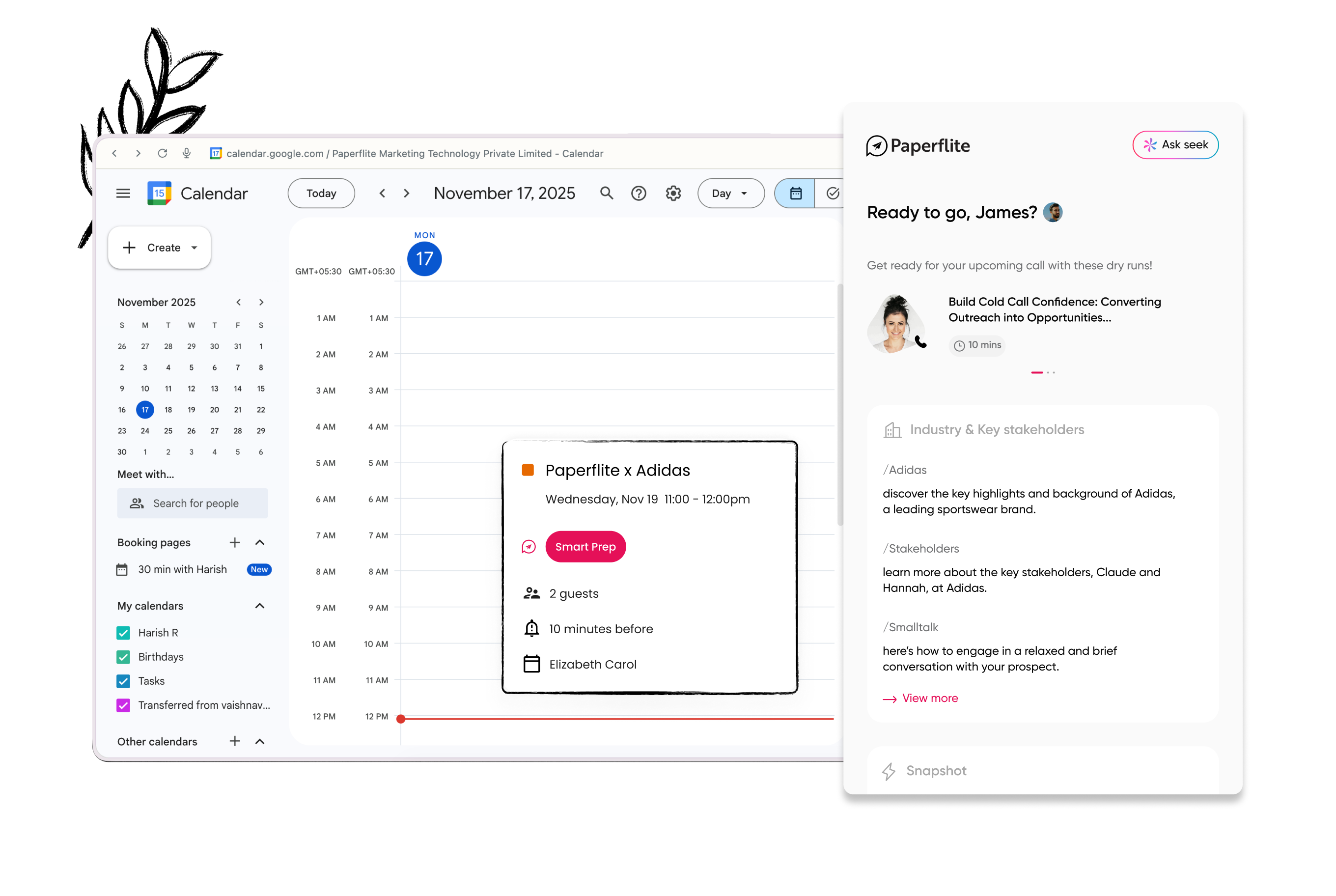
The brief is pre-built. It pulls from what Paperflite already knows about the account and surfaces it across four structured sections.
The Company section covers the account background specific to this deal: industry context, key highlights, what is relevant going into this conversation. Not a database dump. Context that changes how the call starts.
The Stakeholders section profiles everyone on the call. Role, background, recent highlights pulled from the account history. A rep who knows that the person joining the call late is the final decision-maker is not caught off-guard when they appear.
The Small Talk section is where Smart Prep does something no other pre-call tool offers: specific, personalised conversation starters for this prospect, based on who they are. Not a generic opener. Guidance for this call, with this person.
And for reps who want to go deeper before the call starts an Ask Seek button sits at the top of the panel, ready to answer any question about the deal or the account in natural language.
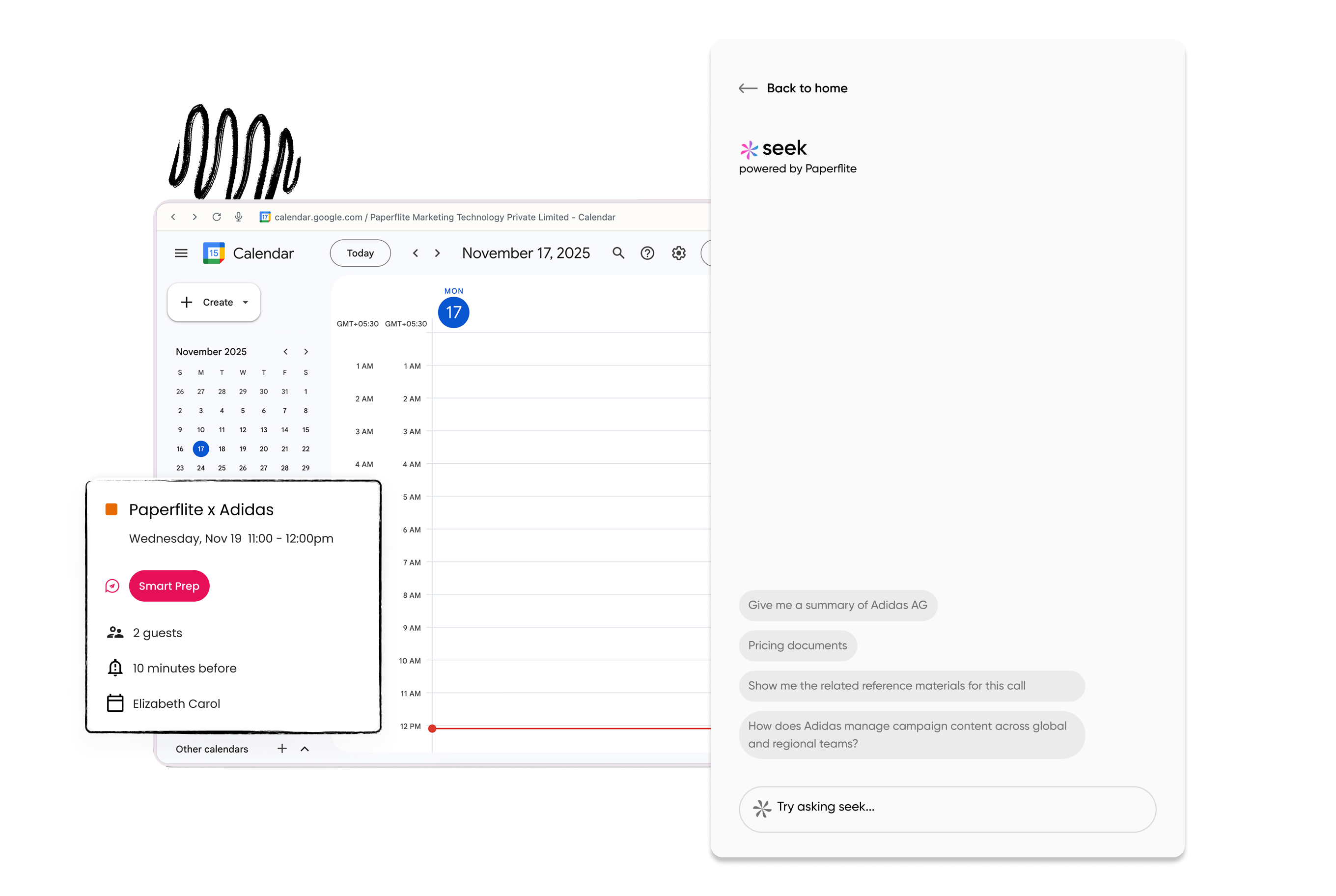
Ask it anything about the account in natural language: how the company manages its regional teams, whether pricing has come up in previous conversations, which stakeholders have been most engaged. It returns a specific answer drawn from the full account history. It surfaces stakeholder profiles with recent highlights, suggests follow-up questions, and recommends content relevant to the upcoming call. All without leaving the calendar.
The rep who spends ten minutes on a simulation before a difficult call is measurably better prepared than the one who did not. Smart Prep makes that option available at the exact moment the rep is thinking about the call: not in a quarterly training session, but in the two minutes before they click join.
This is not a data brief. It's a pre-call coach.
What Changes When Preparation Is Systematic
Without Smart Prep, the rep opens the CRM, finds a three-week-old note, sees stakeholder names they half-remember, and joins hoping context surfaces naturally. With Smart Prep, the two minutes before the call produce a full picture.
The call opens: "Hey Marcus, before we get into it, I saw Adidas just wrapped the Q4 sustainability push. How did that land internally?" That question changes the call. Not because it is clever, but because it is informed. Same deal. Same rep. Completely different call, because the brief was waiting in the calendar.
Why This Is a Team Problem, Not a Rep Problem
The reps who consistently show up prepared to every call are not more disciplined than the ones who don't. They're better at carving time out of a packed calendar to manually pull context from multiple tools, which is a scheduling skill that has nothing to do with selling.
Smart Prep removes the dependency on that skill. The brief assembles itself before every call, for every rep, regardless of how many deals they're carrying or how packed the day is.
The rep who always prepped well preps faster. The rep who never had time now has the context anyway. And the rep who used to wing openers has a coach in the calendar telling them exactly how to start.
When preparation stops being a function of individual habits and starts being a function of the system, the whole team shows up differently. Cold opens become rarer. Postmortems stop mentioning preparation. And deals that should close do because nobody walked in blind on a warm account.
For the Sales Team Where Every Call Carries Pipeline Weight
Already using Paperflite? Smart Prep is available on the Chrome Webstore. Install the extension, connect your calendar, and the brief will be waiting before your next call.
New to Paperflite? [See Smart Prep in action ->]